
 Official Differences Training
Single Lever Power Control(SLPC) Differences Training
Official differences training is required before you fly an aeroplane with single lever power control (SLPC), where one power lever and an engine computer (FADEC) replace the throttle, mixture and propeller levers. It covers both theory and practical flying with an instructor.
- animated slides
- 218
- animated slides
- lessons
- 14
- lessons
- and a course exam
- 13 tests
- and a course exam
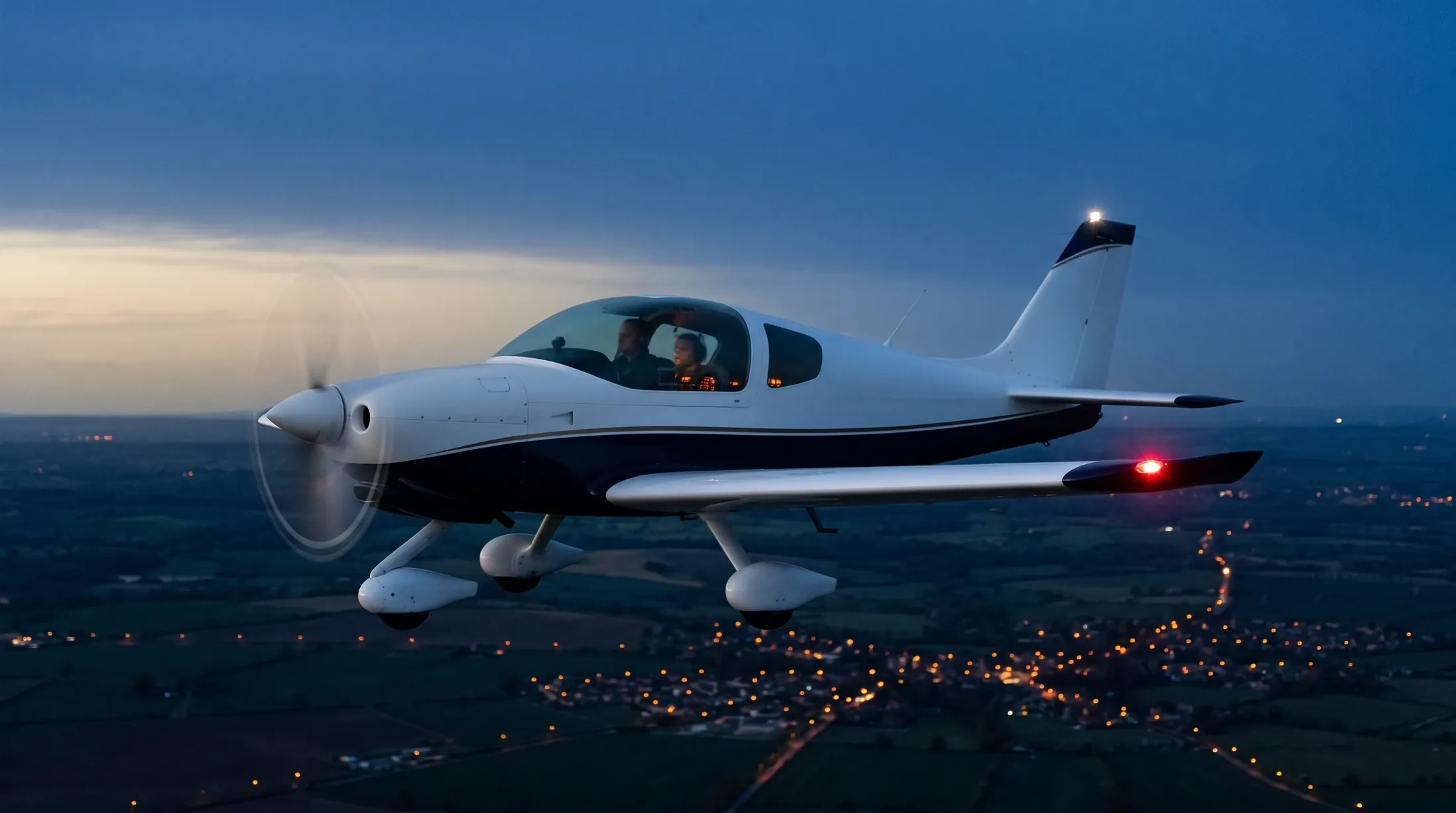

The big difference
One lever instead of three
An SLPC aeroplane has one power lever. An engine computer, the FADEC (Full Authority Digital Engine Control), works out how much fuel to inject and when, the turbocharger's boost and the propeller's RPM. Move the lever and see.
Three levers, each set by hand, in the right order, for every phase of flight.
Push it forward and you ask for more power: the ECU adds fuel, raises the boost and sets the propeller RPM to suit. Pull it back and it does the reverse. You read the power you have as LOAD.
Drawn as the course draws it. Figures are examples only: every SLPC type differs, so always use your own aeroplane's flight manual.
Watch it move
Every slide comes to life
Slides from the course, filmed as they build up step by step. Pick one to jump to it.
- Every slide is animatedEach step builds up as the narrator explains it, at a pace you can follow.
- Three narratorsFull teaching narration in three voices, taking turns through the course.
- Classic slides tooSwitch to Classic to see each slide as a still picture with a short spoken summary.
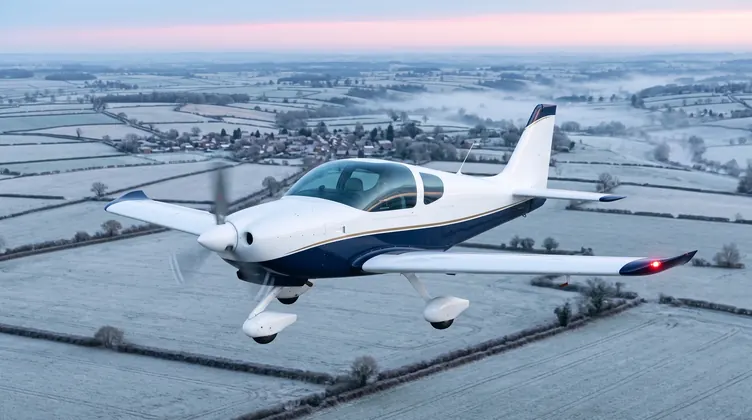
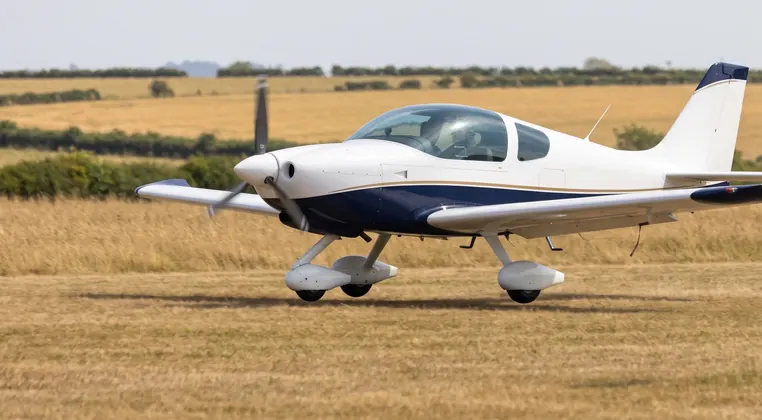
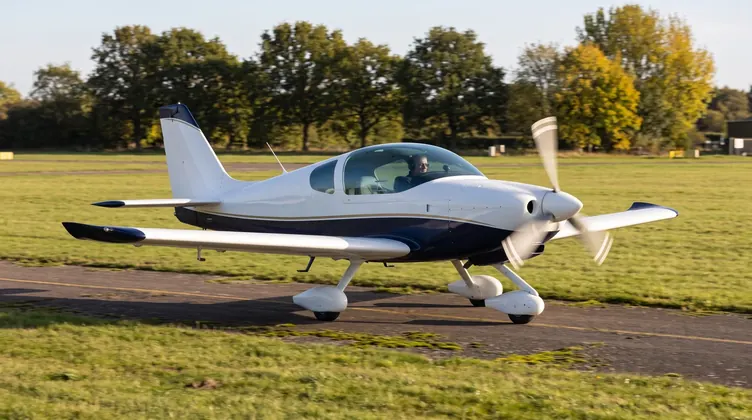
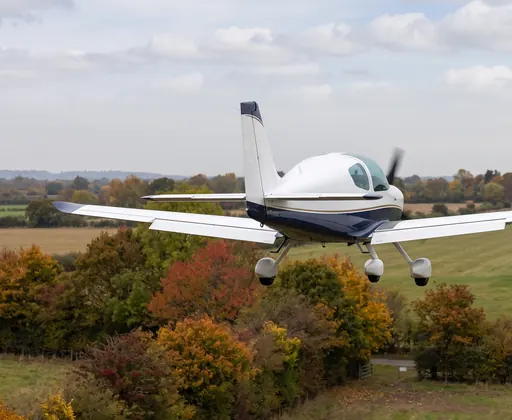
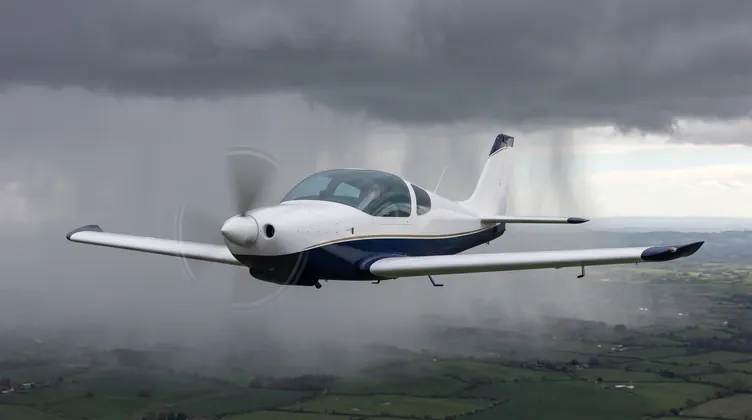
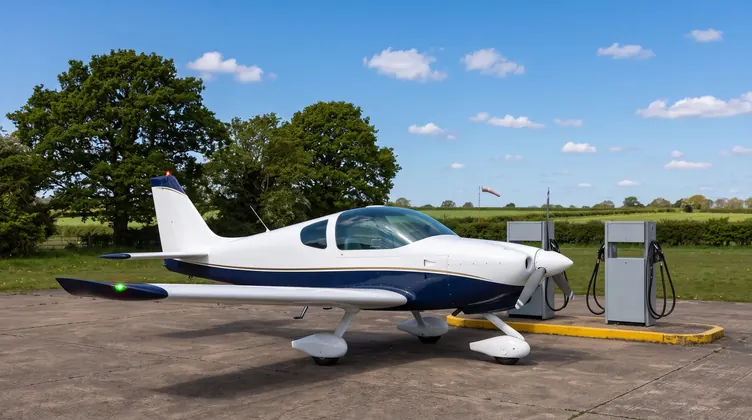
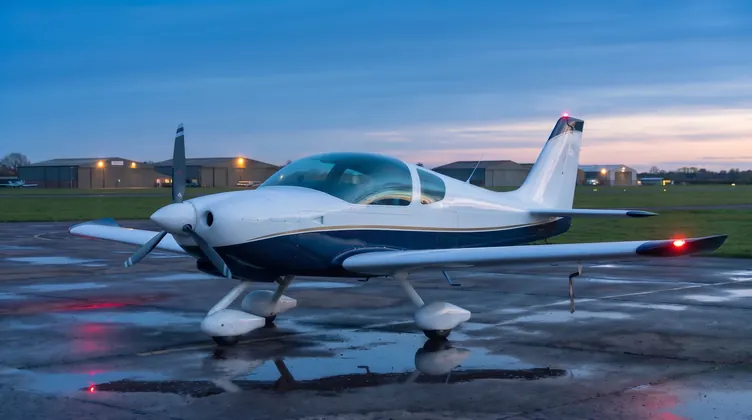
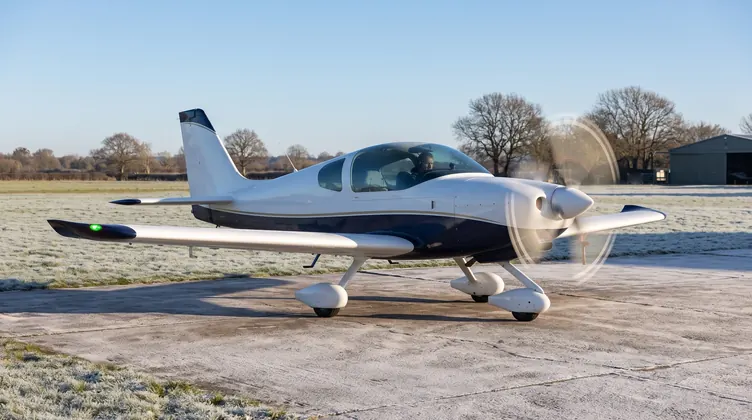
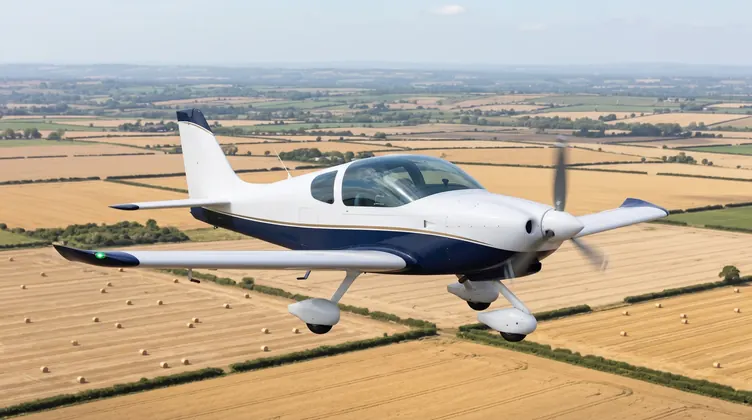
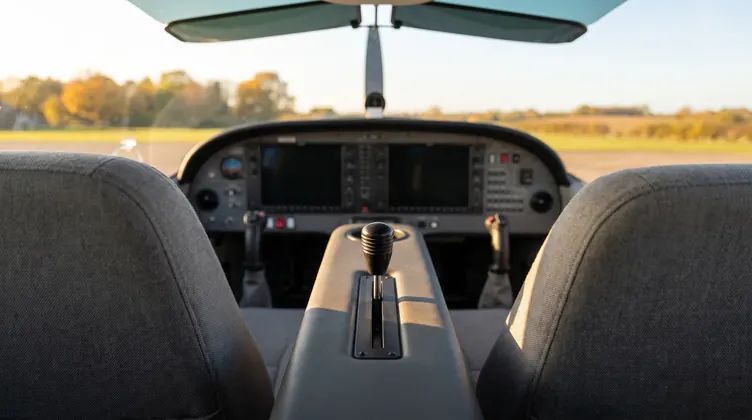
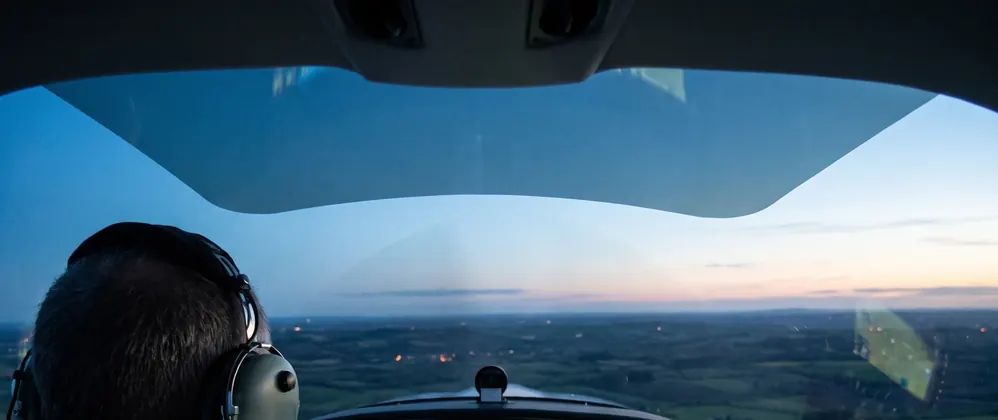
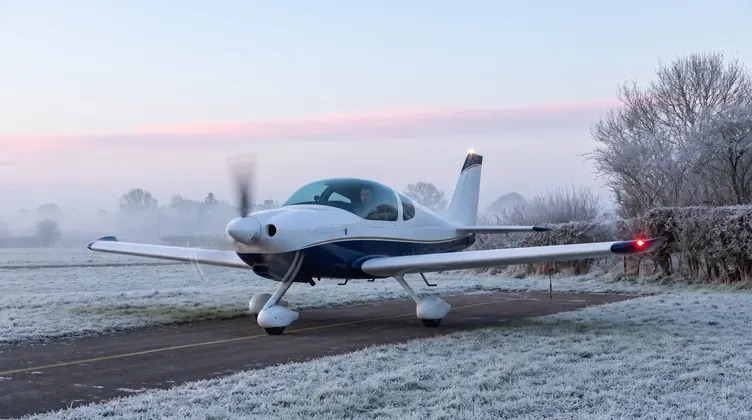
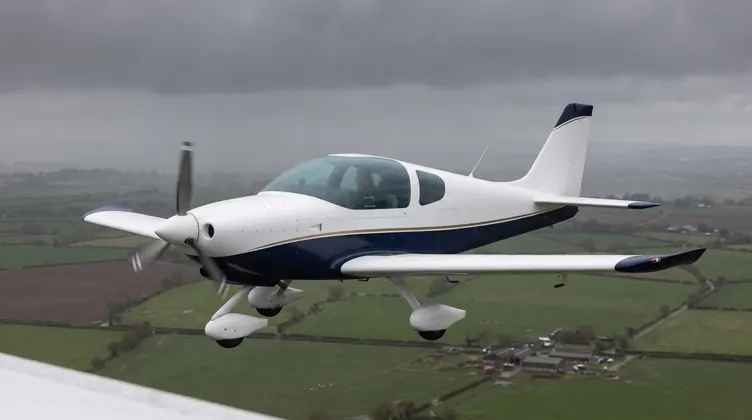
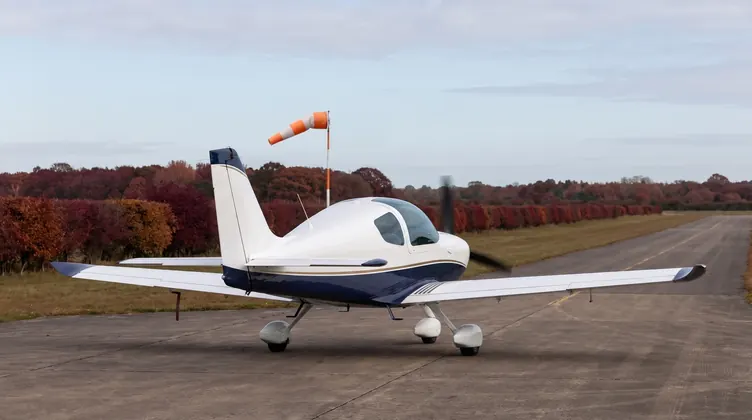
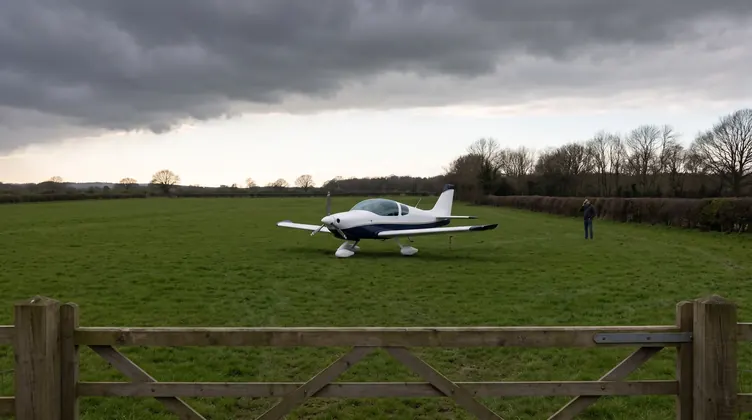
97 photographs in the course, no two the same
The course
What you'll learn
This course teaches the theory, following the CAA's SLPC differences training syllabus heading by heading: the engine and its gearbox, turbocharger, oil and coolant, the propeller and governor, the fuel system and Jet A-1, FADEC and the power lever, engine displays, cautions and warnings, the electrical system, loading and performance, normal, abnormal and emergency operations, and reviewing the flight manual. A final chapter covers converting from SLPC aeroplanes back to conventional ones. Your training flights with an instructor then put it into practice.
Every chapter ends with a progress test, and the course ends with a course exam. The course is for single-engine aeroplanes.
To prove you have completed the course, after you have passed our on-line exam you will be issued with a Course Completion Certificate.
Under the cowling
A diesel, a turbo and two computers
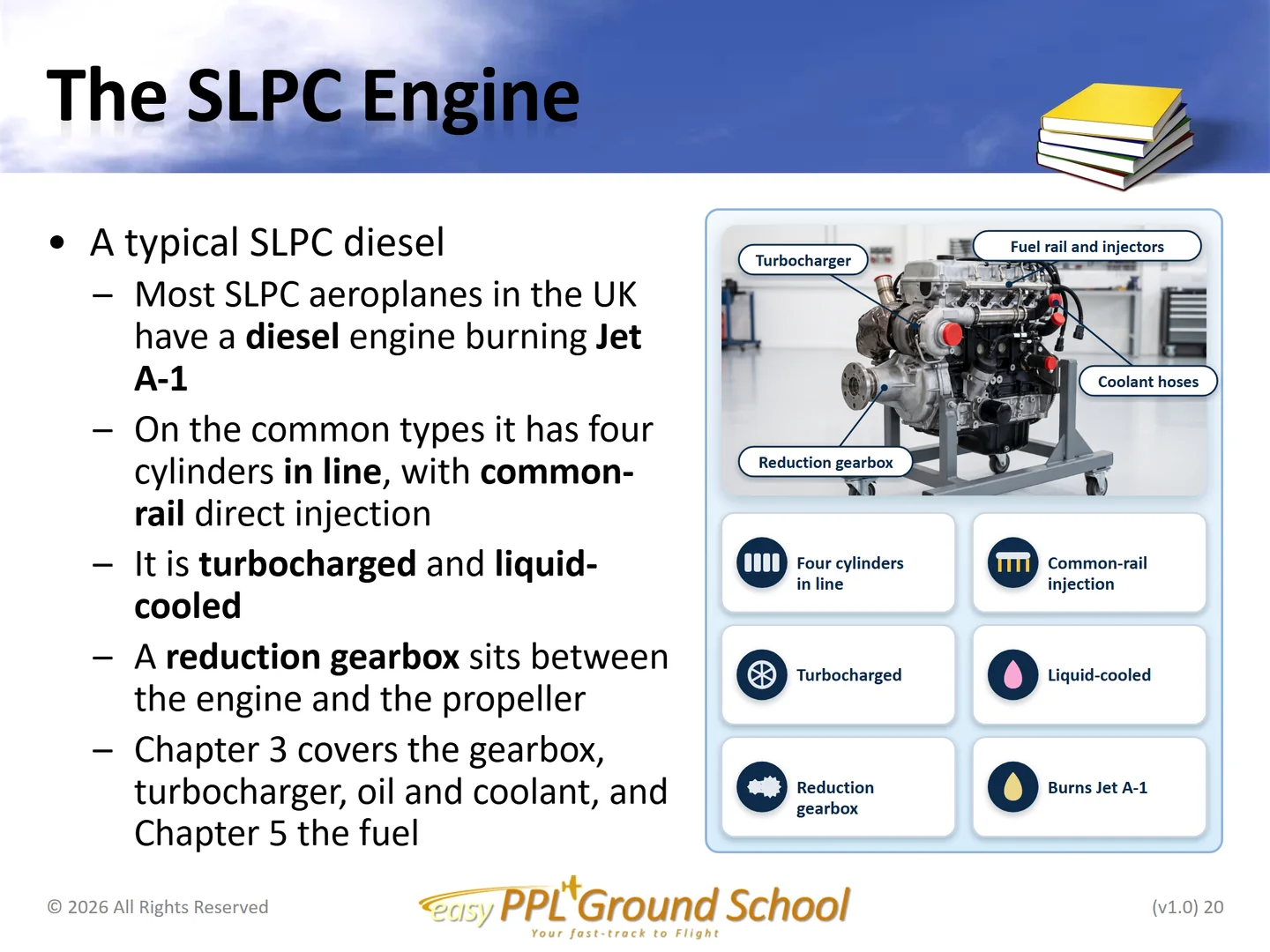
Most SLPC aeroplanes in the UK have a turbocharged, liquid-cooled diesel burning Jet A-1. The course takes it apart one system at a time.
Pick a part
Four cylinders in line, turbocharged and liquid-cooled, burning Jet A-1: the engine you'll find in most SLPC aeroplanes in the UK. Fuel, oil, coolant, air and the ECUs' signals all move as they do in the course.
When an ECU fails
Two computers, one engine
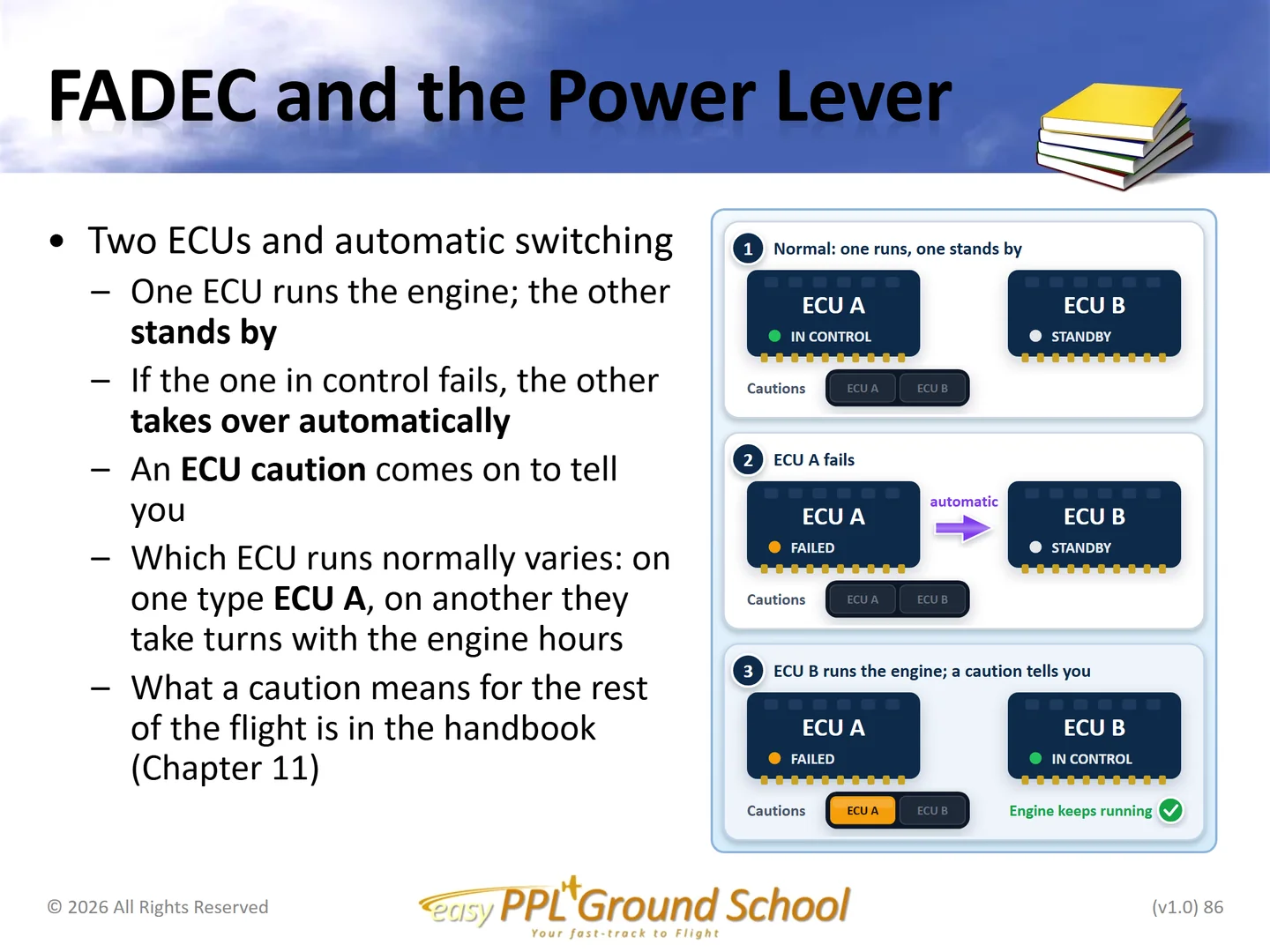
One ECU runs the engine and the other stands by. If the one in control fails, the other takes over automatically, and a caution tells you. Press the button and watch.
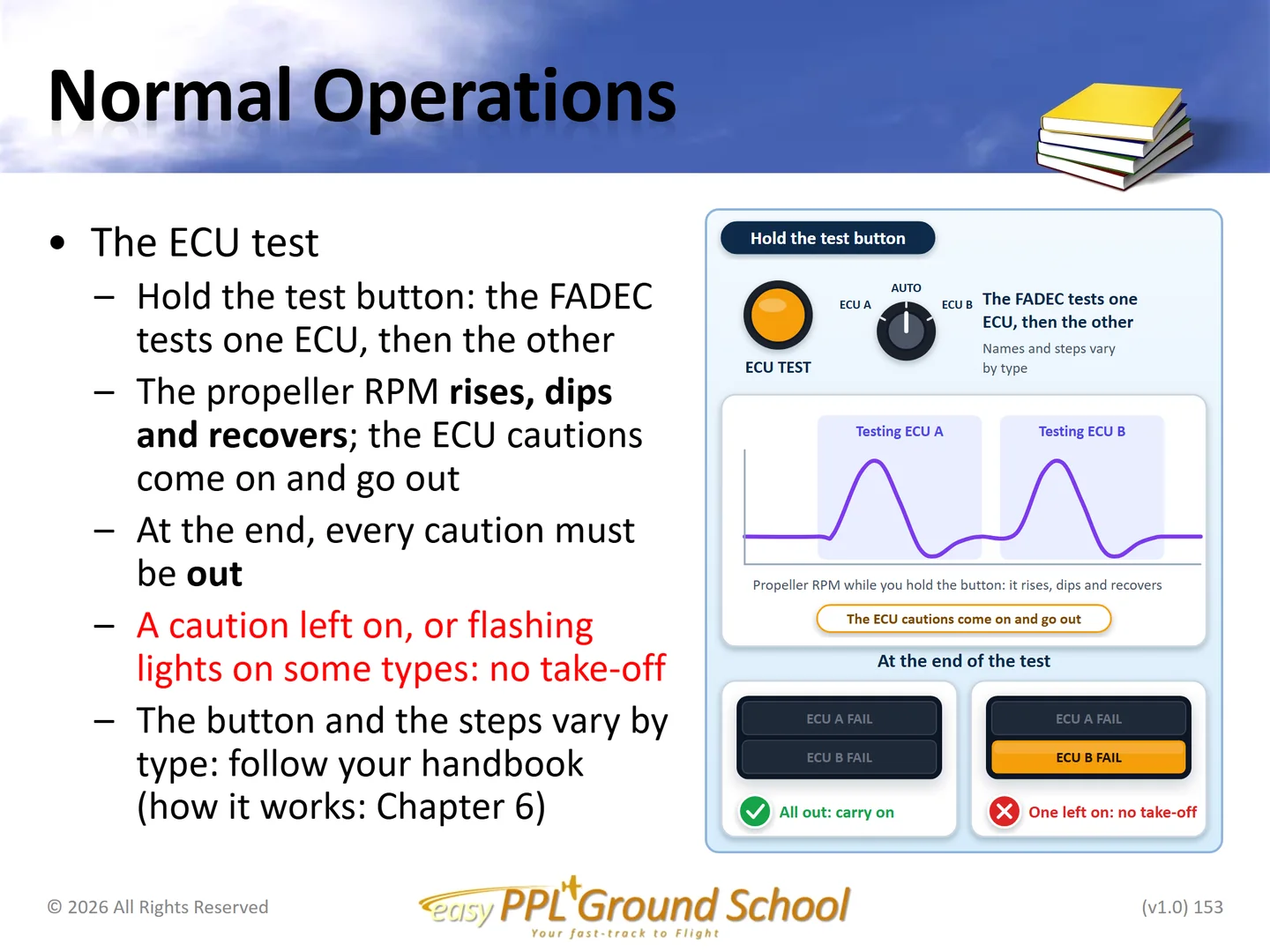
- The ECU test before every flight, step by step
- The selector switches and test buttons, and why they differ by type
- Back-up batteries: which ECU they keep running, and for how long
ECU A is in control; ECU B stands by. Which one normally runs the engine varies by type.
The fuel
Jet A-1, not AVGAS
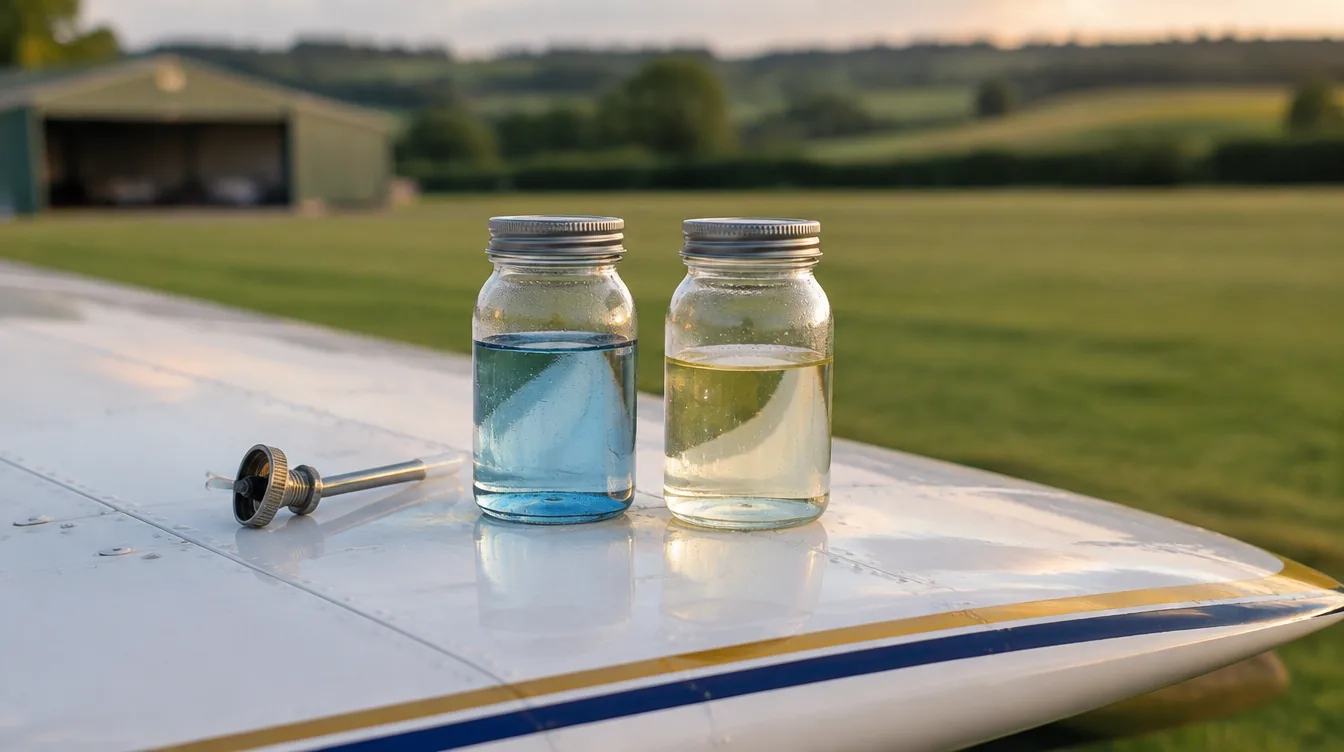
The diesels burn Jet A-1. It looks nothing like the blue AVGAS you're used to, and it weighs more.
 AVGAS 100LLJet A-1
AVGAS 100LL
Dyed blue. About 0.72 kg per litre.
Jet A-1
Not dyed: clear and bright, colourless to straw. About 0.8 kg per litre, so 100 litres weigh about 8 kg more than 100 litres of AVGAS.
Colour alone is not a reliable test. Smell it, check the labels and watch the refuelling. Suspect the wrong fuel? Don't start the engine: tell an engineer.
Course contents
Four parts, 14 lessons
Each chapter follows a heading of the CAA's SLPC syllabus and ends with its common traps, a recap and a progress test.
From the course · A typical SLPC diesel 01Part 1
The engine and its control
What's different under the cowling: the diesel, its gearbox, turbocharger, oil and coolant, and a propeller with no lever of its own.
4 lessons · 61 slides
- 1IntroductionWhat an SLPC aeroplane is, one lever instead of three, where you'll meet SLPC, why the rules ask for training, and how it's done and recorded.16 slides Progress Test 1
- 2The SLPC EngineWhat changes from a conventional engine, the typical SLPC diesel, compression ignition and glow plugs, electronic petrol engines, and why the engine needs electricity.14 slides Progress Test 2
- 3Gearbox, Turbocharger, Oil and CoolantThe reduction gearbox and its oil, the turbocharger and the cool-down, the right oil, and the coolant and the temperatures to watch.15 slides Progress Test 3
- 4The PropellerPropeller principles, constant speed and the governor, flying without a propeller lever, what you see on the display, and caring for the propeller.16 slides Progress Test 4
From the course · Two ECUs 02Part 2
Fuel, FADEC and the electrics
Jet A-1 and the fuel system, the FADEC and its two ECUs, the engine display and its lights, and why the electrics matter more.
4 lessons · 67 slides
- 5The Fuel SystemJet A-1 and the other fuels, the system end to end, fuel temperature, consumption and endurance, labelling, supervising refuelling, and fuel samples.16 slides Progress Test 5
- 6FADEC and the Power LeverWhat FADEC means, what the ECUs sense and set, moving the power lever, automatic switching, selector switches, the ECU test, and what you still do.17 slides Progress Test 6
- 7Engine Displays, Cautions and WarningsLOAD and propeller RPM, temperatures, pressures and fuel, the colour bands, the annunciators, the ECU and GLOW lights, and building an engine scan.17 slides Progress Test 7
- 8The Electrical SystemWhy the electrics matter more, what the engine needs power for, the alternator and battery, the ECU back-up, ground power and flat batteries.17 slides Progress Test 8
From the course · The ECU test 03Part 3
Flying an SLPC aeroplane
Loading and performance, then a flight in order from the pre-flight checks to shutting down, and what to do when things go wrong.
3 lessons · 49 slides
- 9Loading and PerformanceFuel density, litres into kilograms, mass and balance, high or hot airfields, and climb, cruise, endurance and landing performance.16 slides Progress Test 9
- 10Normal OperationsThe pre-flight checks of the fuel, oil and coolant, starting, taxiing, the run-up and the ECU test, take-off, climb, cruise, landing and shutting down.17 slides Progress Test 10
- 11Abnormal and Emergency OperationsAn ECU caution, alternator and electrical failures, engine failure and the in-flight restart, engine fires, other cautions, and memory items.16 slides Progress Test 11
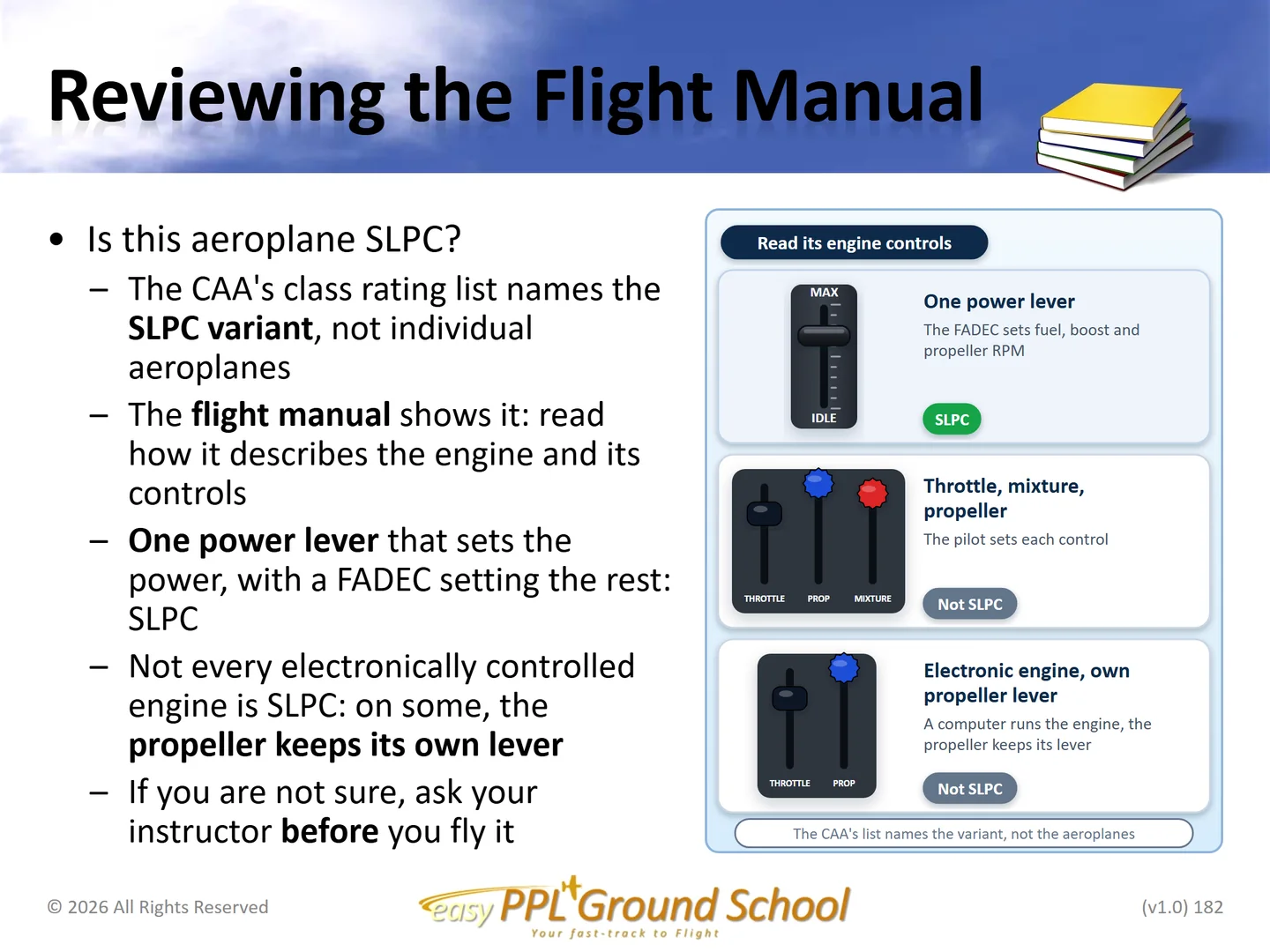
From the course · Is this aeroplane SLPC? 04Part 4
The handbook, and converting back
Getting to know a type from its flight manual, and what to remember when you go back to conventional aeroplanes.
2 lessons · 34 slides
- 12Reviewing the Flight ManualWhy the handbook comes first, its sections and supplements, telling whether an aeroplane is SLPC, and what its limitations and procedures say.13 slides Progress Test 12
- 13Converting from SLPC AeroplanesBack to conventional aeroplanes: the mixture, magnetos, air cooling, carburettor icing and heat, the fixed-pitch propeller, and the checks and emergencies.21 slides Progress Test 13
Pictures from the course
Day and night, every season
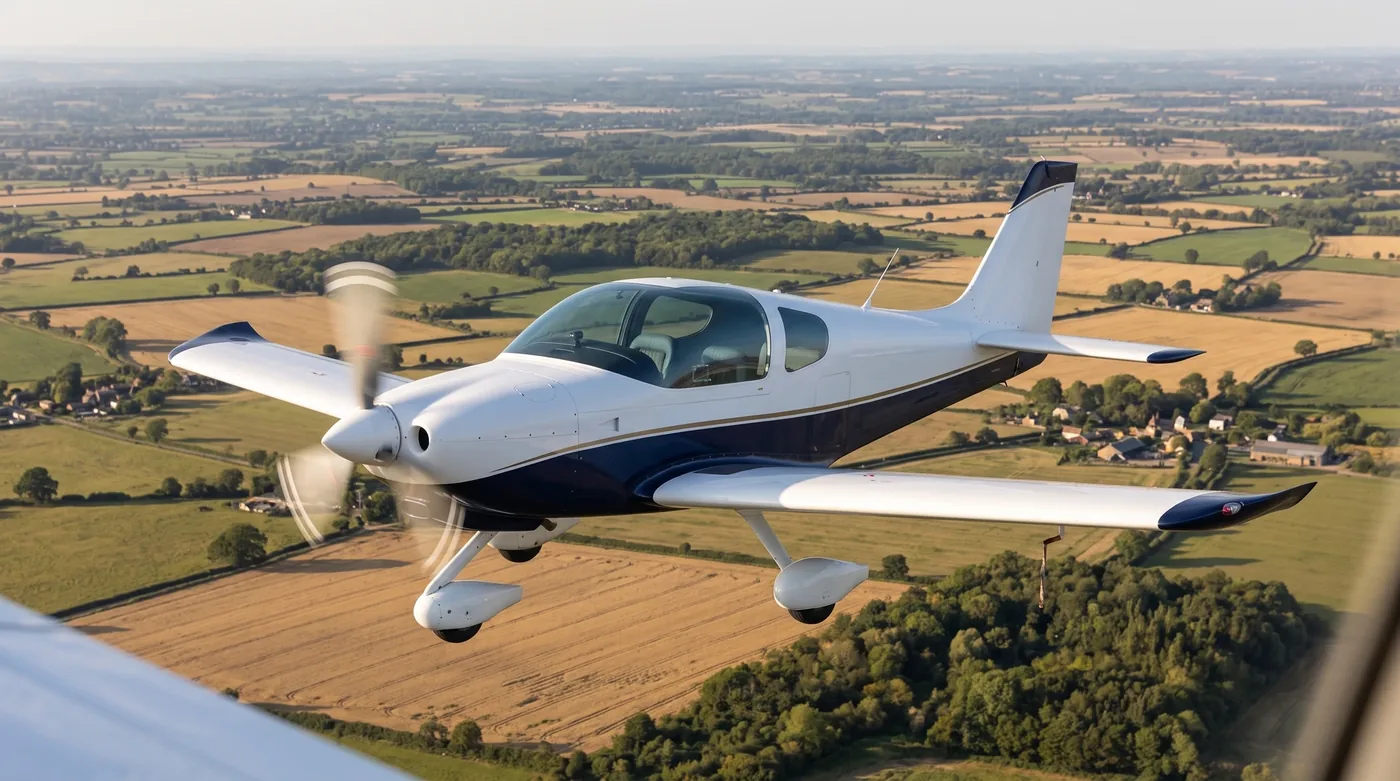
Alongside the drawings, the course shows our own SLPC aeroplane as you'll meet one: on the ground and in the air, from frosty dawns to wet nights.
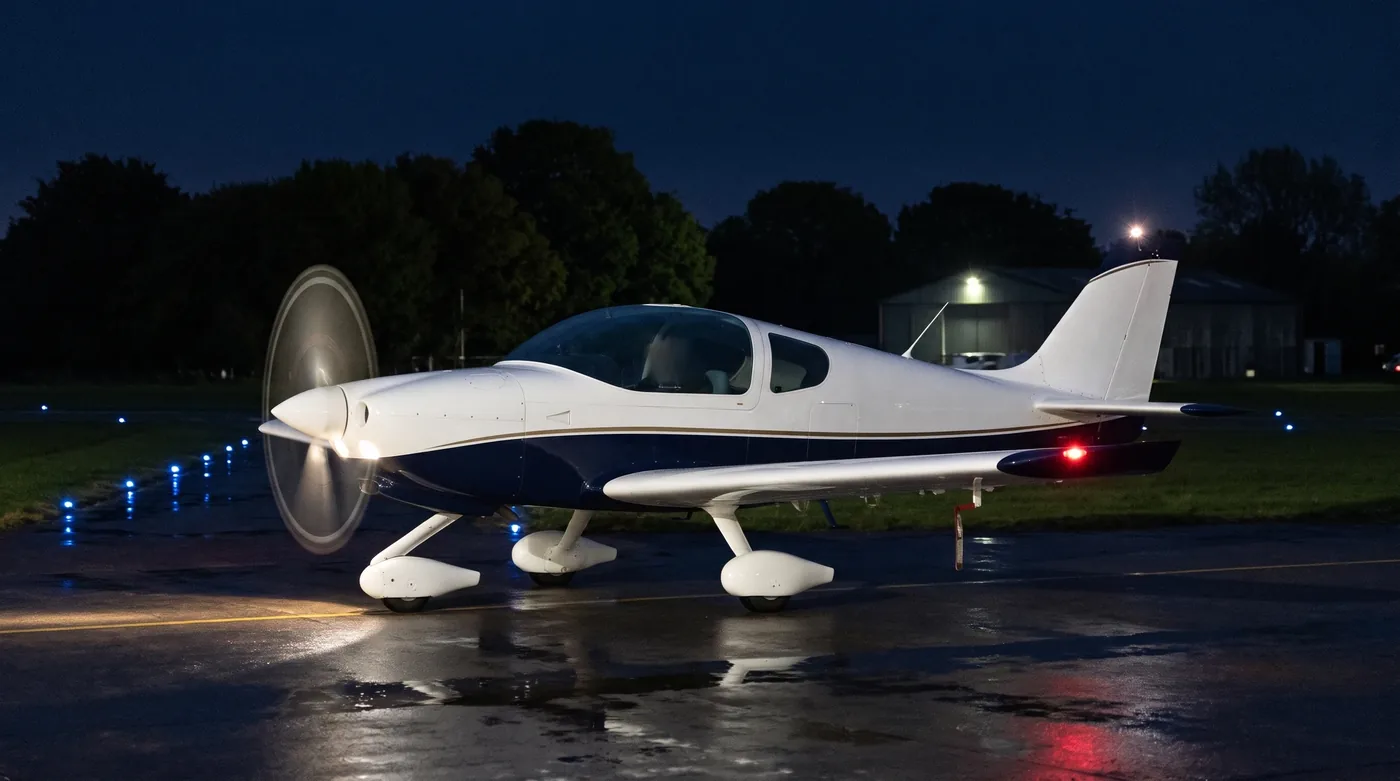
Engine Displays, Cautions and WarningsTaxiing at night
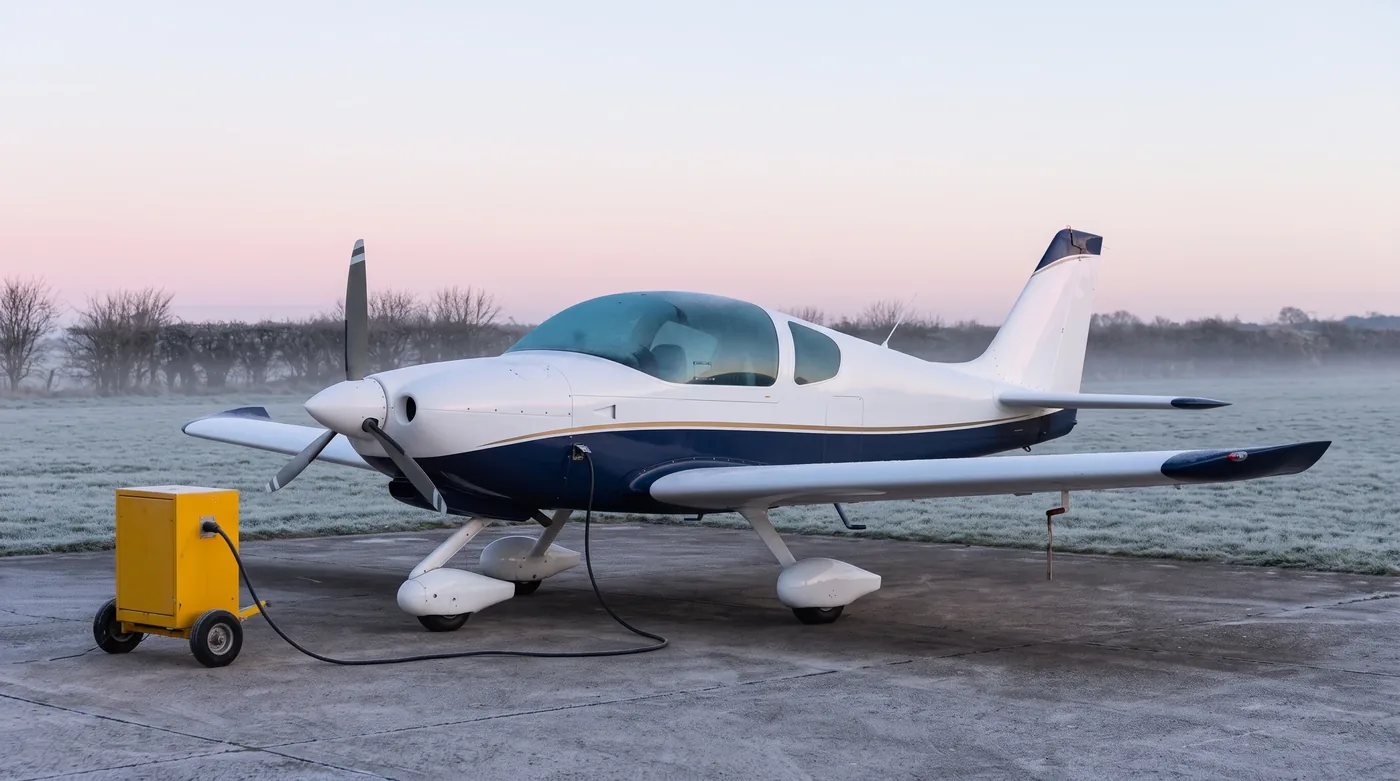
The Electrical SystemGround power at dawn
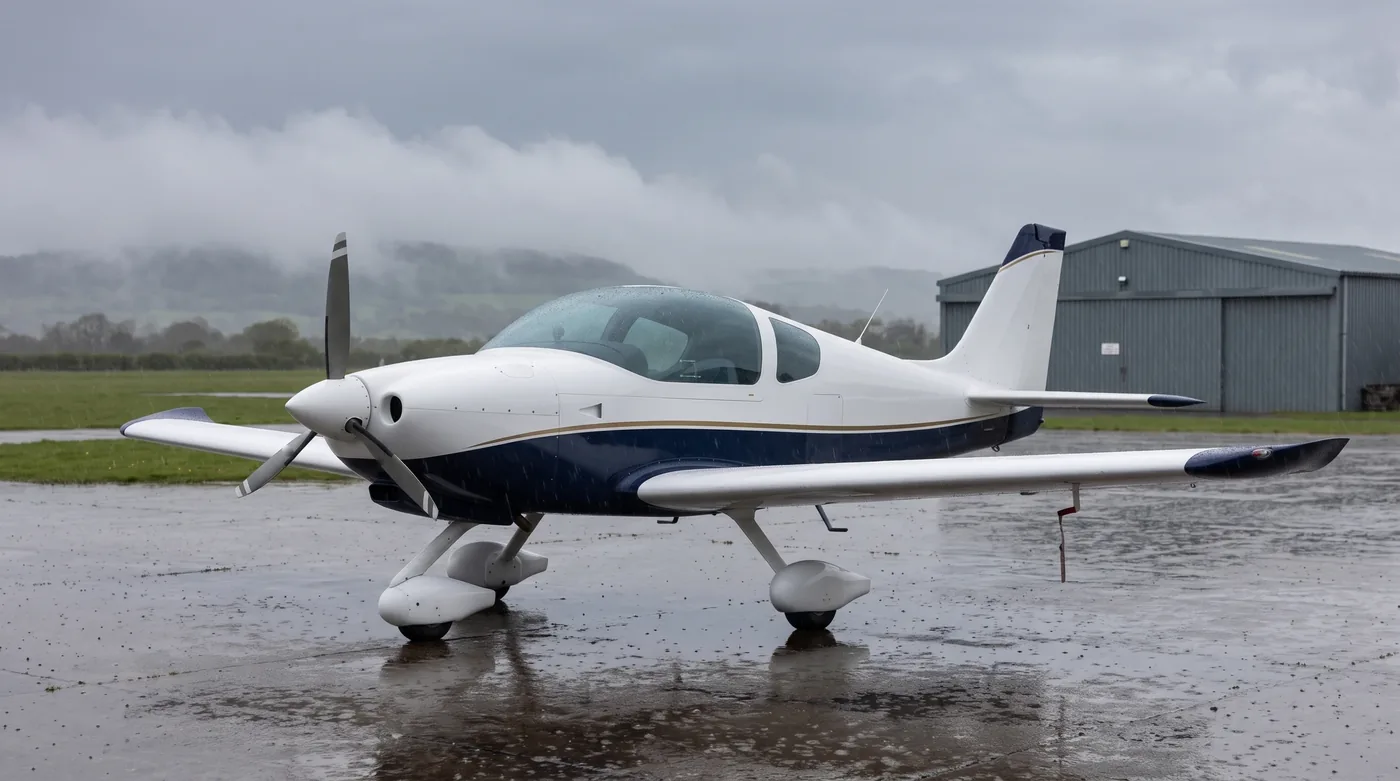
Abnormal and Emergency OperationsWeather moving in
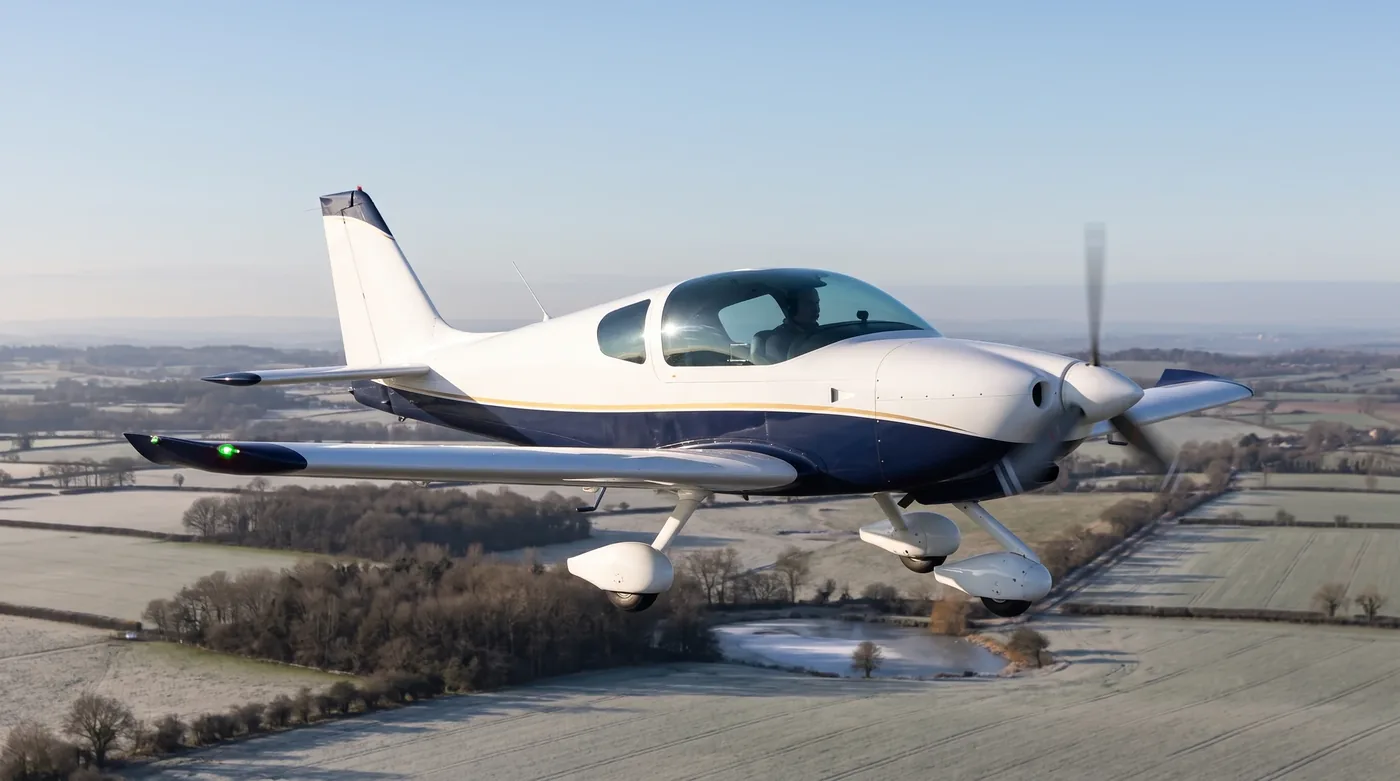
The PropellerClimbing in winter
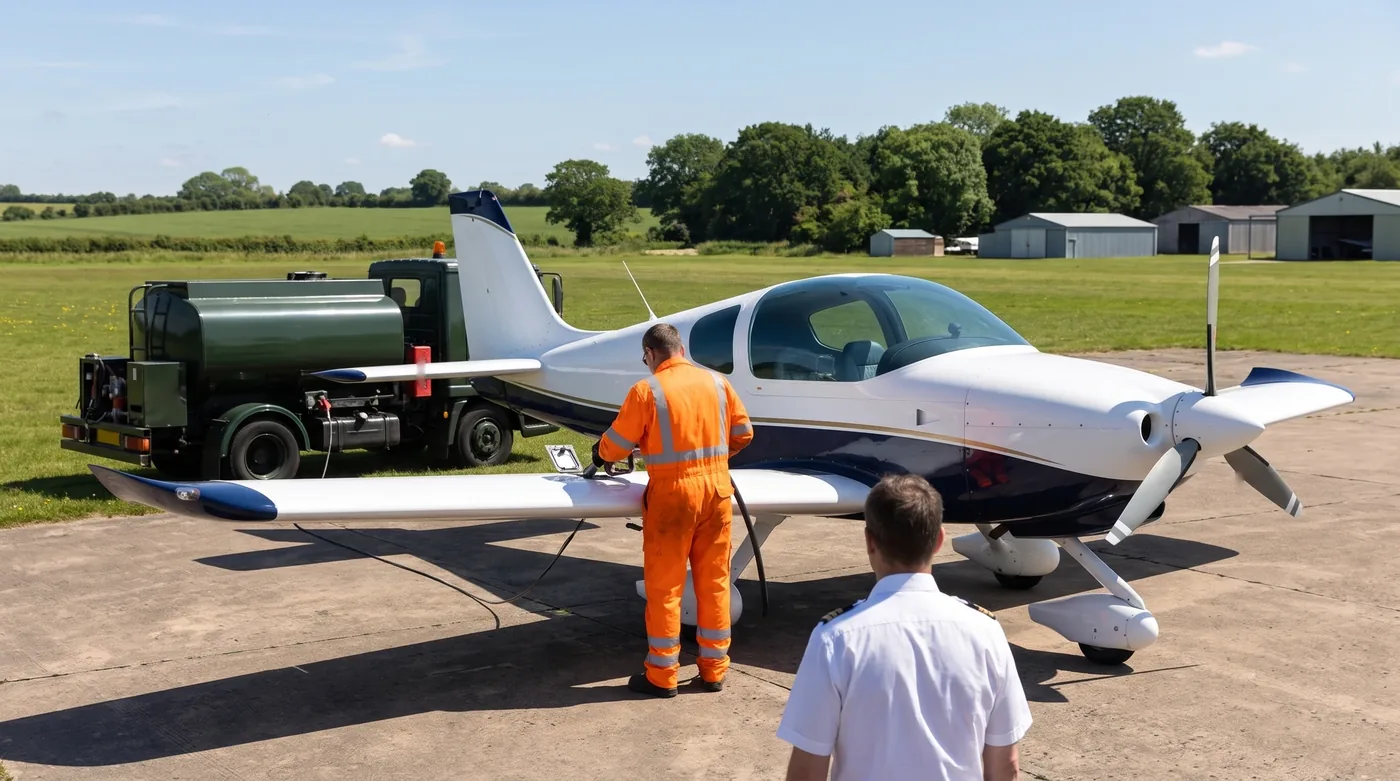
The Fuel SystemWatching the refuelling
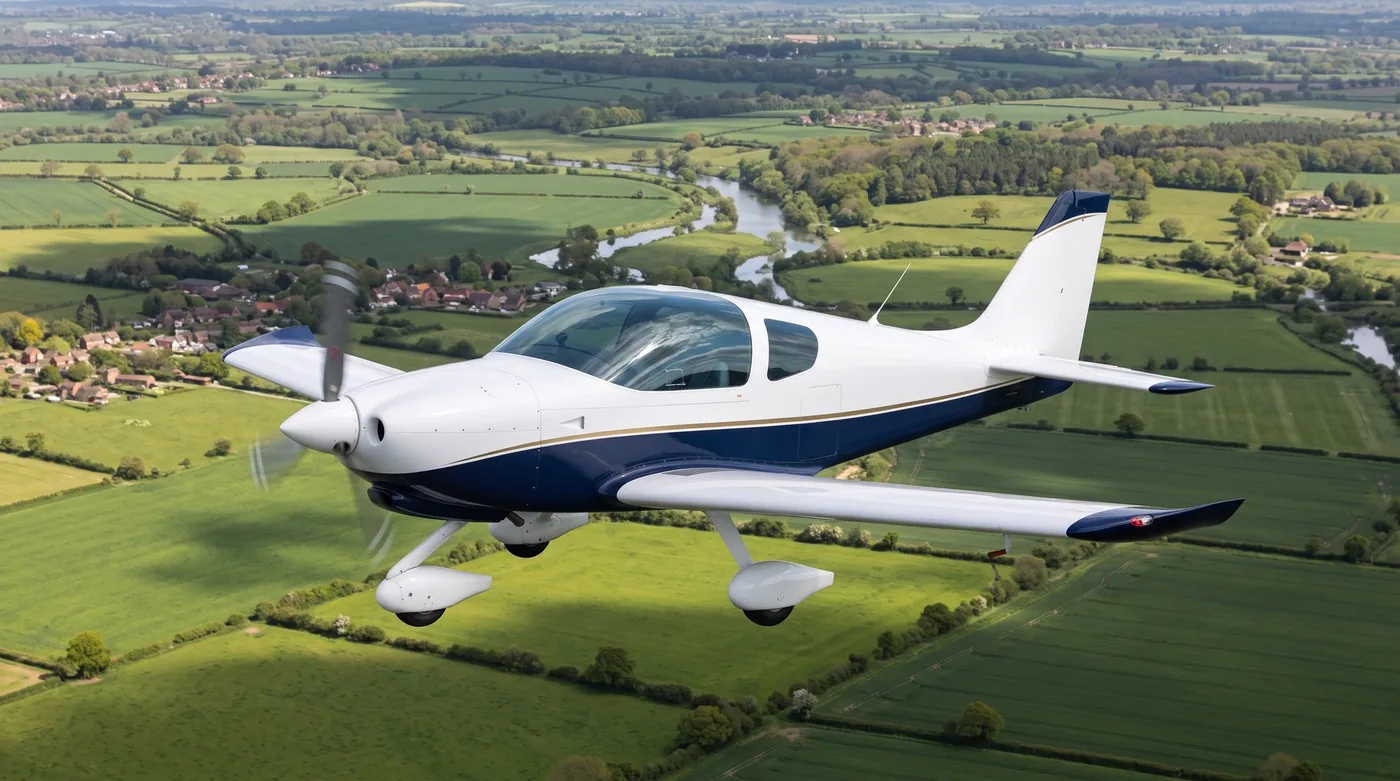
FADEC and the Power LeverLate summer
What's included
Everything you need, in one place
- 218 animated slidesEach one built up step by step while a narrator explains it, in 14 lessons.
- Classic slides tooPrefer still pictures? Switch to Classic for each slide with a short spoken summary.
- The CAA's syllabusEvery heading of the CAA's SLPC differences training syllabus, chapter by chapter.
- 13 progress testsOne after every chapter, and every answer explained with a picture.
- Course examQuestions on the whole course to finish.
- Certificate of completionYours when you pass the course exam.
- Kept up to dateUp-to-date material that stays up to date.
- Study anywhereOn your computer, tablet or phone.
Questions
SLPC differences training, answered
Anything else? Contact us: we're happy to help.
Your instructor signs your logbook
Do I need SLPC differences training?
Yes, before you fly an SLPC aeroplane. Under FCL.710, flying another variant within your class rating needs differences training, and the CAA's class rating list shows SEP with single lever power control (SLPC) as a variant that needs it. The aeroplane's flight manual tells you whether it is SLPC.
Does this course complete the training?
It gives you the knowledge. Differences training is knowledge plus flights with a suitably qualified instructor in an SLPC aeroplane; the instructor then signs your logbook. This course prepares you for those flights.
Is there a minimum number of hours, or a test?
No. The rules set no minimum number of hours and there is no test: you train until your instructor is satisfied. For single-engine piston aeroplanes it doesn't lapse, but each new SLPC type still needs a thorough briefing on that type.
Which aeroplanes are SLPC?
Most SLPC aeroplanes in the UK have turbocharged, liquid-cooled diesel engines burning Jet A-1: for example some Diamond DA40s, diesel-engined Cessna 172s and Piper Archers, and the Tecnam P2010 TDI. Not every electronically controlled engine is SLPC, so check the flight manual.
What is in the course?
14 lessons with 218 animated, narrated slides following the CAA's SLPC syllabus, 13 progress tests and a course exam. A chapter on converting from SLPC aeroplanes back to conventional ones is included. You can switch any slide to Classic to see it as a still picture with a short spoken summary.
Can I study on my phone?
Yes. The course works on any computer, tablet or phone, and in the Easy PPL app for Android you can download lessons and study offline.
Prices
Choose how you study
Full Course
£15.49for one month
Renew for £13.94 a month
- Every lesson in the course
- 13 progress tests
- The course exam
- 1 certificate
Test/Exam Access Only
£13.99for one month
Renew for £13.99 a month
- 13 progress tests
- The course exam
- Ideal for revision