
 Aeroplane Guides
Robin HR200Aeroplane Guide
A guide to the Robin HR200 for student pilots and newly qualified private pilots, written around the HR200/120B, the two-seat trainer flown at UK flying schools and clubs.
- animated slides
- 259
- animated slides
- lessons
- 17
- lessons
- and a course exam
- 15 tests
- and a course exam


Free preview
Watch a slide build up
Every slide in the course draws itself step by step while a narrator explains it. This one is recorded as it plays in the course. Turn your sound on to hear the narration.
Robin HR200 - Aeroplane Guide· Chapter 12 · Slide 51:01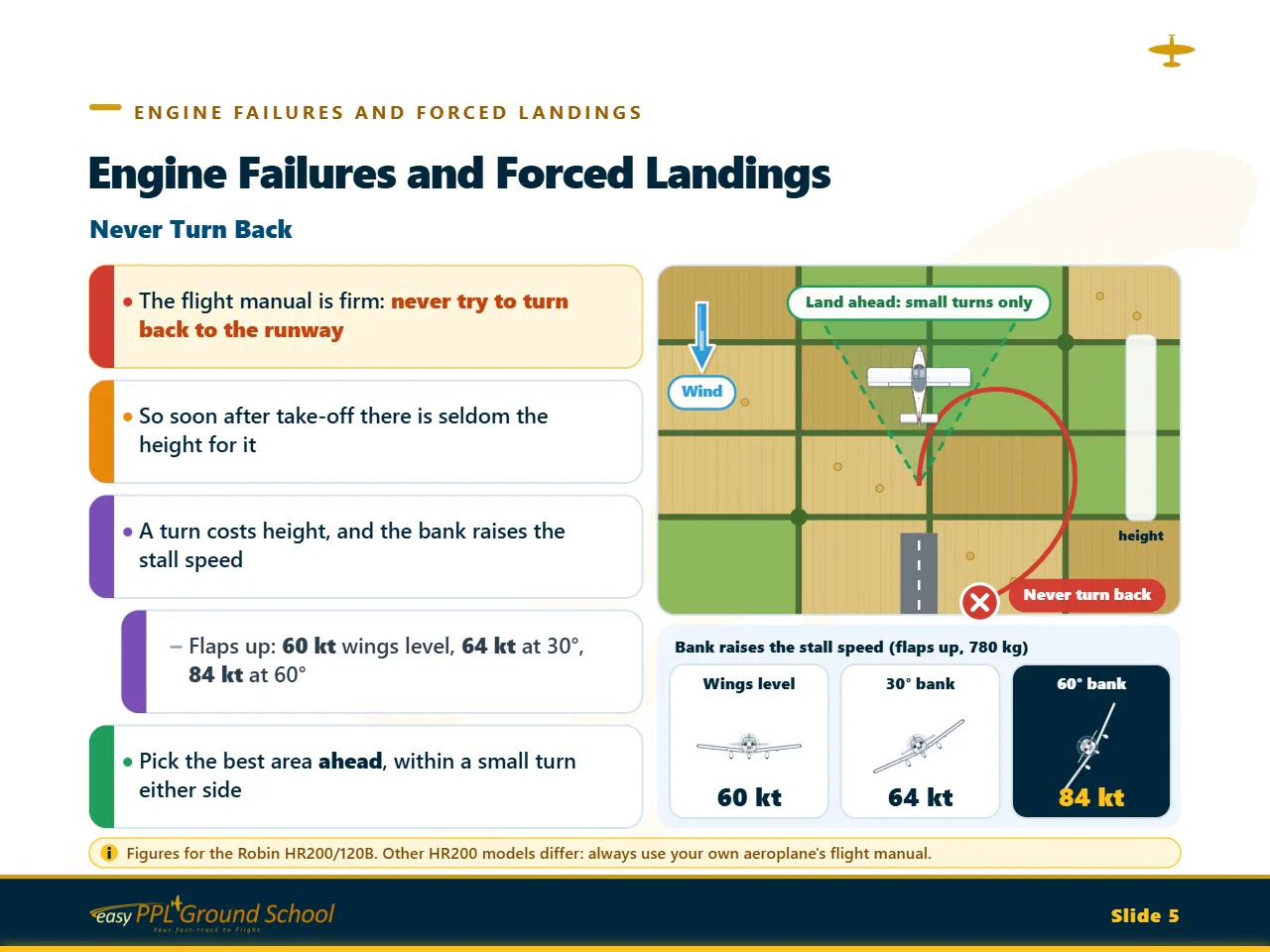
- Every slide is animatedEach step builds up as the narrator explains it, at a pace you can follow.
- Three narratorsFull teaching narration in three voices, taking turns through the course.
- Classic slides tooSwitch to Classic to see each slide as a still picture with a short spoken summary.
The course
What you'll learn
The course goes through the aeroplane's systems one at a time: the airframe, flight controls and landing gear, the engine and propeller, the fuel and electrical systems, and the instruments and cabin systems. It then covers the limitations, the checks and procedures from the walk-round to shutting down, engine failures, fires and other emergencies, performance, and weight and balance, and ends with night flying and the optional equipment you may find fitted.
Fifteen progress tests check your understanding as you go, and the course ends with a course exam.
To prove you have completed the course, after you have passed our on-line exam you will be issued with a Course Completion Certificate.
The aeroplane
What makes the HR200 different
If you learnt on a Cessna or a Piper, these are the things that are new. The course draws each one and shows it working.
Canopy closed and locked
01A sliding canopy
No doors: the front of the canopy slides forward and you climb in from either side. Two release levers can jettison it if it ever jams.
Chapters 2 and 12
Stick central
02An all-moving tailplane
There's no separate elevator. The whole tailplane pivots when you move the stick, and a tab along its trailing edge moves the same way, further, to give the stick its feel. The trim wheel sets the tab.
Chapter 3
Electric pump ON: starting, take-off, approach and landing
03One tank, two pumps
One 120-litre tank behind the seats, 118 litres of it usable. An electric pump and an engine-driven pump feed the carburettor, and a wire-locked knob on the console shuts the fuel off.
Chapter 5
Lamp test: every lamp lights
04Eight warning lamps
A strip under the glareshield: low oil pressure, low fuel pressure, low fuel level, charge, starter engaged and flaps down, with two spare and a knob to test them.
Chapter 6
Inside the cockpit
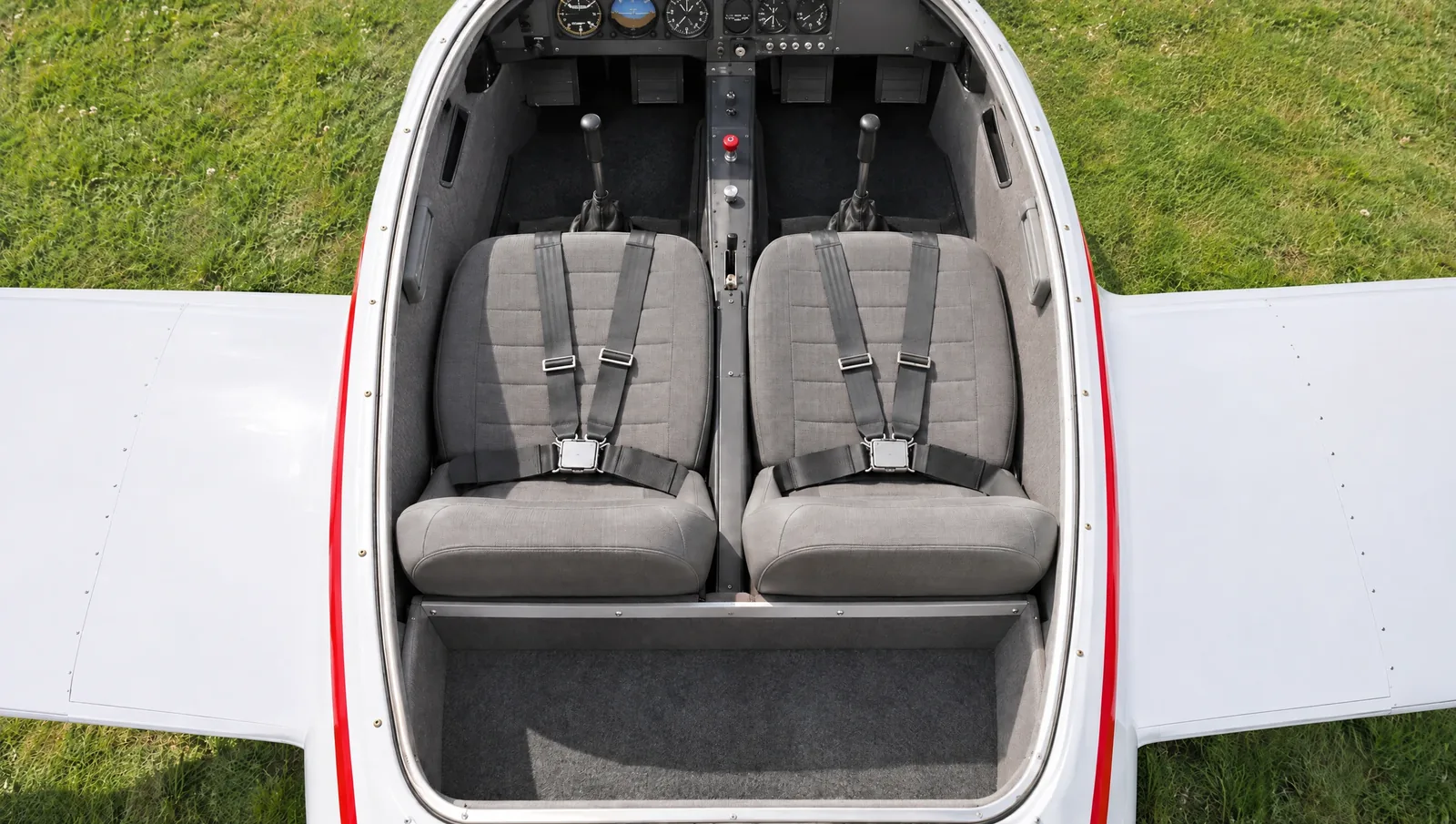
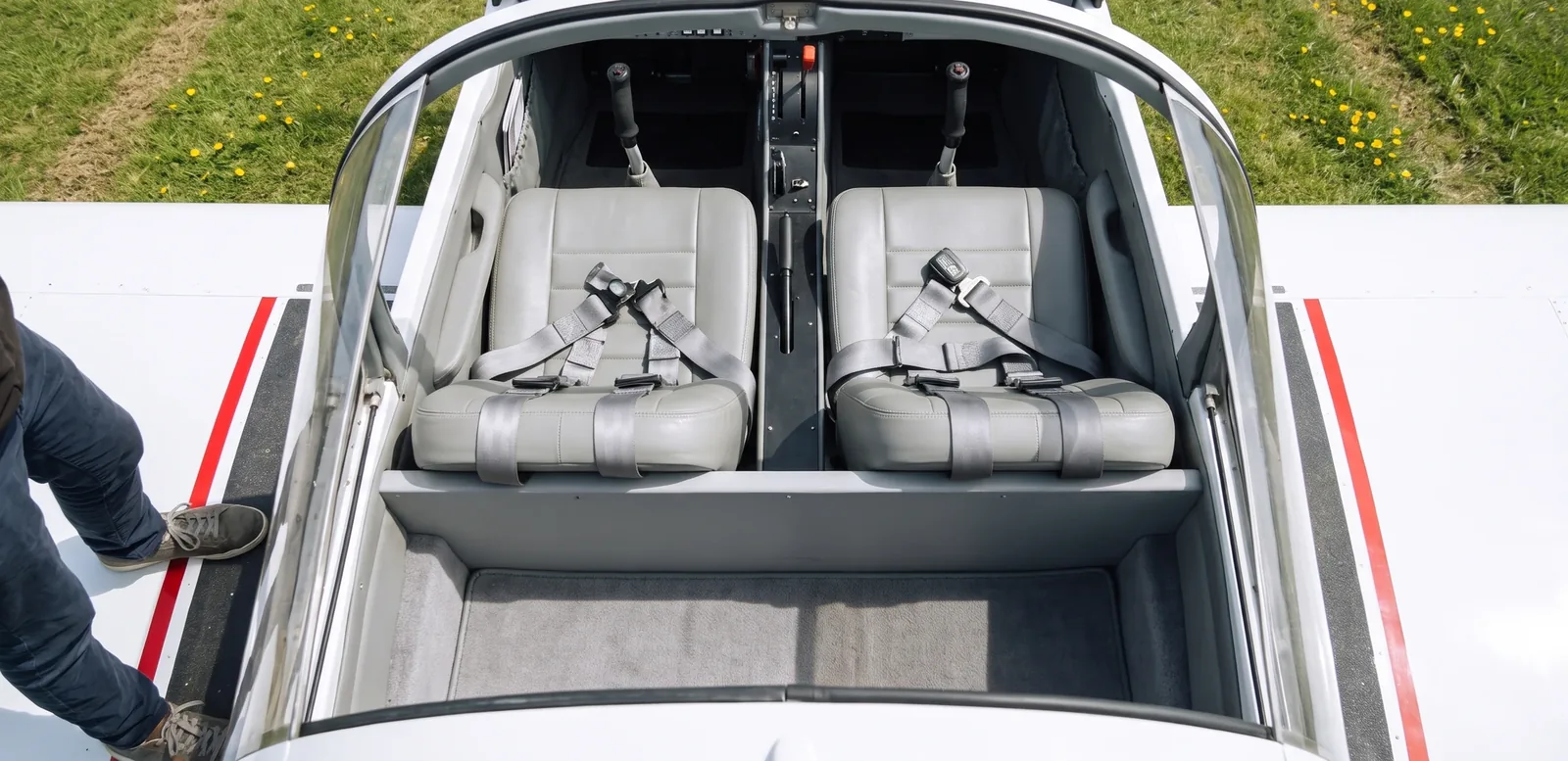
Two seats, side by side
A stick for each seat, the engine and fuel controls on a console between them, and an empty baggage area behind. The course draws the HR200/120B's panel part by part and shows each one working.
Course contents
Four parts, 17 lessons
The course goes through the aeroplane one system at a time, then how you fly it, what to do when things go wrong, and the numbers. Every chapter ends with a progress test.
- 01Part 1The aeroplane and its systems
What each part does and how to work it, from the airframe and controls to the engine, fuel, electrics and instruments.
 2
The Aeroplane
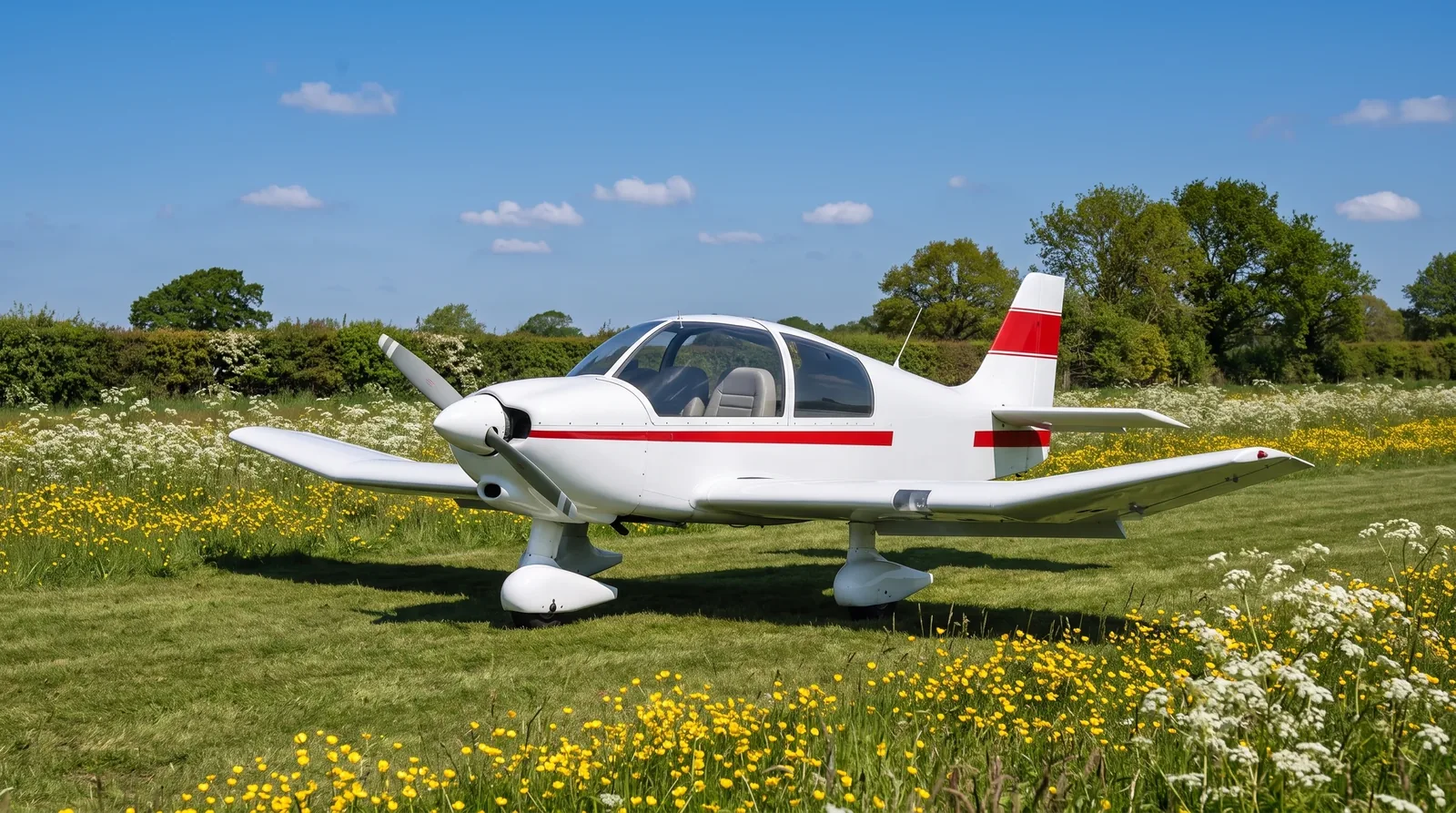
The HR200 at a glance: its parts and dimensions, the wing and structure, the sliding canopy and its jettison, the two seats and harnesses, and the baggage area.
17 slides Progress Test 1
 3
Flight Controls and Landing Gear
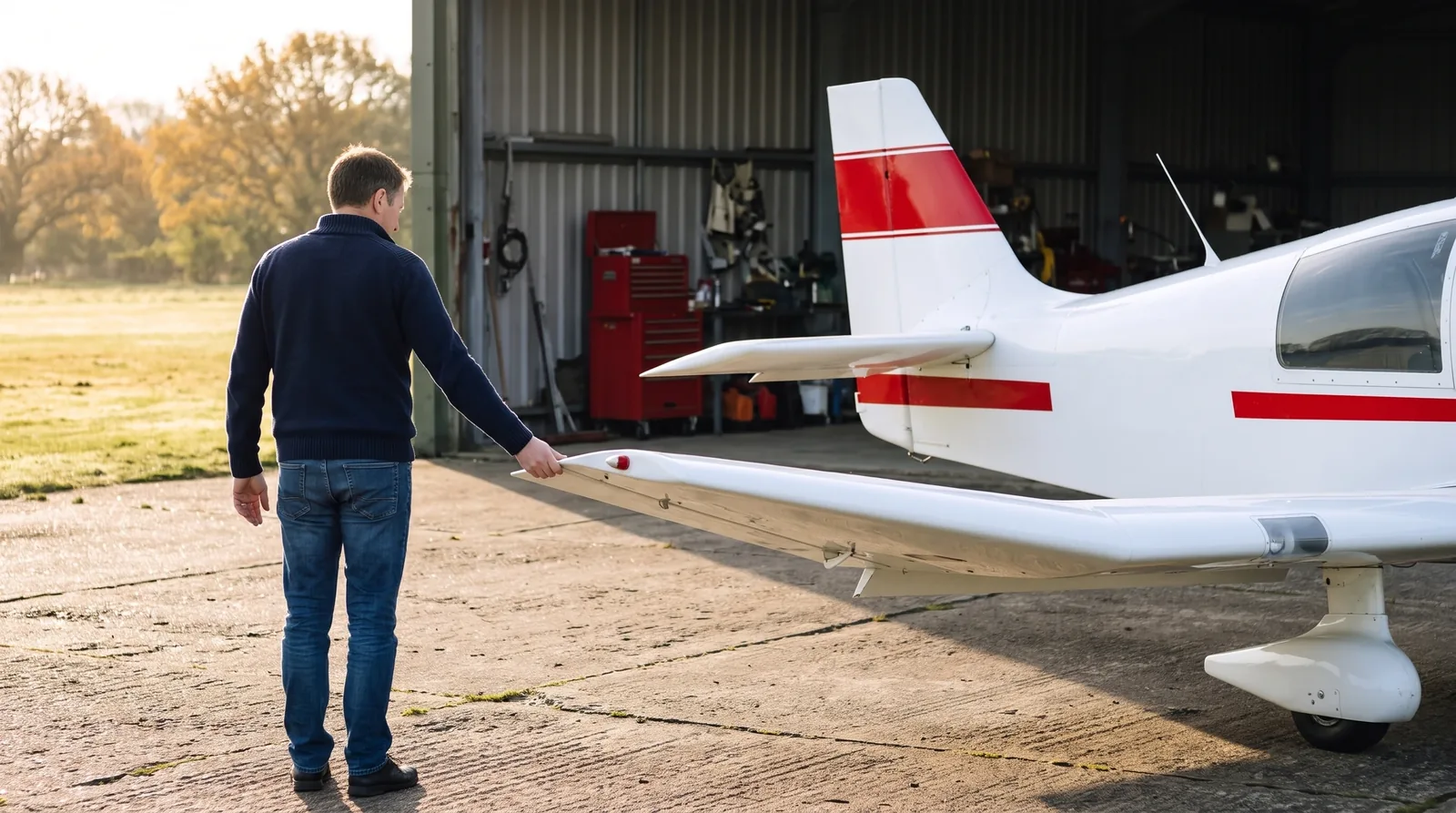
The stick, the ailerons, the all-moving tailplane and its tab, the trim wheel and rudder, the electric flaps, then the gear, tyres, steering and brakes.
16 slides Progress Test 2
 4
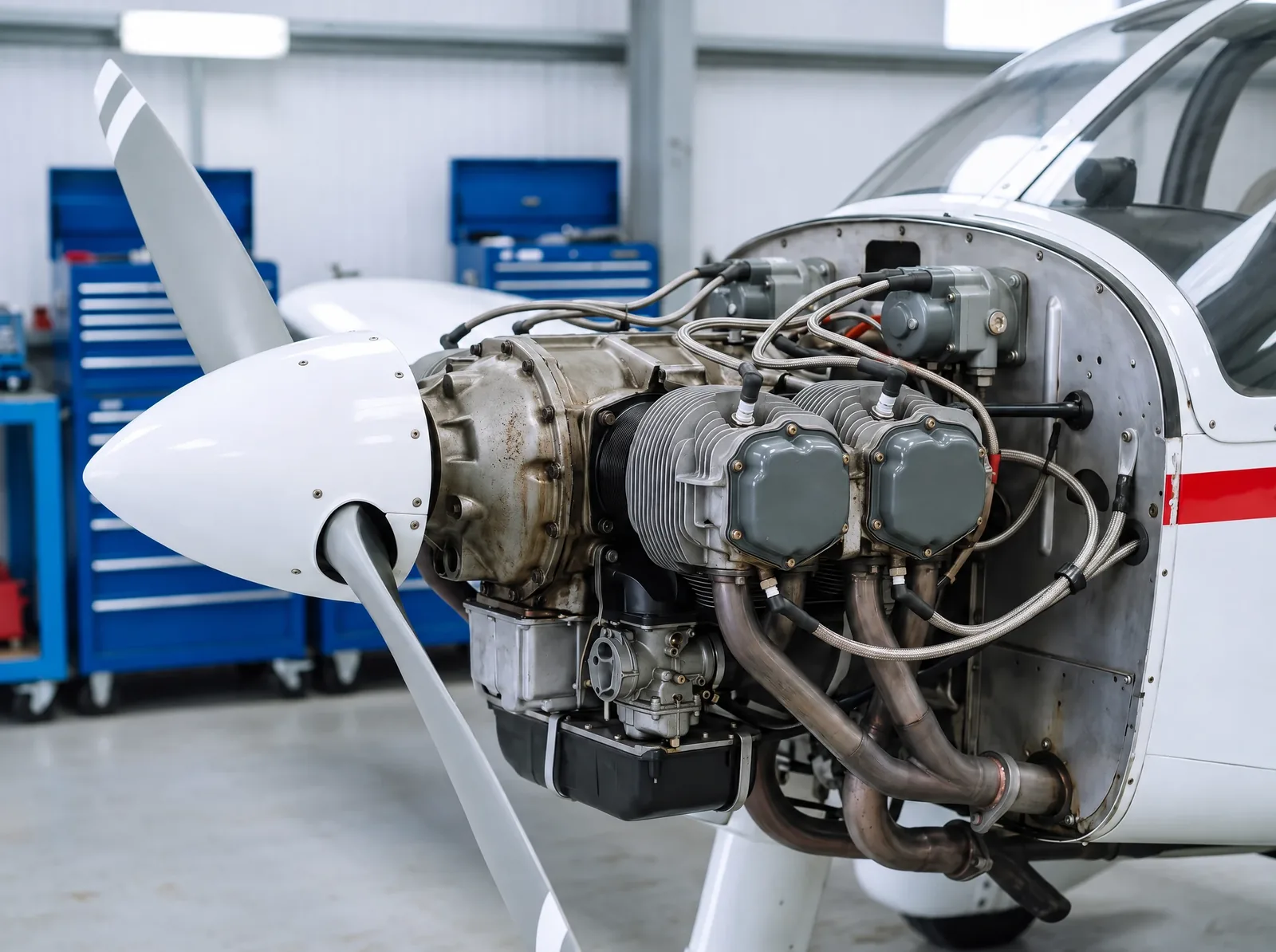
Engine and Propeller
The O-235 and its controls, priming, the mixture, carb heat and carburettor icing, the magnetos and the starter, the oil system, the engine gauges and the propeller.
17 slides Progress Test 3
 5
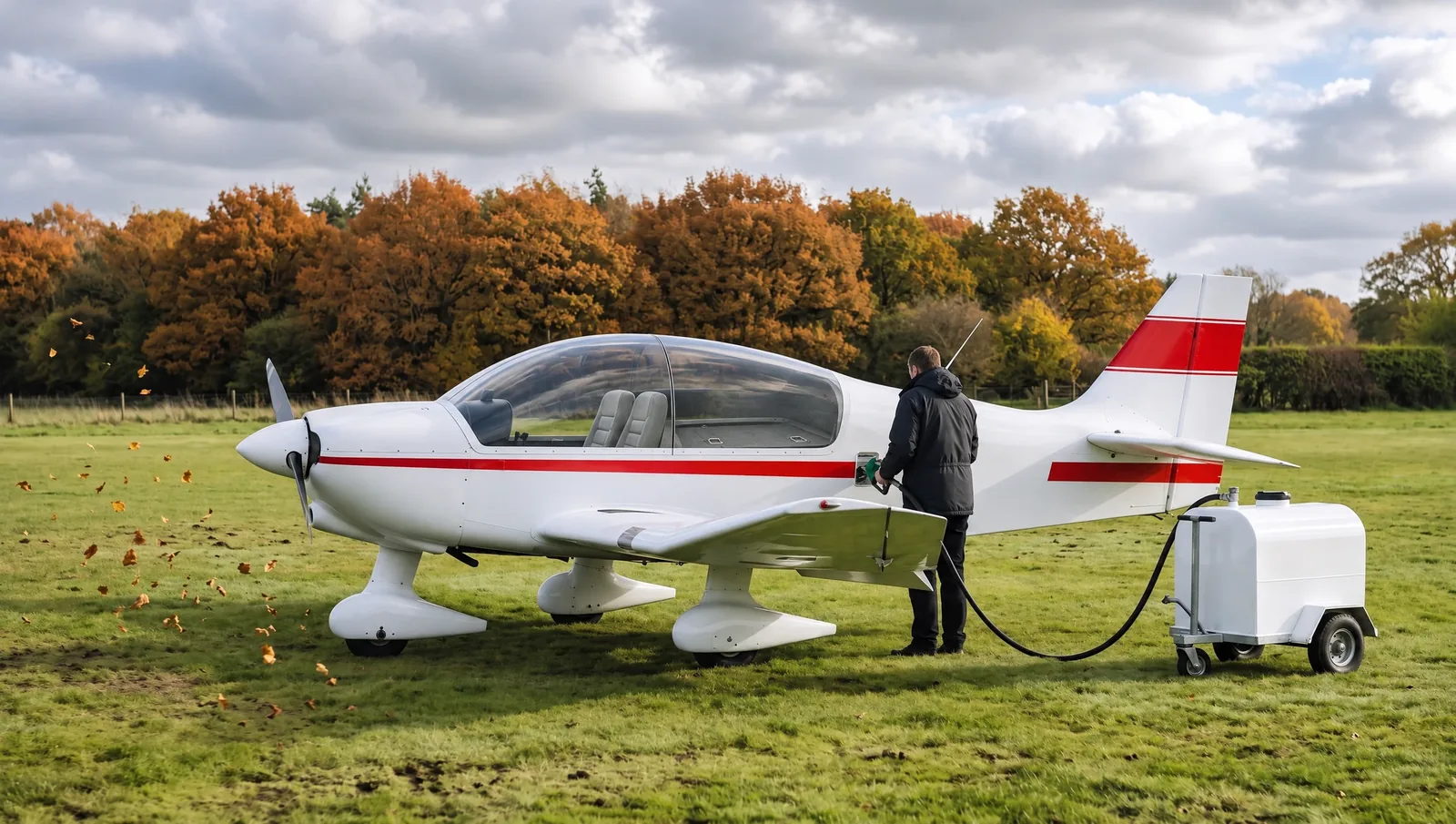
Fuel System
The one tank, the system end to end, the two pumps, the wire-locked shut-off, the gauges and lamps, fuel samples, refuelling and planning at 25 litres an hour.
16 slides Progress Test 4
 6
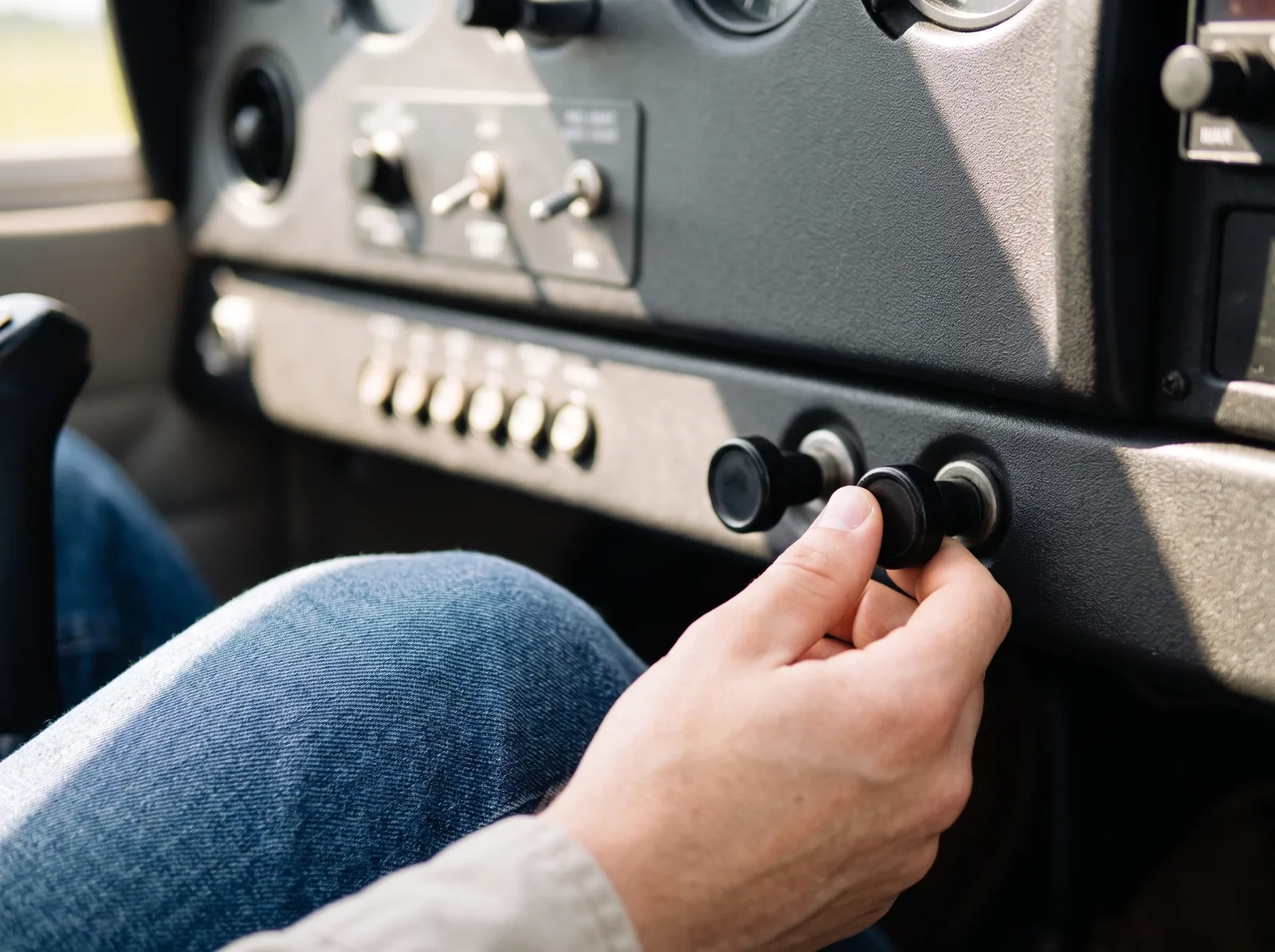
Electrical System
The battery and alternator, the voltmeter, breakers and fuses, the warning lamps, the lights, the radio bus, an alternator failure and the low-voltage warning.
17 slides Progress Test 5
 7
Instruments and Cabin Systems
A tour of the panel, the pitot-static system and static vents, the flight instruments, gyros and vacuum, the stall warning, cabin heat, defrost and fresh air.
16 slides Progress Test 6
- 02Part 2Limits, and a flight in order
The limitations and placards, then a flight from the walk-round and the start to the take-off, the cruise and the landing.
 8
Limitations
The Utility category, airspeeds and ASI markings, load factors, weight and CG limits, manoeuvres and no spins, the placards and the UK CAA supplement.
17 slides Progress Test 7
 9
Pre-Flight, Starting and Taxiing
The cockpit checks, the walk-round station by station, normal, hot, cold and flooded starts, the after-start checks and taxiing.
15 slides Progress Test 8
 10
Run-Up, Take-Off and Climb
The run-up with the magneto, carb heat and mixture checks, the before take-off checks, normal, short and crosswind take-offs, and the climb.
16 slides Progress Test 9
 11
Cruise, Descent and Landing
Cruise power and leaning, the descent, the downwind and final checks, normal, short and crosswind landings, the go-around, and shutting down.
17 slides Progress Test 10
- 03Part 3When things go wrong
Engine failures and forced landings, fires and the other emergencies, each drill taken step by step.
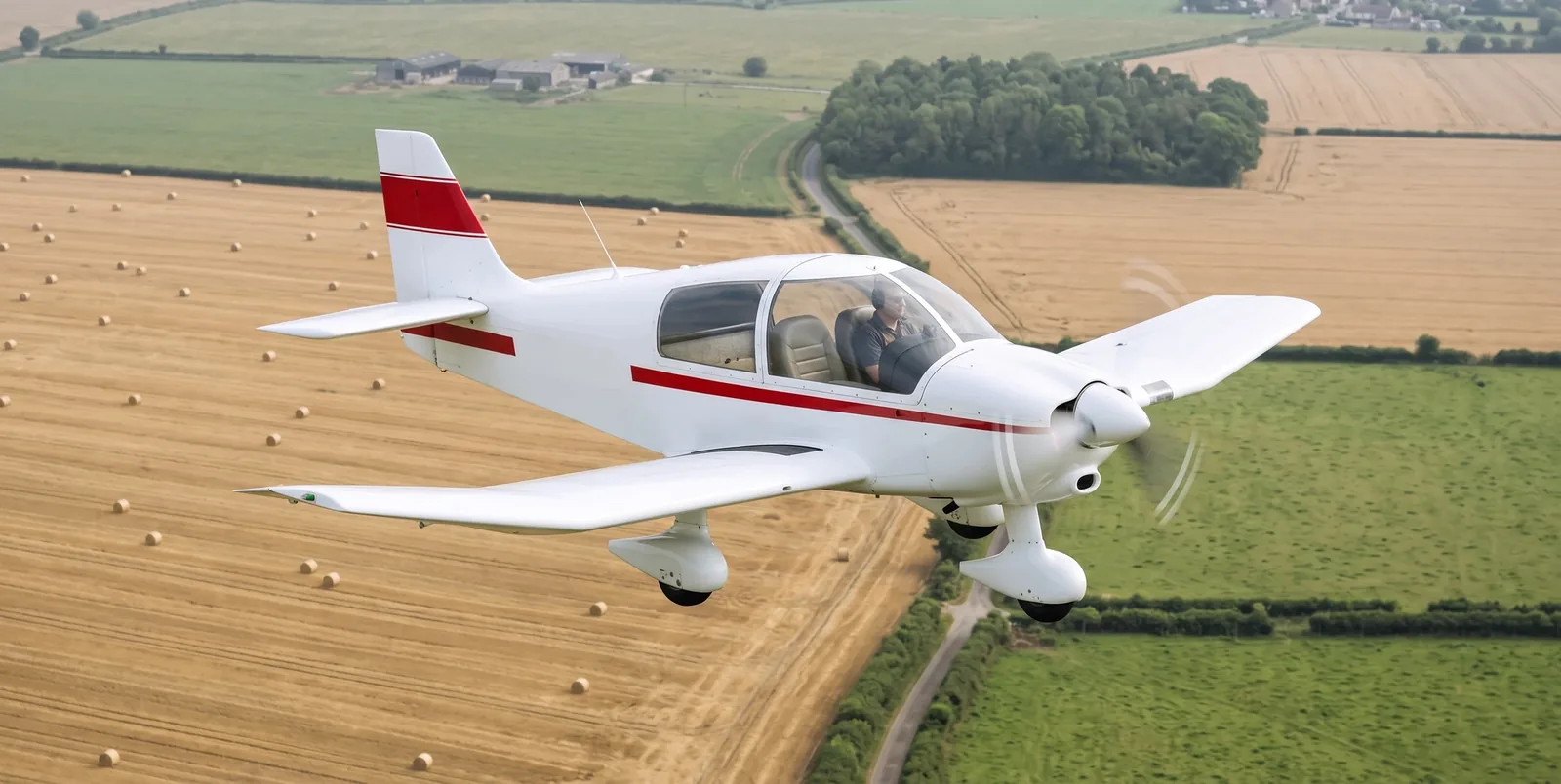 12
Engine Failures and Forced Landings
Engine failure on the take-off run, after take-off and in flight, restarting, the glide, forced and precautionary landings, a jammed canopy, rough running and low oil pressure.
16 slides Progress Test 11
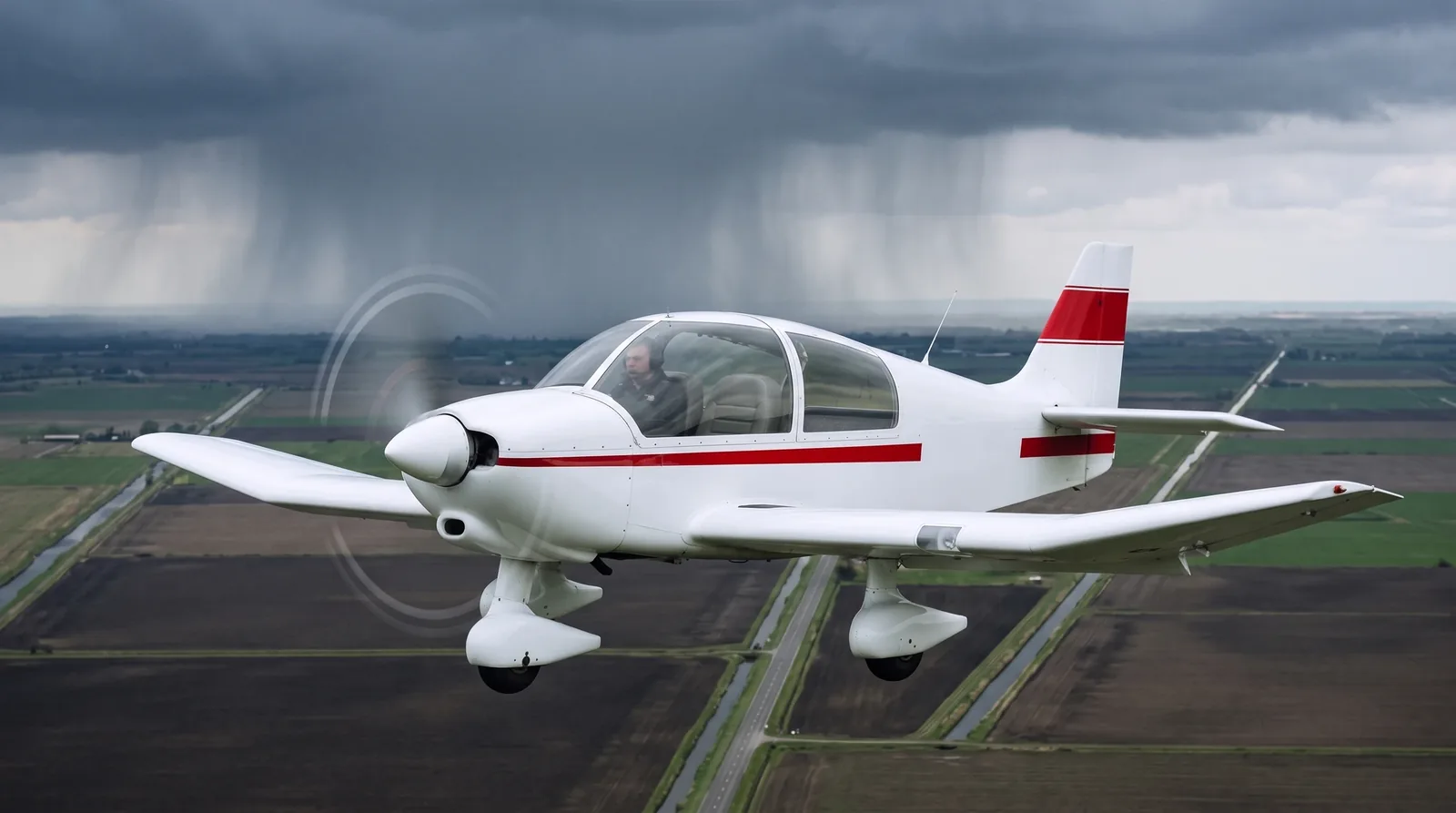 13
Fires and Other Emergencies
Fire on start and in flight, cabin and electrical fires, icing, the carb heat rules, an alternator failure, the inadvertent spin and losing elevator control.
16 slides Progress Test 12
- 04Part 4The numbers, and flying at night
Reading the performance charts, working out weight and balance, then night flying and the optional equipment.
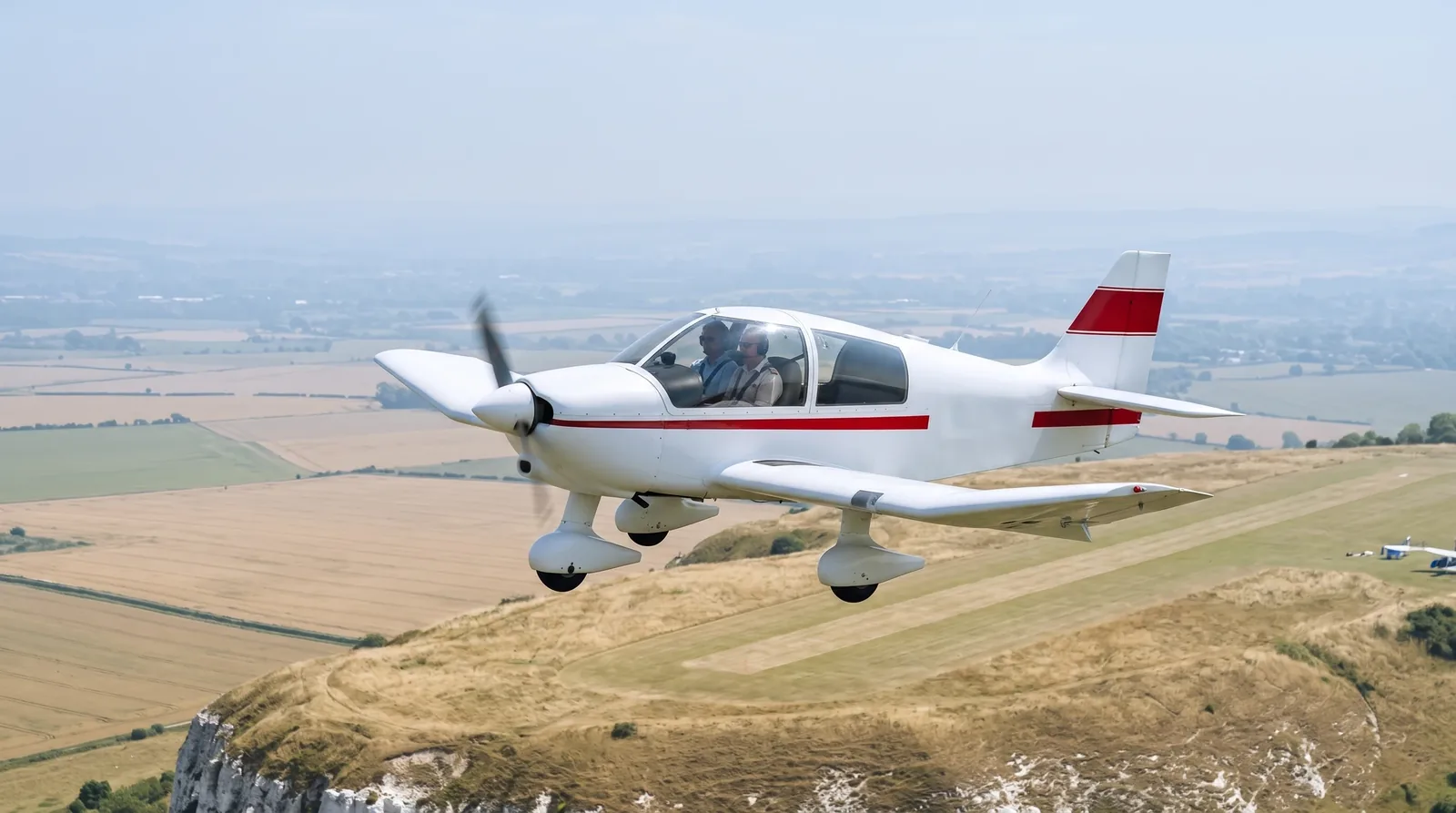 14
Performance
Where the figures come from and the UK corrections, stall speeds, the take-off and landing charts, climb, glide, the cruise table and worked examples.
17 slides Progress Test 13
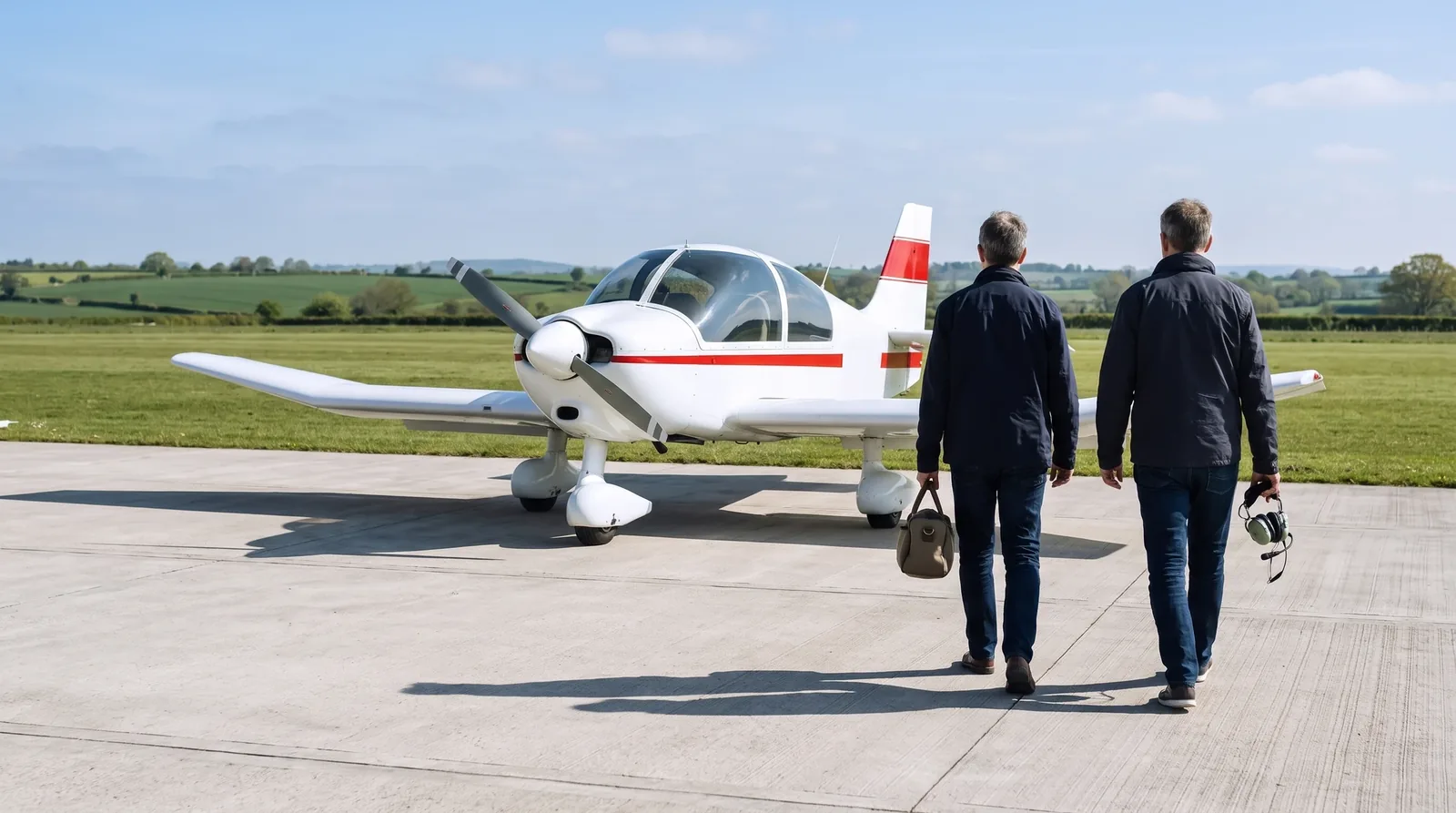 15
Weight and Balance
The terms, the datum and arms, the envelope and loading chart, the weight of the fuel, and worked examples.
15 slides Progress Test 14
 16
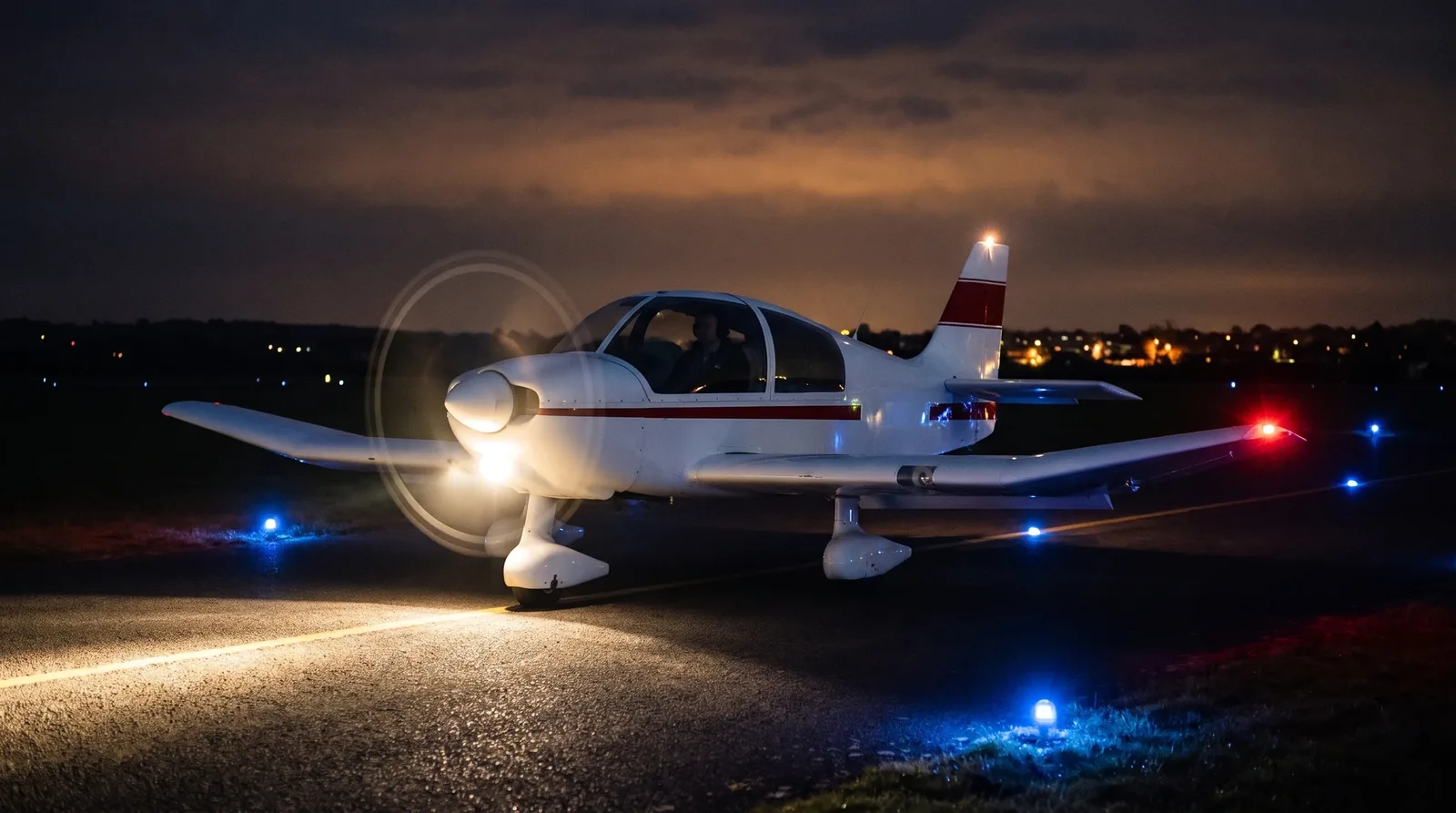
Night Flying and Optional Equipment
Night VFR: the equipment, lighting, checks and emergencies; the low-voltage warning in full; then the GPS, autopilot, other propellers and the shut-off guard.
16 slides Progress Test 15
Pictures from the course
Every season, day and night
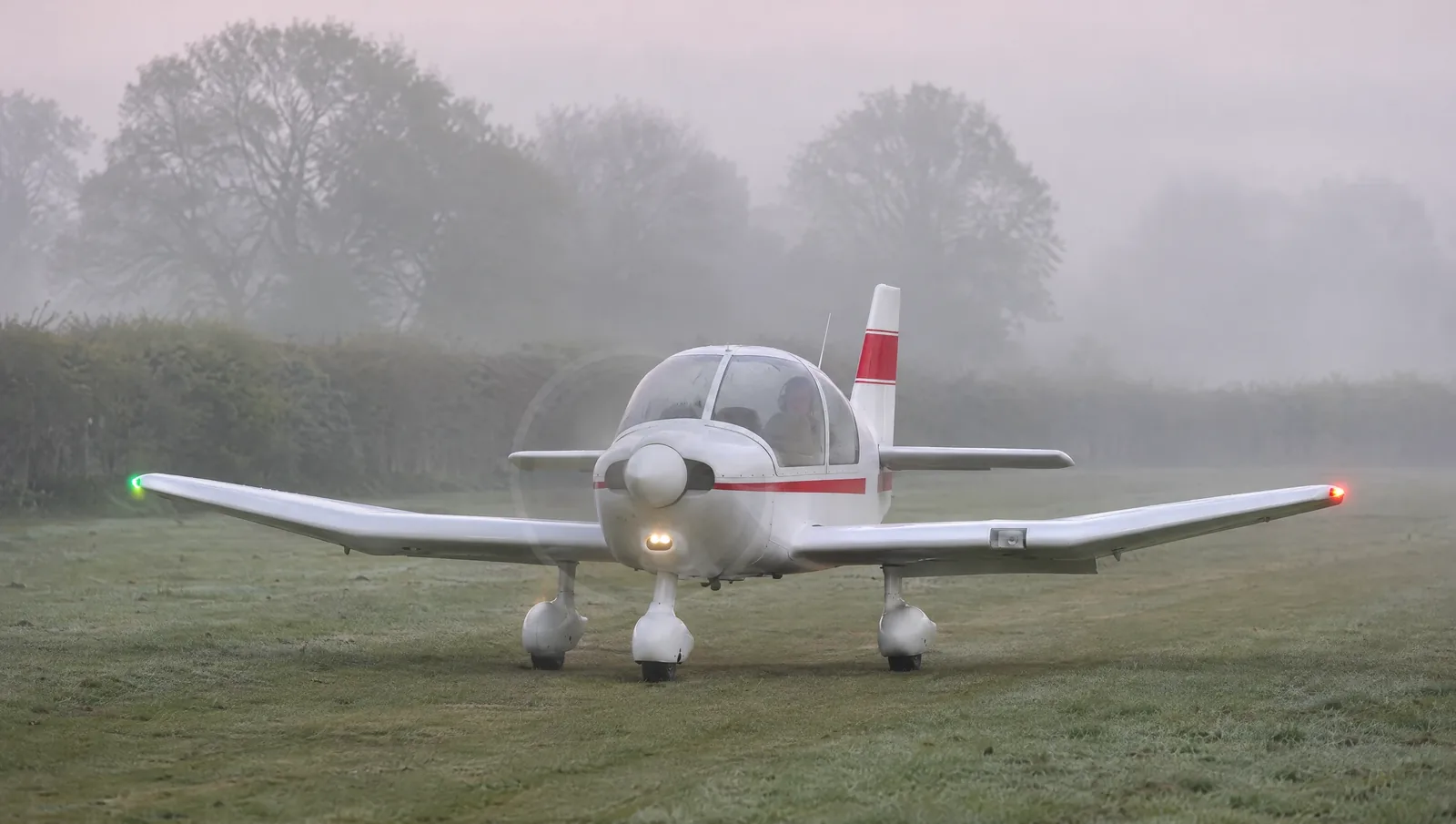
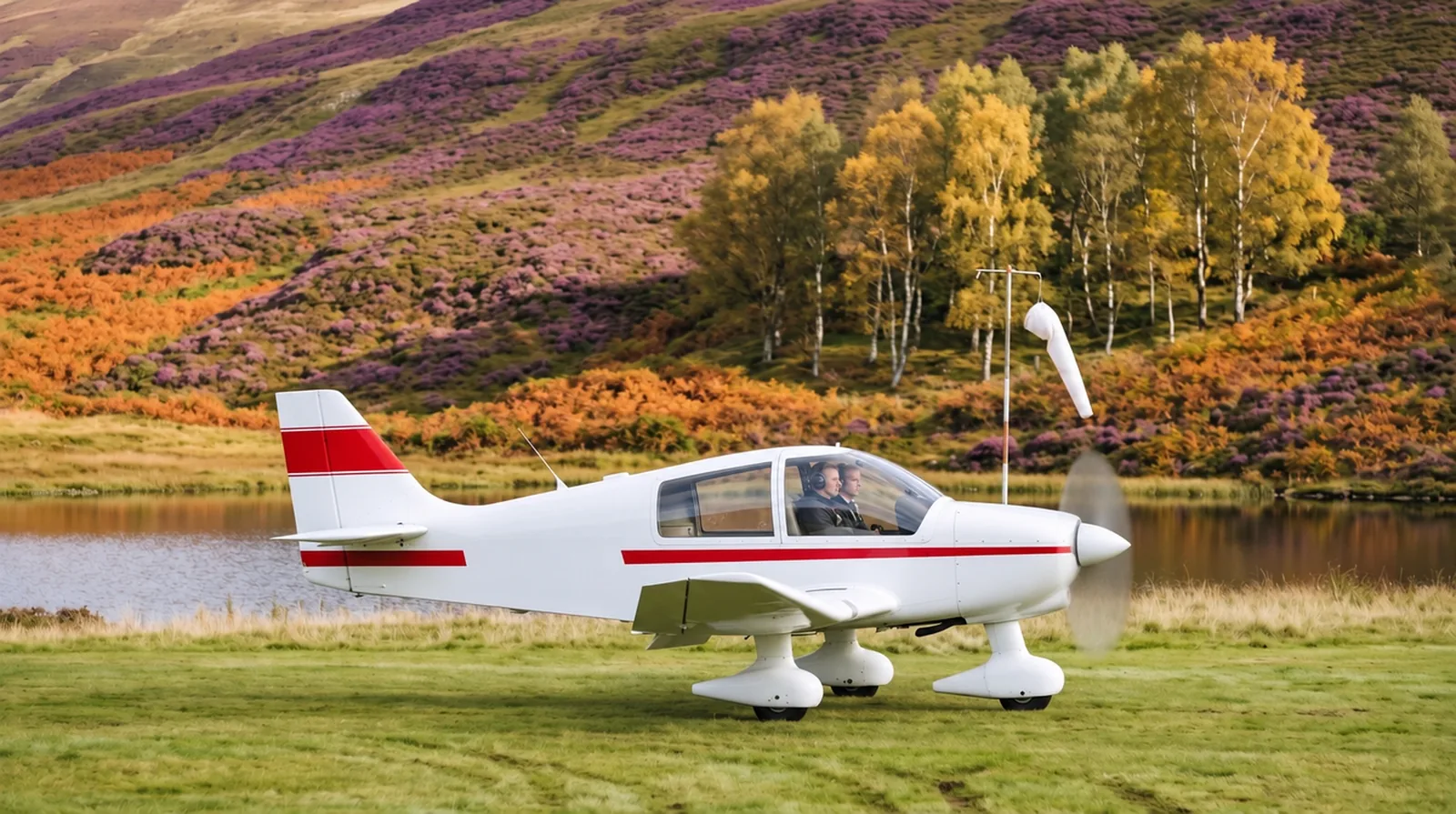
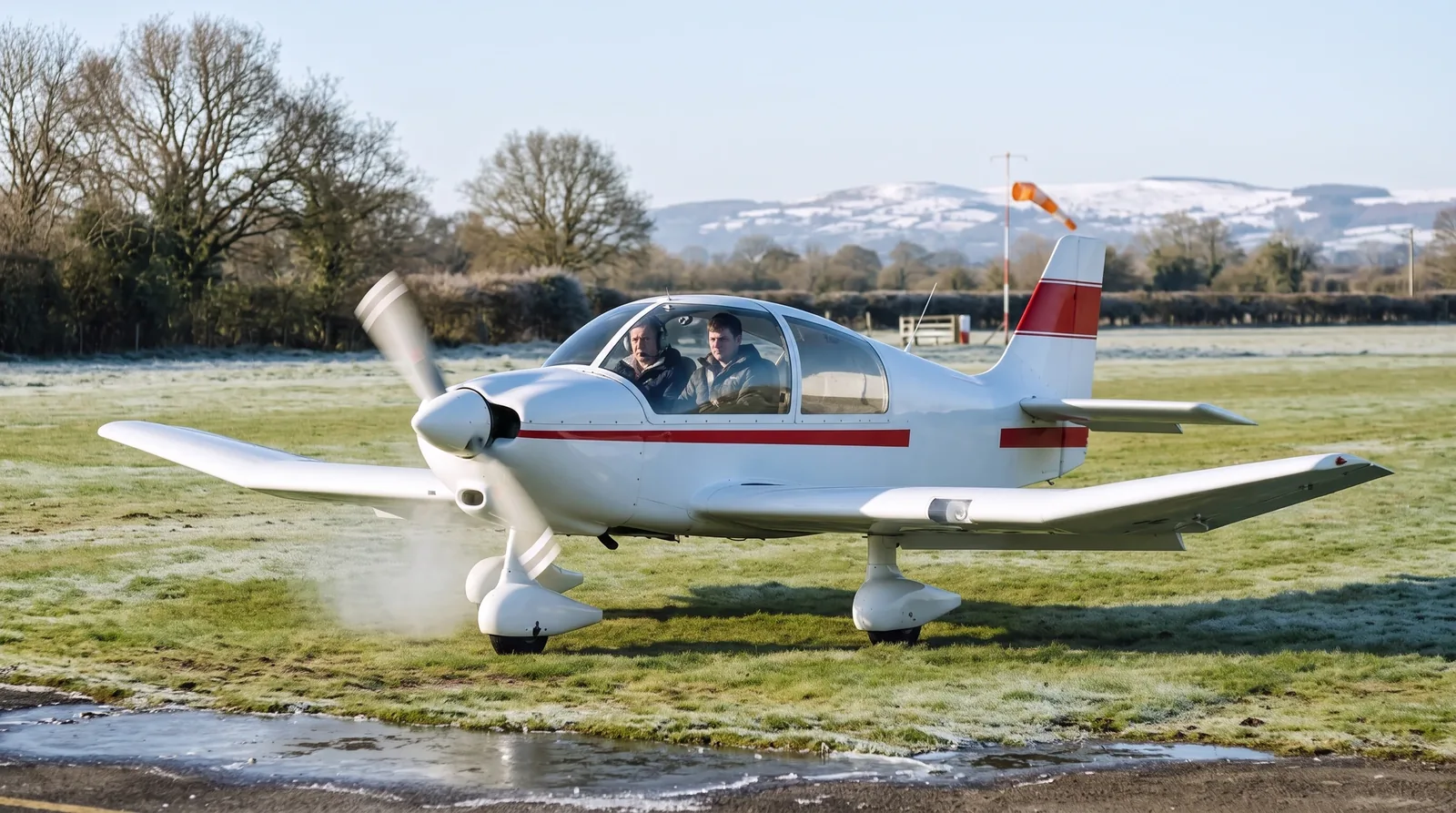
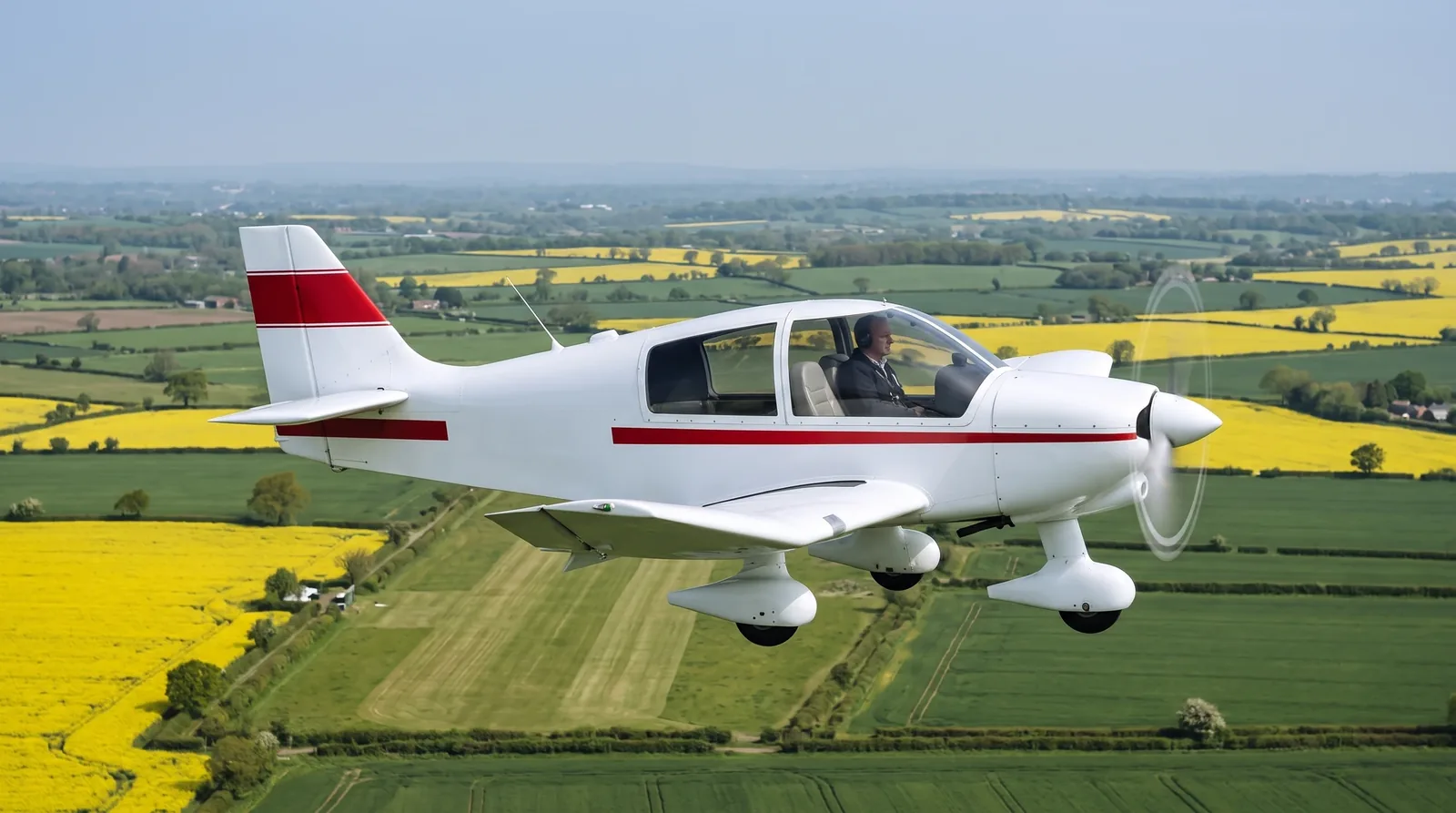
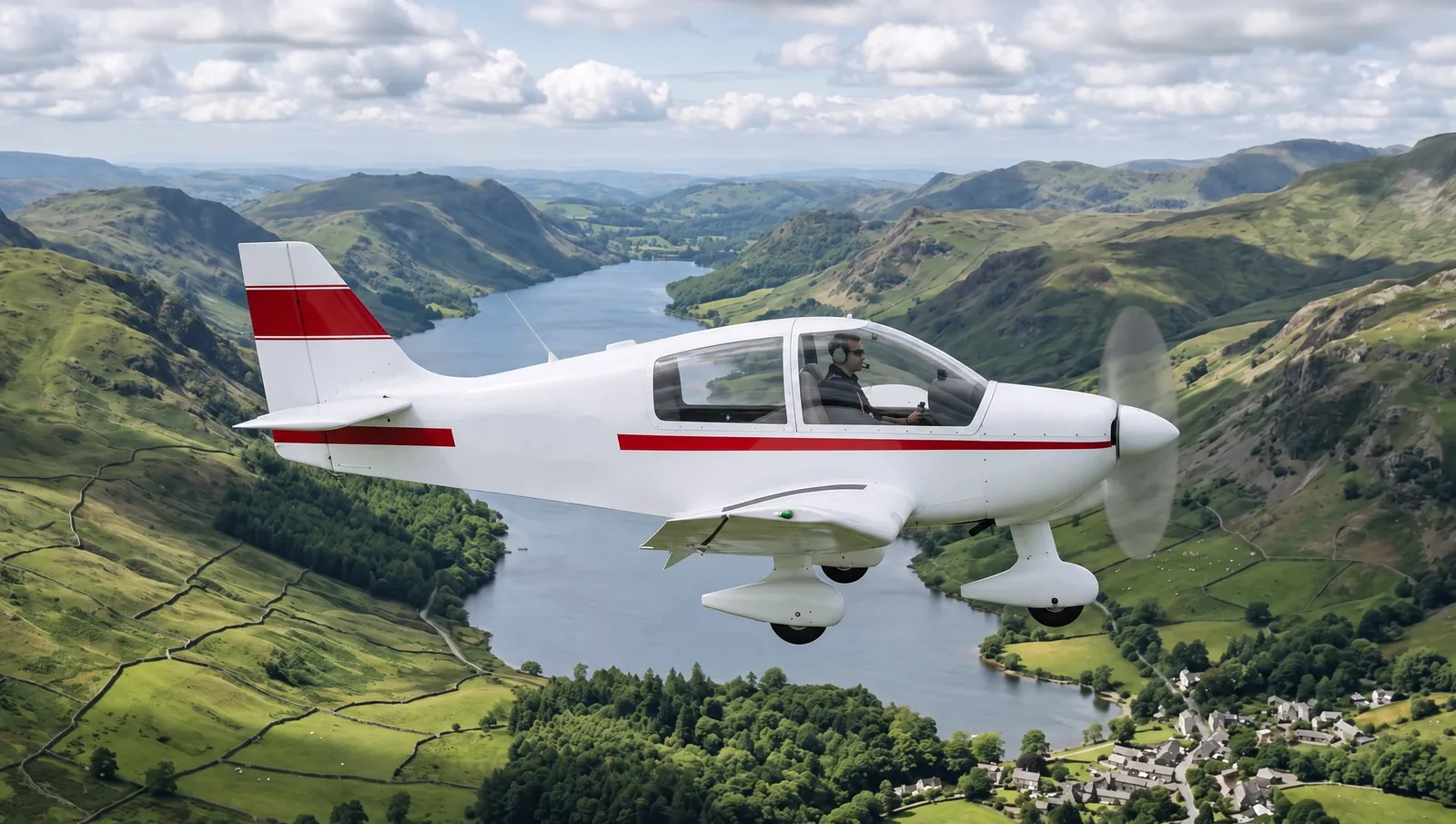
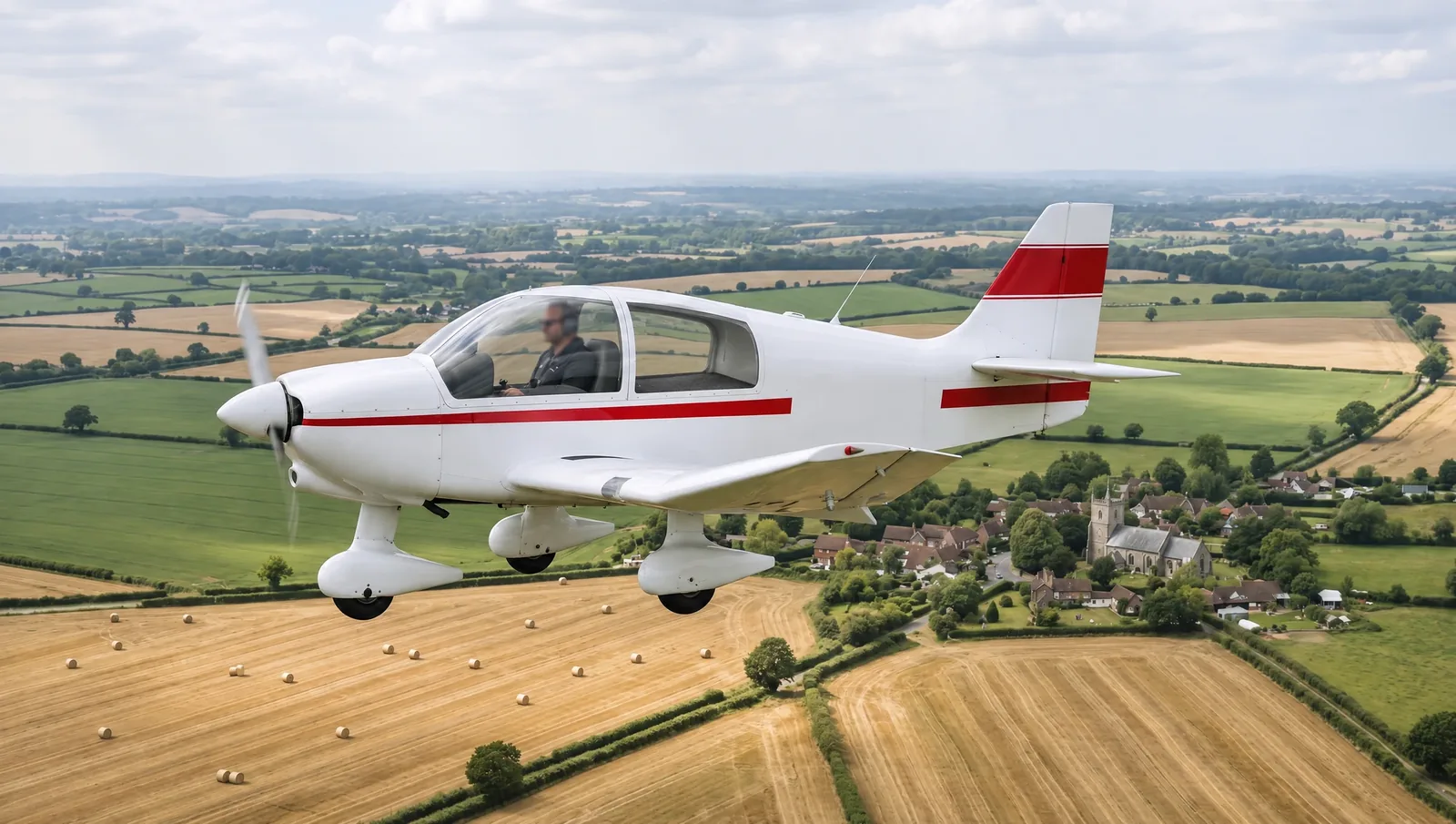
Alongside the drawings, the course shows the HR200 as you'll meet it: on grass strips and hilltops, in frost, fog and summer haze, and after dark.
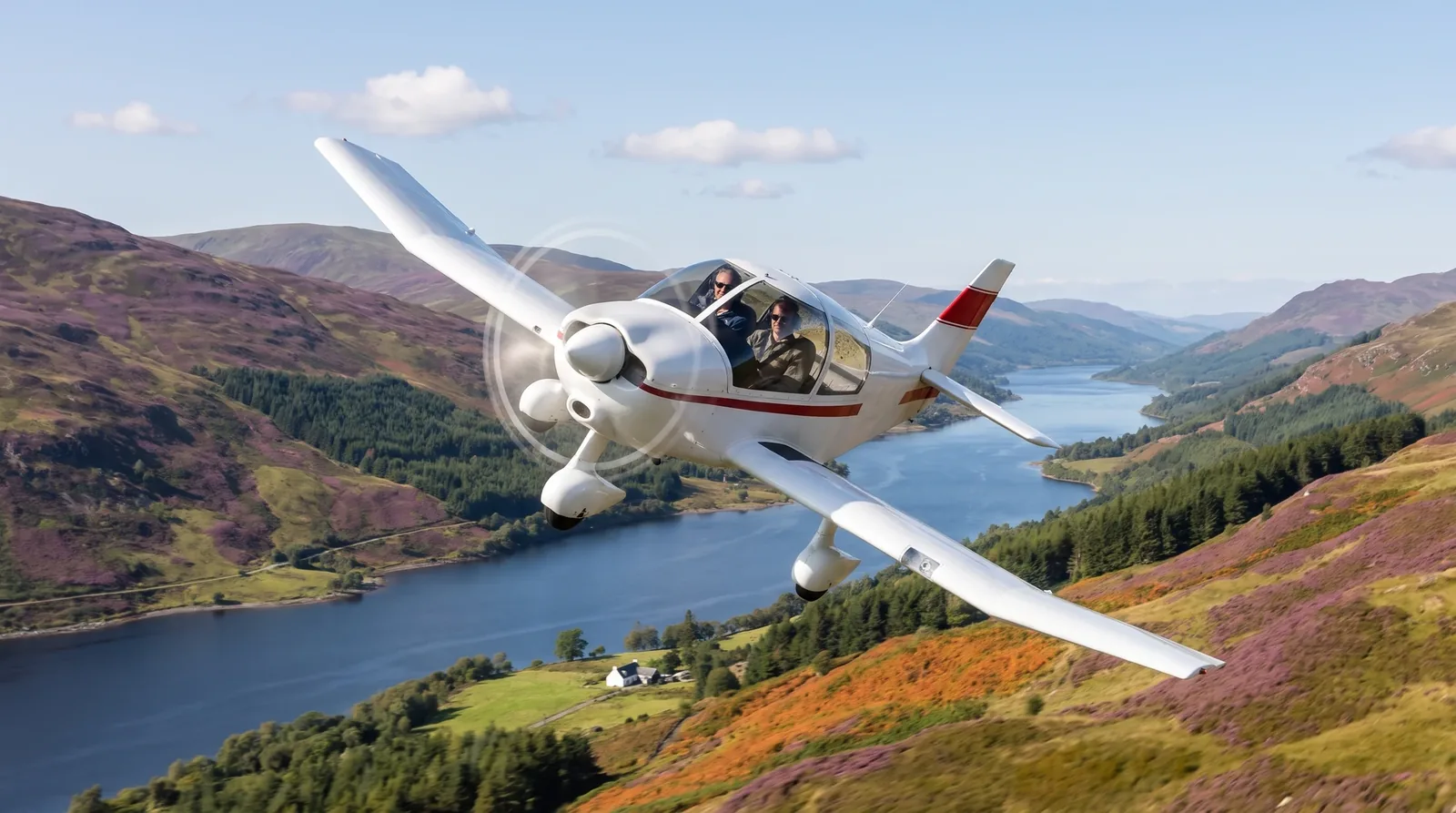
LimitationsA steep turn over a loch
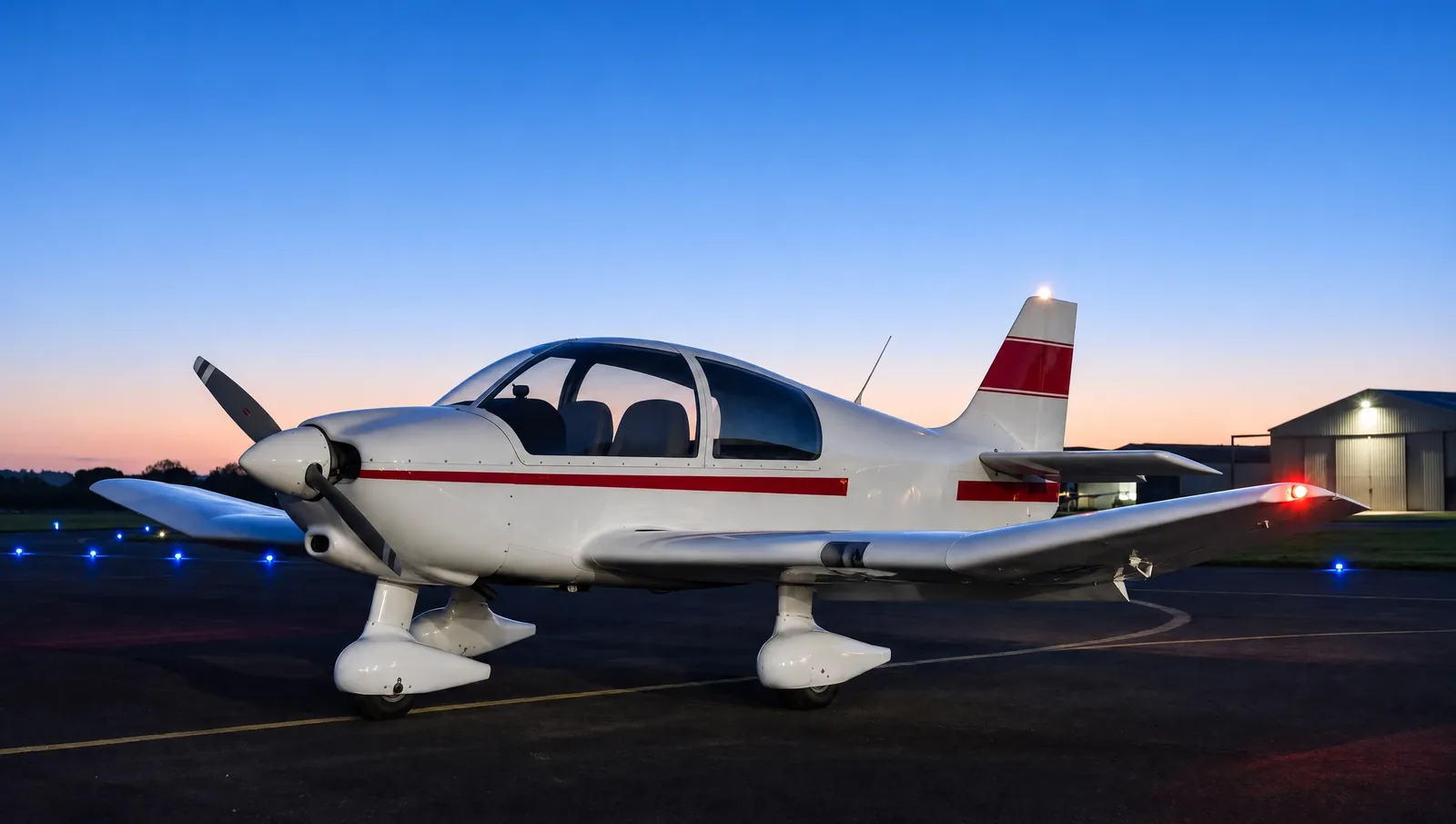
Blue hour
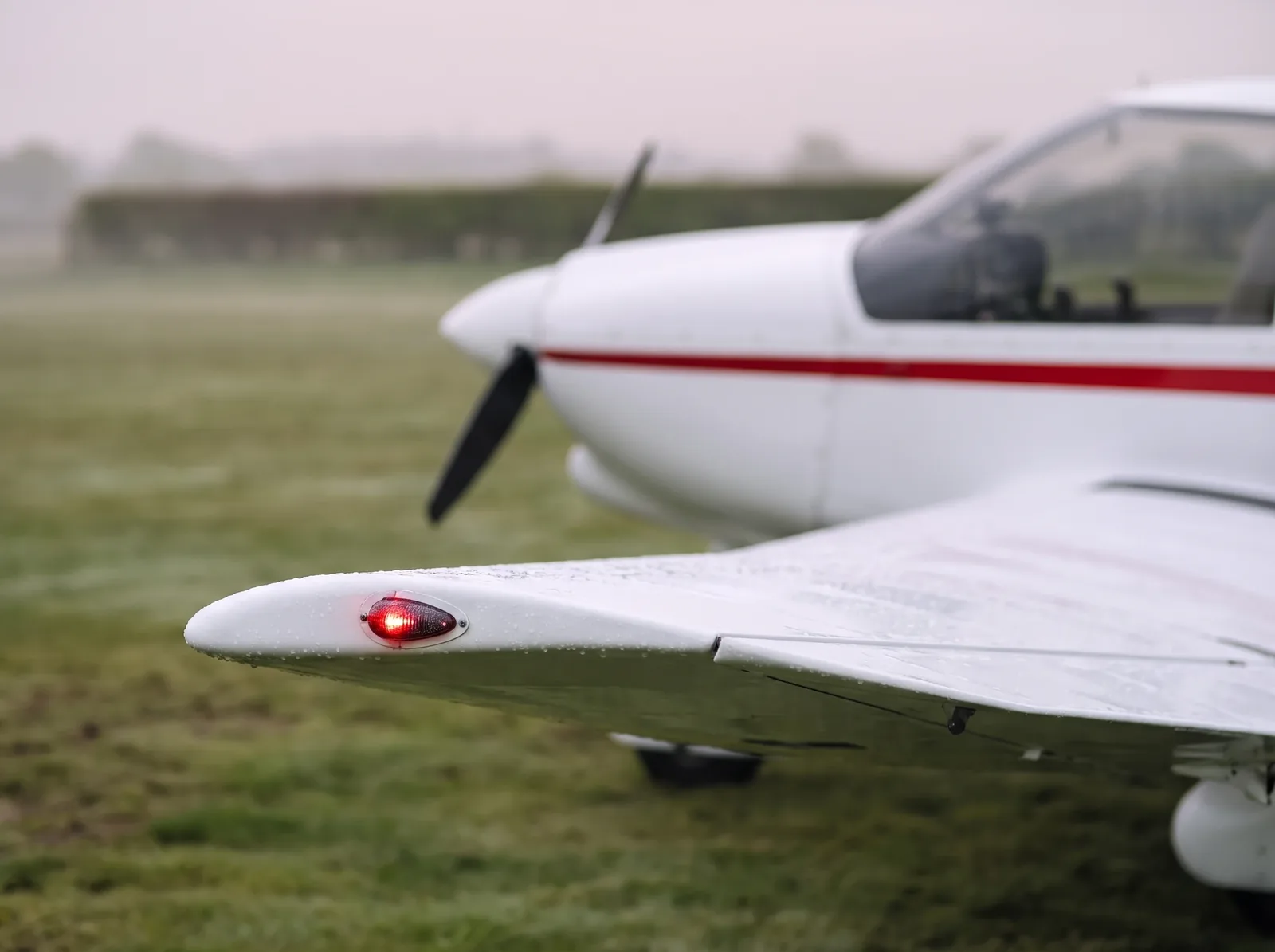
Red on the left
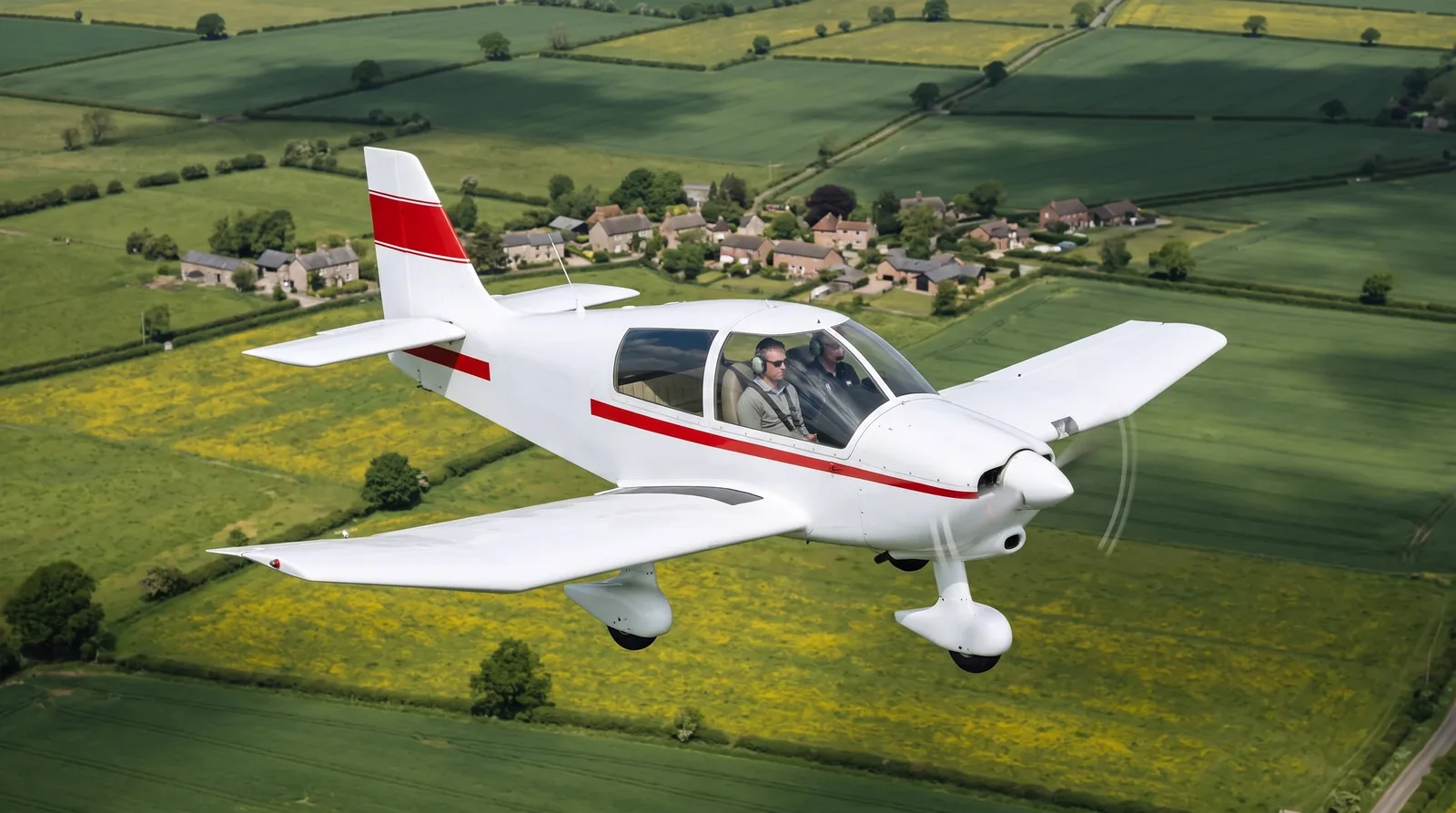
Early summer
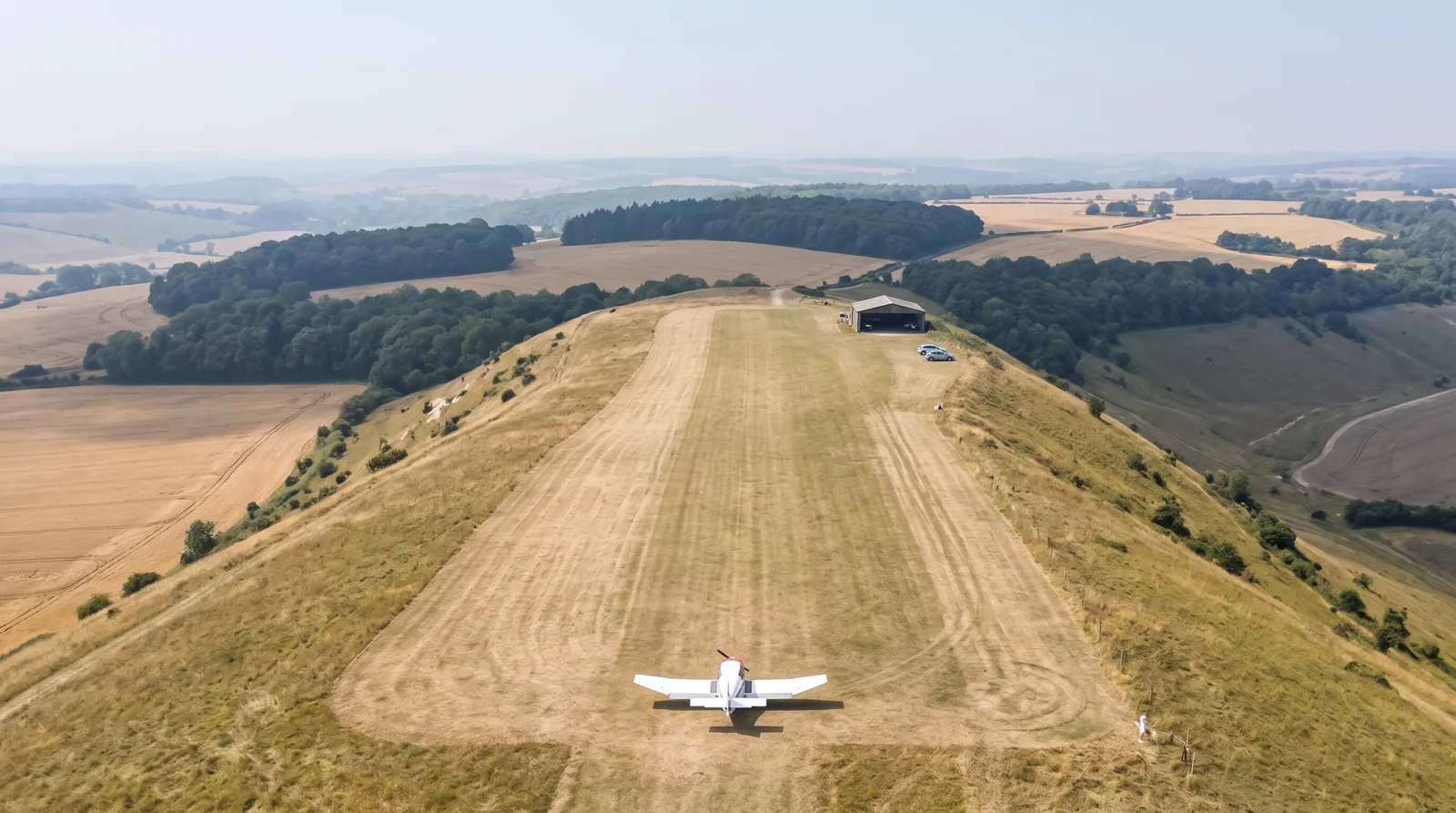
A hilltop strip
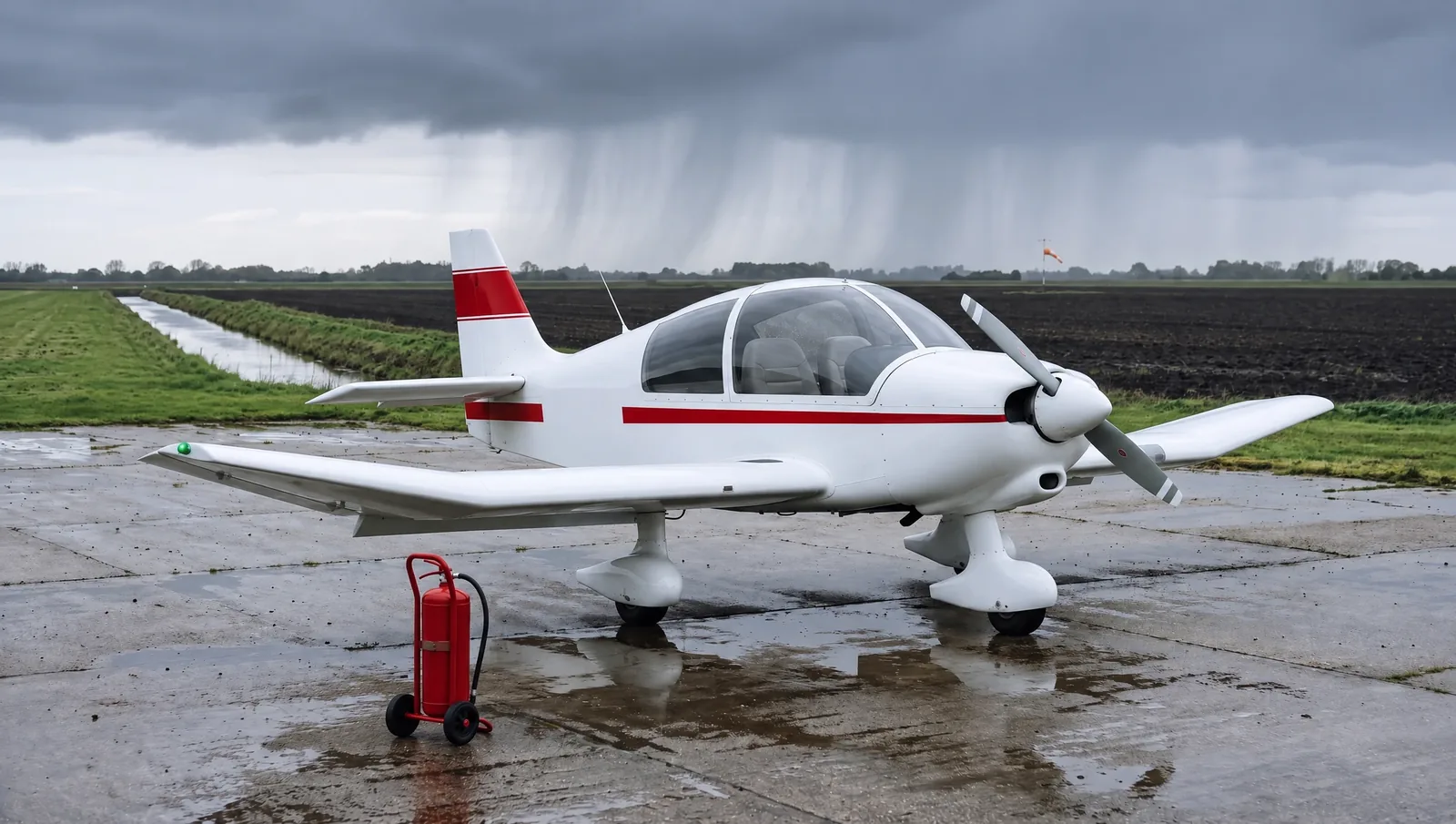
Fires and Other EmergenciesA shower passing
The figures
Written around the Robin HR200/120B
The speeds, weights and limits in the course are the HR200/120B's, from its flight manual. Other HR200 models have different engines and figures, so always use the manual for the aeroplane you fly.
Each slide with figures says which model they're for
- Wing span
- 8.33m
- Wing span
- Length
- 6.64m
- Length
- Lycoming O-235
- 118hp
- Lycoming O-235
- Maximum weight
- 780kg
- Maximum weight
- Never exceed speed, VNE
- 160kt
- Never exceed speed, VNE
- Usable fuel
- 118litres
- Usable fuel
- Side by side
- 2seats
- Side by side
Figures for the Robin HR200/120B. Other HR200 models differ: always use your own aeroplane's flight manual.
What's included
Everything you need, in one place
- 259 animated slidesEach one built up step by step while a narrator explains it, in 17 lessons.
- Classic slides tooPrefer still pictures? Switch to Classic for each slide with a short spoken summary.
- 15 progress testsOne after every chapter, and every answer explained with a picture.
- Course examExam-style questions on the whole course to finish.
- Certificate of completionYours when you pass the course exam.
- Kept up to dateUp-to-date material that stays up to date.
- Study anywhereOn your computer, tablet or phone.
Questions
The HR200 guide, answered
Anything else? Contact us: we're happy to help.
Animated, with Classic slides too
Who is this course for?
Student pilots and newly qualified PPL holders who fly, or are about to fly, a Robin HR200. It explains every system and procedure plainly, as a good instructor would at the aeroplane.
Which HR200 does it cover?
The HR200/120B, with the 118 hp Lycoming O-235. Every figure in the course is that model's. Other HR200 models differ, so always use your own aeroplane's flight manual.
What is in the course?
17 lessons with 259 slides: the aeroplane and its systems, the limitations, a flight in order from the walk-round to shutting down, engine failures and the other emergencies, performance, weight and balance, and night flying.
What is the difference between the animated and Classic slides?
Every slide is animated and builds up step by step while a narrator teaches it. If you prefer, switch any slide to Classic to see it as a still picture with a short spoken summary.
Are there tests and a certificate?
Yes. There are 15 progress tests, one after every chapter, with every answer explained with a picture. The course exam has 30 questions from the whole course in 45 minutes, with a pass mark of 75%. Pass it to receive your Course Completion Certificate.
Does it replace the flight manual or my instructor?
No. It explains the aeroplane and how to fly it so you arrive well prepared, but the flight manual for your own aeroplane and your instructor always come first.
Can I study on my phone?
Yes. The course works on any computer, tablet or phone, and in the Easy PPL app for Android you can download lessons and study offline.
Buy it now
Choose how you study
Full Course
£15.49for one month
Renew for £13.94 a month
- Every lesson in the course
- 15 progress tests
- The course exam
- 1 certificate
Test/Exam Access Only
£13.99for one month
Renew for £13.99 a month
- 15 progress tests
- The course exam
- Ideal for revision
No account needed to add to your basket: you'll register (free) at checkout, and your course opens as soon as you've paid.