
 Free CAA drone test course · UK
Free Flyer ID test prep course The 2026 Drone Code in plain English
Anyone in the UK who flies a drone or model aircraft of 100g or more outdoors needs a Flyer ID, and you get one by passing the CAA's free online theory test. This free course teaches everything the test covers, from the rules in force since 1 January 2026.
Or weigh your drone and see which IDs it needs.
- slides
- 241
- slides
- chapters
- 15
- chapters
- tests, with the Course Exam
- 14
- tests, with the Course Exam
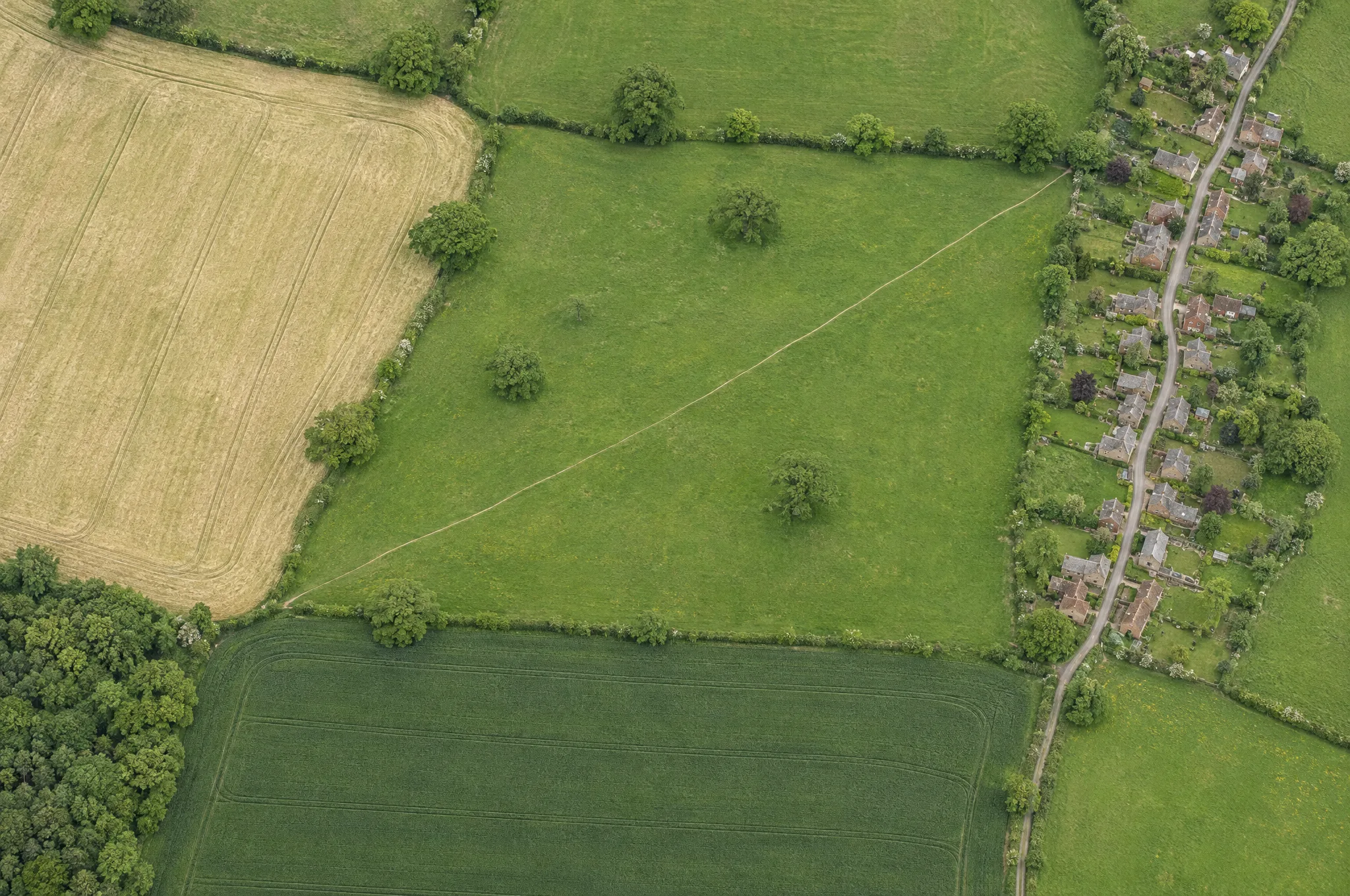
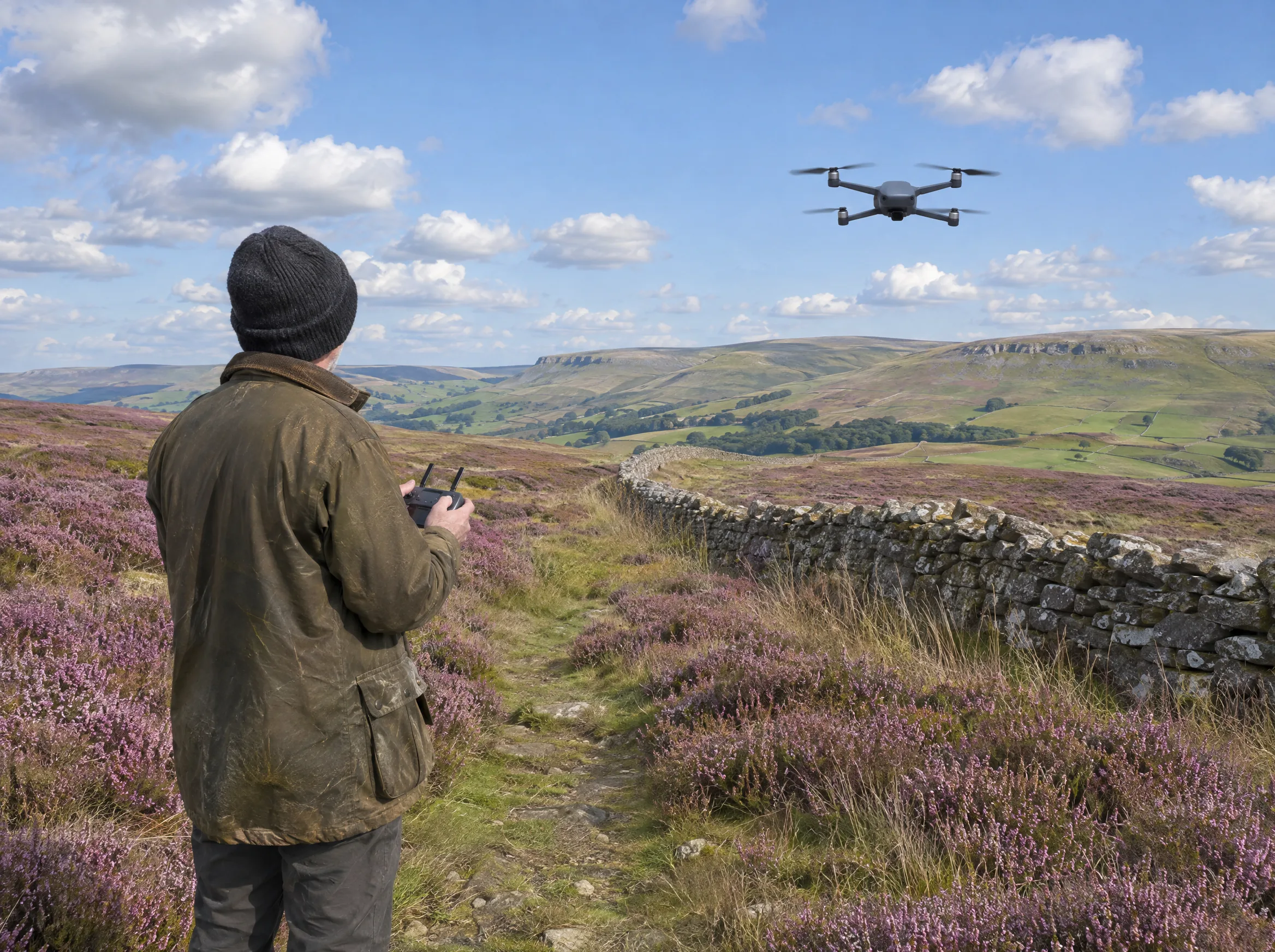
A drone flown in the Far from People (A3) sub-category climbs to 115 metres, just under the 120 metre (400 foot) height limit, while it is more than 115 metres from anyone. It comes down to 40 metres and flies towards a walker on a footpath, stopping 57 metres away, outside the 50 metre no-fly cylinder that reaches from the ground to the height limit round them. Then it flies towards the village and stops 157 metres from its edge, outside the 150 metre line, and lands.
Watch a slide
The no-fly cylinder
Every slide in the Flyer ID Test Prep Course builds up on screen, step by step, while a narrator explains it in plain English. Slide 90, as a student sees it: the no-fly cylinder reaches 50 metres out from an uninvolved person and all the way up to the 120 metre height limit. A drone 100 metres up and 30 metres to one side is 104 metres away in a straight line, and still inside it. Turn your sound on to hear the narration.
Flyer ID Test Prep Course· Chapter 6 · People and Crowds0:56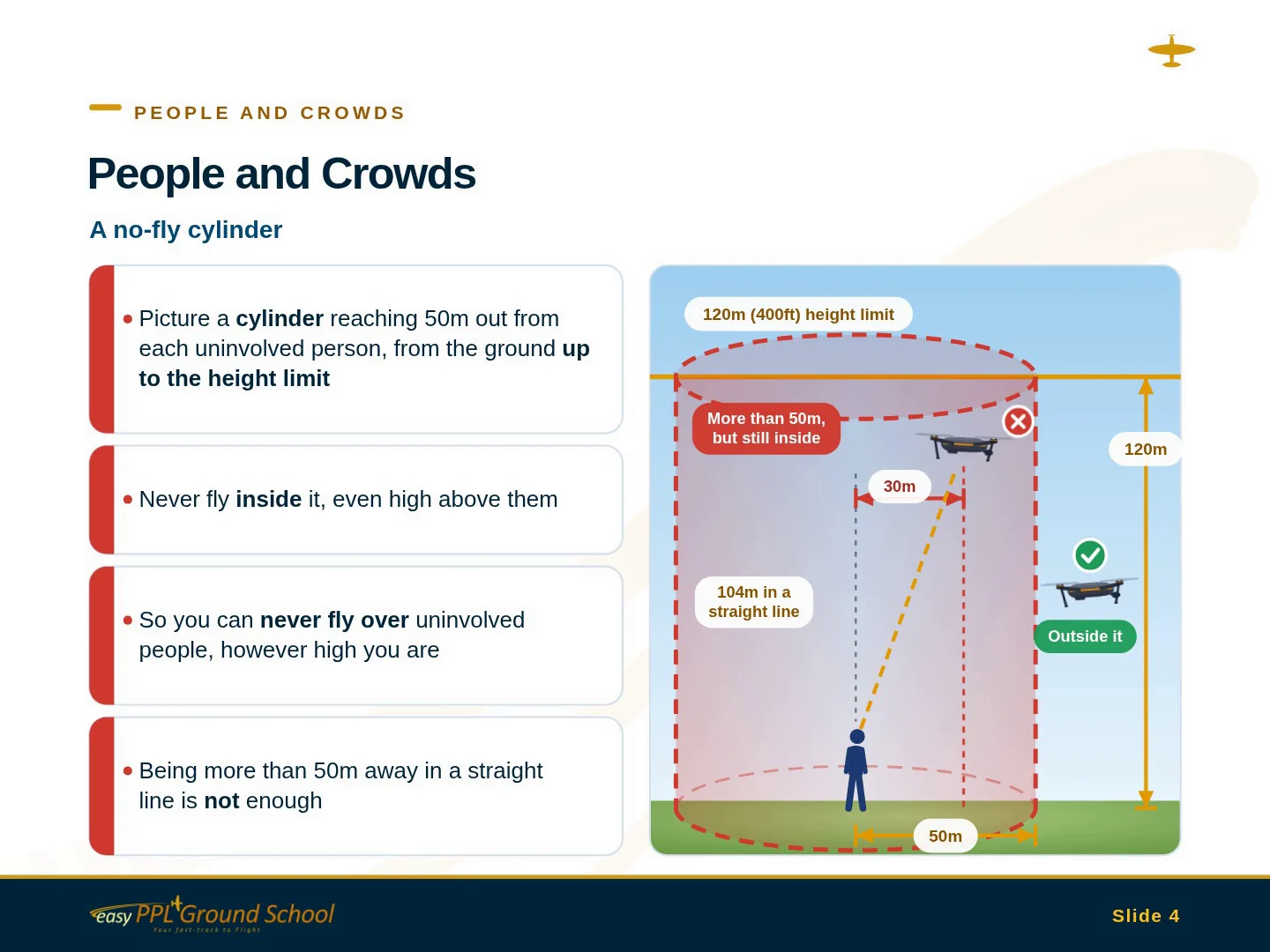
- Every ruleBuilt up on screen, a step at a time
- Every wordExplained the first time you meet it
- Every slideNarrated, or Classic with a short summary
The CAA Flyer ID test
The CAA drone test, in figures
The CAA's Flyer ID test is a free online theory test of 40 multiple-choice questions, and you need 30 right to pass (75%).
It's open book: you may have the Drone and Model Aircraft Code open while you answer, and everything you need is in it. Allow at least 30 minutes; there's no time limit as long as you're not inactive for more than 90 minutes, and you can take it as many times as you like. Pass, and your Flyer ID lasts five years.
Our Course Exam is your Flyer ID practice test: 40 questions on chapters 1 to 13, 30 to pass, against a 60-minute clock, so it's a little stricter than the real thing.
FLYER IDGBR-RP-XXXXXXXXXXXX
- The test
- Free
- and so is the ID
- Questions
- 40
- multiple choice
- To pass
- 30
- right (75%)
- The Code
- Open
- book: look things up
- Allow
- 30+
- minutes, no time limit
- Lasts
- 5
- years, then pass again
40 questions · 60 minutes · 75% to pass
A practice run for the CAA's test, in the same format.
The course
What you'll learn
A Flyer ID is the CAA's proof that you have passed its basic competence test for drones and model aircraft. Anyone in the UK who flies one of 100g or more outdoors needs one, at any age, and the test is free: 40 multiple-choice questions, with the Drone and Model Aircraft Code open beside you.
This course takes you through the Code from start to finish, in plain English, with clear diagrams and pictures: the Flyer ID and the Operator ID, categories and class marks, Remote ID, keeping your drone in sight, the 120m height limit, people and crowds, built-up areas, airports and Flight Restriction Zones, restrictions and hazards, the checks before you fly, the weather and your own fitness, flying at night, reporting, insurance and privacy.
It's written for anyone, starting from nothing: first-time flyers of any age, parents flying with their children, photographers, people who fly for work, model aircraft and FPV flyers, and anyone renewing a Flyer ID under the 2026 rules. Every new word is explained the first time you meet it, chapters end with Common Traps, a Chapter Recap and a progress test, and the Course Exam at the end is set out like the CAA's own test.
Try it yourself
Which drone IDs do I need?
You need a Flyer ID to fly a drone or model aircraft of 100g or more, and an Operator ID if it weighs 250g or more, or 100g or more with a camera.
Weigh yours, with everything attached, and see what it needs and where a drone of that weight with no class mark may fly. Chapters 1 to 3 of the course take you through it all, from the label on the drone to the class marks.
The course's examples
Flyer ID
RequiredNeeded to fly anything of 100g or more, camera or not. It's free: you pass the CAA's online test.
Operator ID
RequiredIt weighs 100g or more and has a camera. Whoever is responsible for it registers as its operator (18 or over; £12.34 a year at the time of writing) and puts the Operator ID on a label on it.
Where it may fly, with no class mark
A1Over People
It may fly near and over uninvolved people (never over a crowd), and in built-up areas.
- With a camera, the Code's privacy points apply too, whatever its size.
- With a UK class mark, the class decides where it may fly instead. Flying only indoors, or in a closed netted area it can't escape from? Neither ID is needed.
The syllabus
The 2026 Drone Code, chapter by chapter
The course follows the CAA's Drone and Model Aircraft Code in 15 chapters, with a progress test after each of the first 13 and a 40-question Course Exam to finish.
- 1
The Flyer ID and the Test
20 slidesWhat a Flyer ID is and who needs one, the CAA's test in numbers, how long it lasts, and the rules for children.
- 2
Operator ID and Labels
18 slidesWho needs an Operator ID, who the operator is, the yearly fee, and how to label your aircraft.
- 3
Categories and Class Marks
18 slidesThe Open, Specific and Certified categories, A1, A2 and A3, the UK class marks, and what to do with no mark.
- 4
Remote ID
14 slidesWhat Remote ID sends, which aircraft need it now and which from 1 January 2028, and your secret private key.
- 5
Sight, Observers and Height
16 slidesKeeping it in direct sight, observers and FPV, and the 120m (400ft) height limit over hills and cliffs.
- 6
People and Crowds
18 slidesThe 50m no-fly cylinder round uninvolved people, the small-drone exception, and why you never fly over a crowd.
- 7
Built-up Areas
17 slides150m from residential, recreational, commercial and industrial areas, buildings on their own, and the landowner's permission.
- 8
Airports and Airspace
17 slidesFlight Restriction Zones and their three parts, getting permission, small airfields, and where to check before you fly.
- 9
Restrictions and Hazards
16 slidesPermanent and temporary restrictions, emergencies, byelaws and signs, cranes and wires, wildlife and other aircraft.
- 10
Before You Fly
17 slidesThe instructions and settings, geo-awareness and firmware, battery or fuel, cargo, and the maximum take-off mass.
- 11
Weather and Fitness
16 slidesWind, rain, cold, fog and glare, and your own fitness to fly: alcohol, medicine, tiredness and distractions.
- 12
In the Air and Afterwards
18 slidesLow-flying aircraft, reporting incidents, a crash on private land, the green light for night flying, and insurance.
- 13
Privacy
15 slidesCameras and microphones, homes and gardens, the law, and what to do with what you record.
- 14
Less Common Flying
6 slidesFollow-me mode, model gliders and very tall structures: good to know.
Not in the Flyer ID test - 15
Taking the Test
15 slidesHow the CAA's test works, using the Code open beside you, the key numbers, and getting your Flyer ID.
The Course Exam
40 questions on chapters 1 to 13, 30 to pass (75%), against a 60-minute clock: a practice run for the CAA's test. Then take the real one, with the Code open beside you.
Inside the course
Every rule, drawn out
These are real slides from the course, each with a diagram of its own. Each one builds up step by step on screen while the narrator explains it.
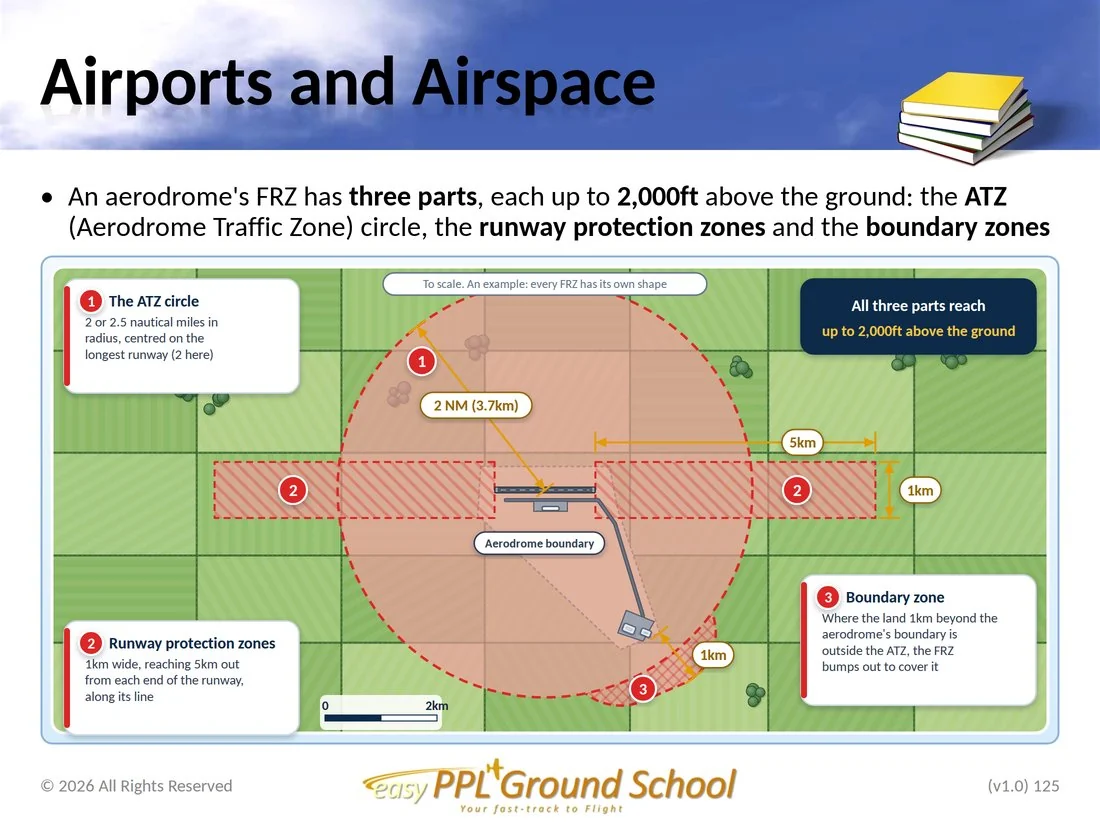
An airfield's Flight Restriction Zone 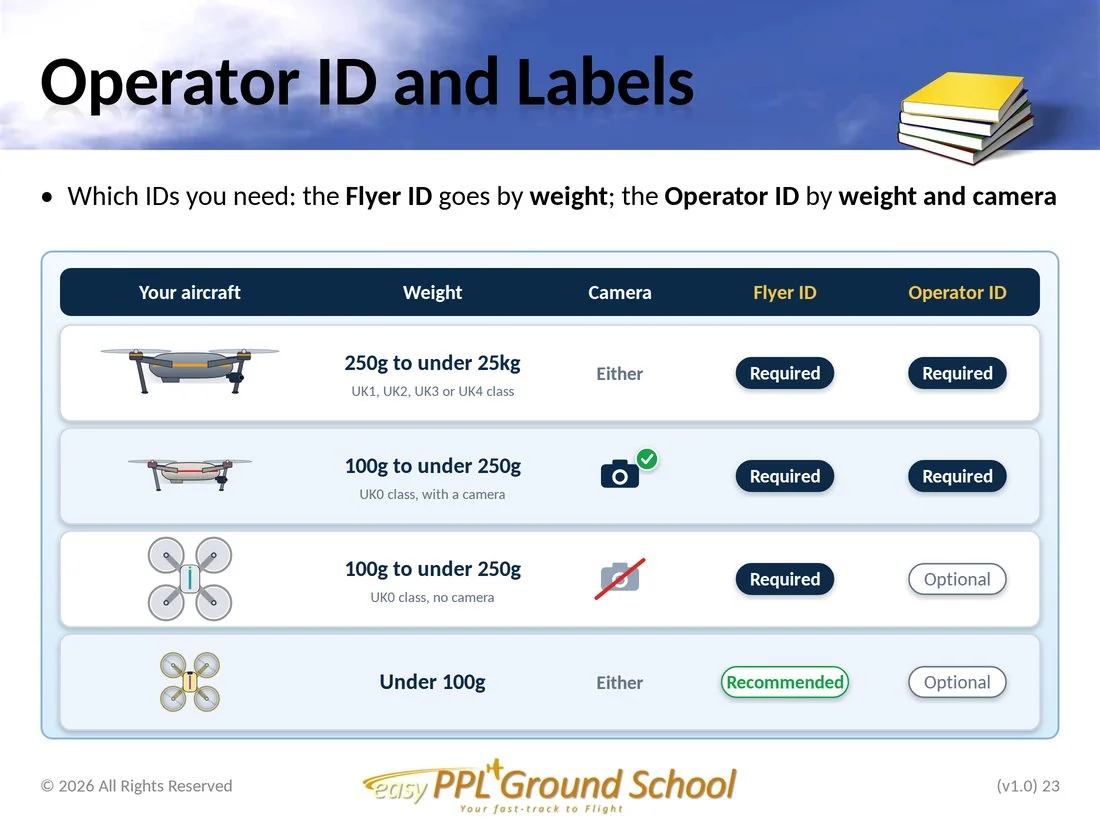
Which IDs you need 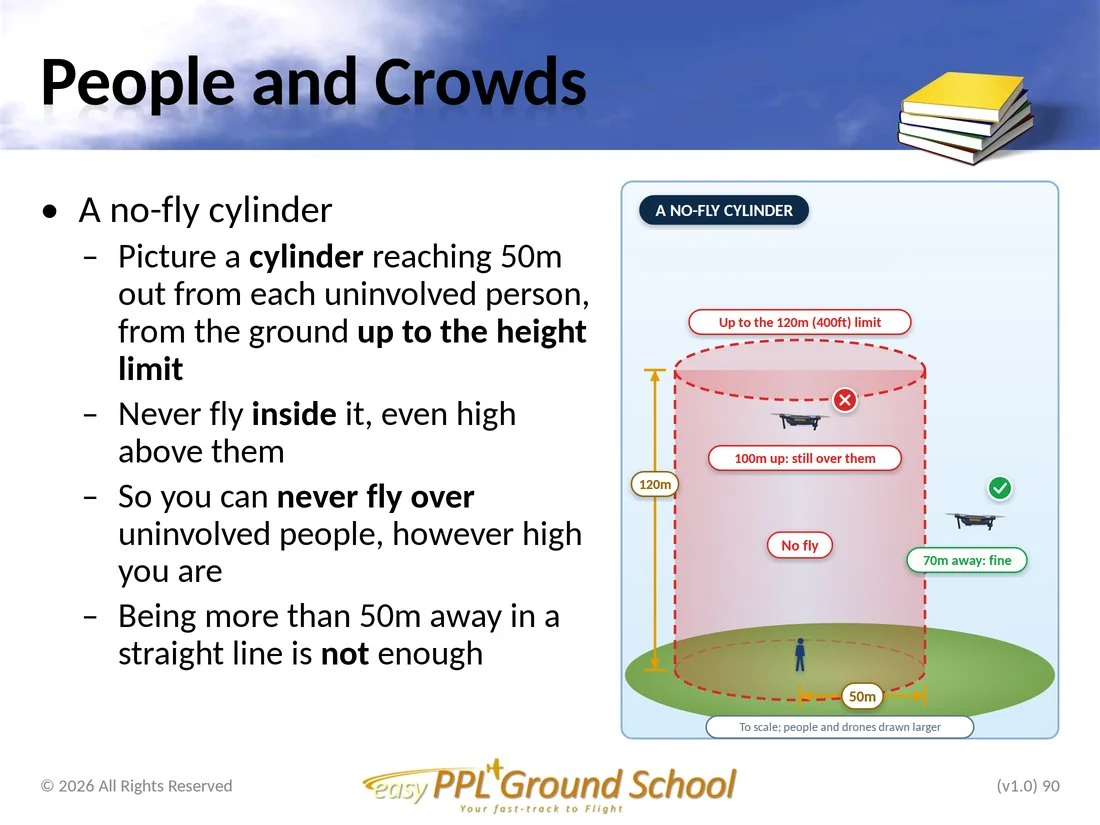
The no-fly cylinder 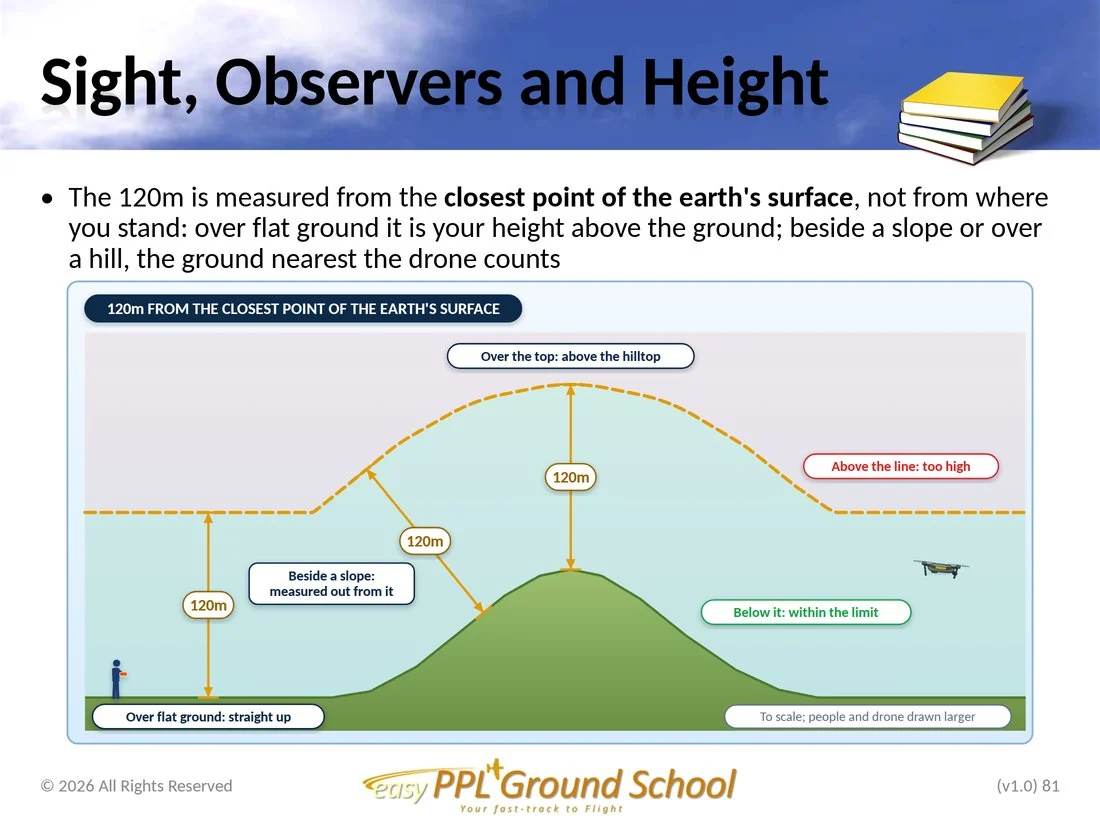
120m from the closest ground 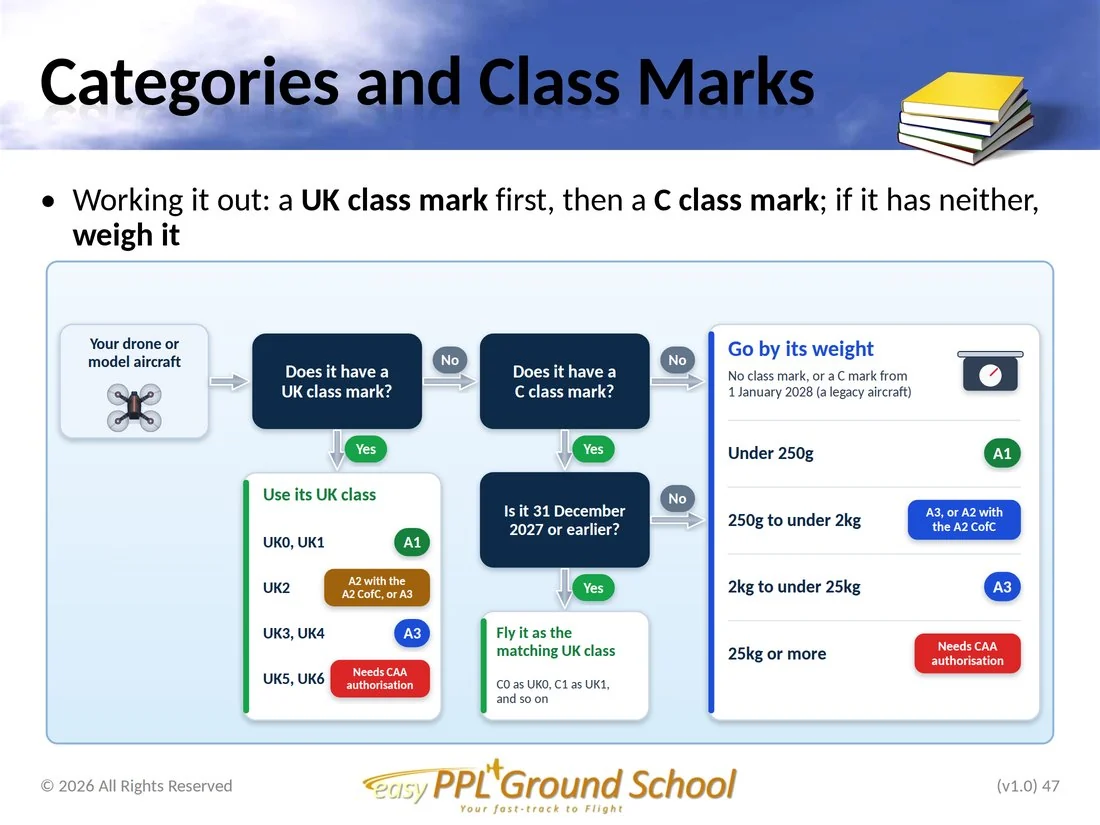
Class mark or weight? 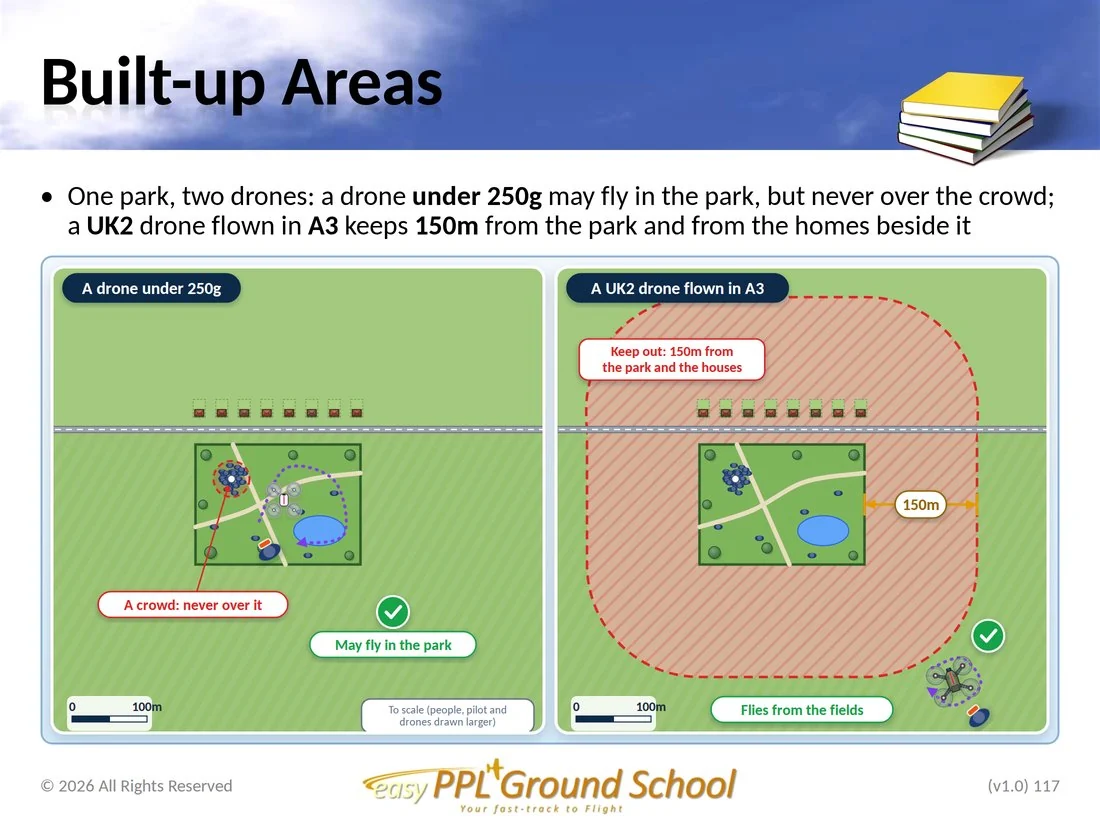
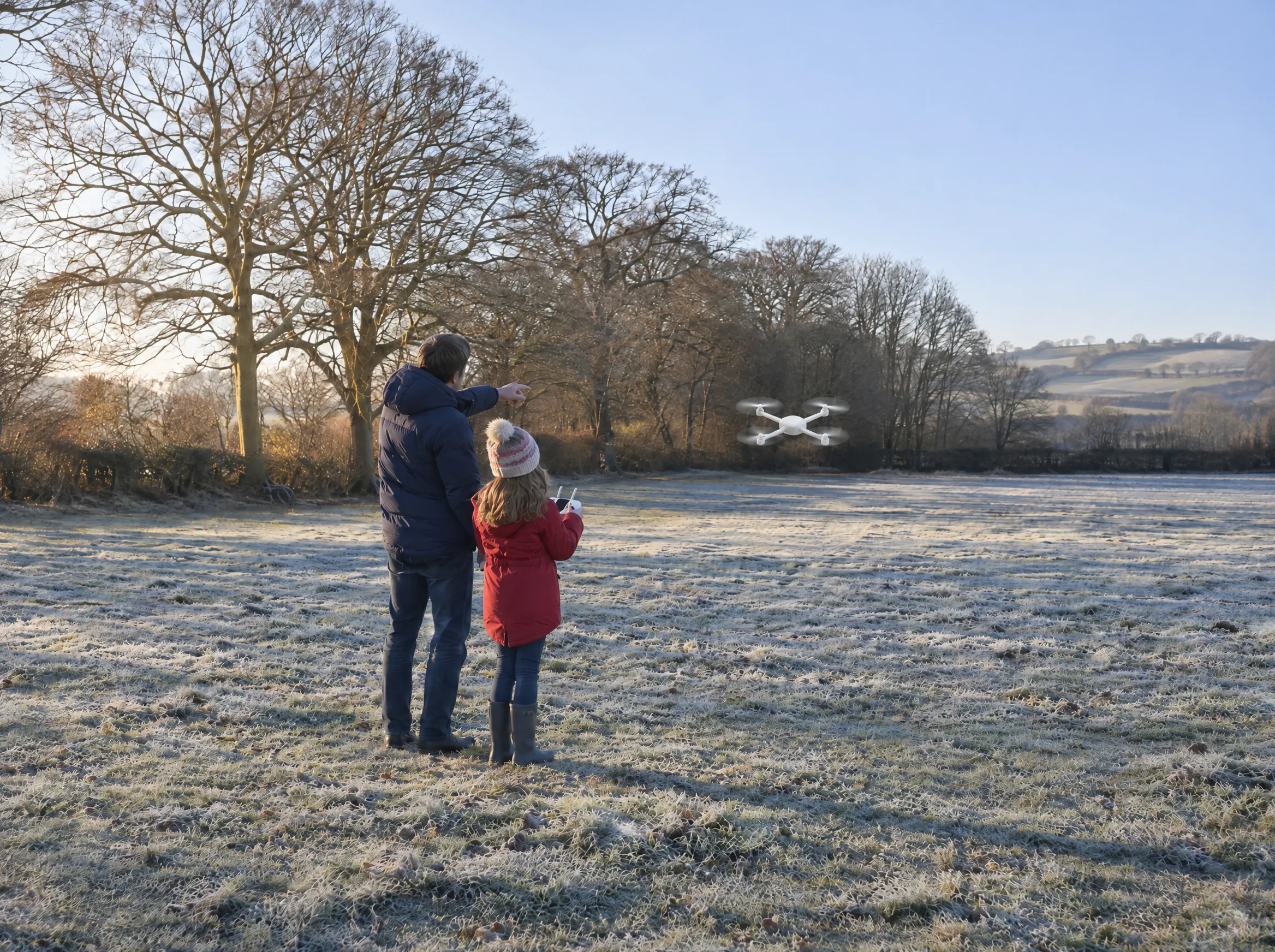
One park, two drones 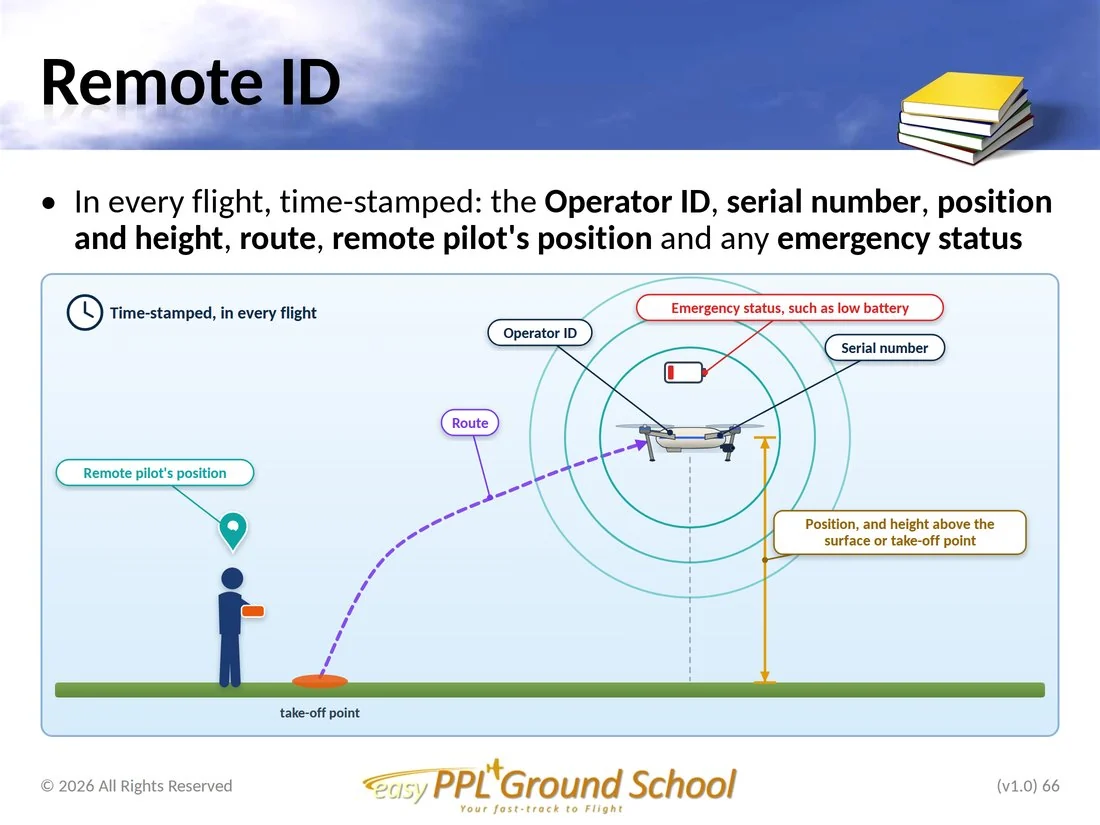
What Remote ID sends 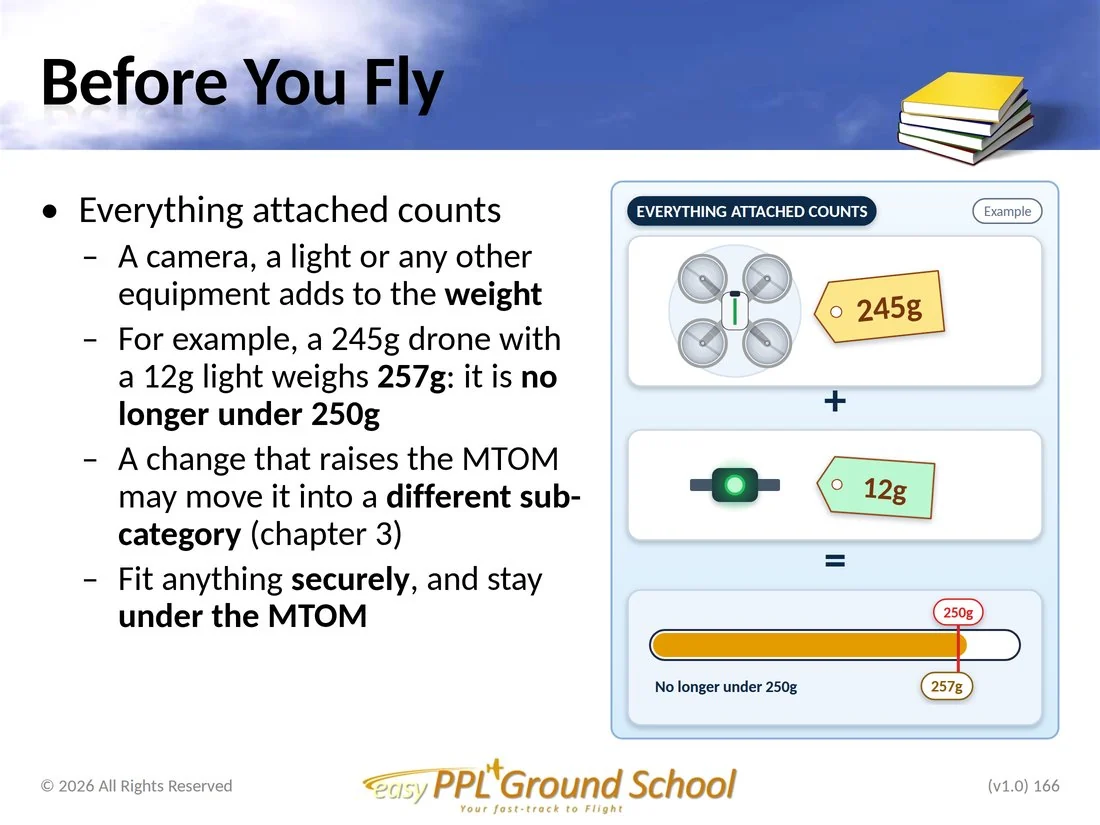
Everything attached counts 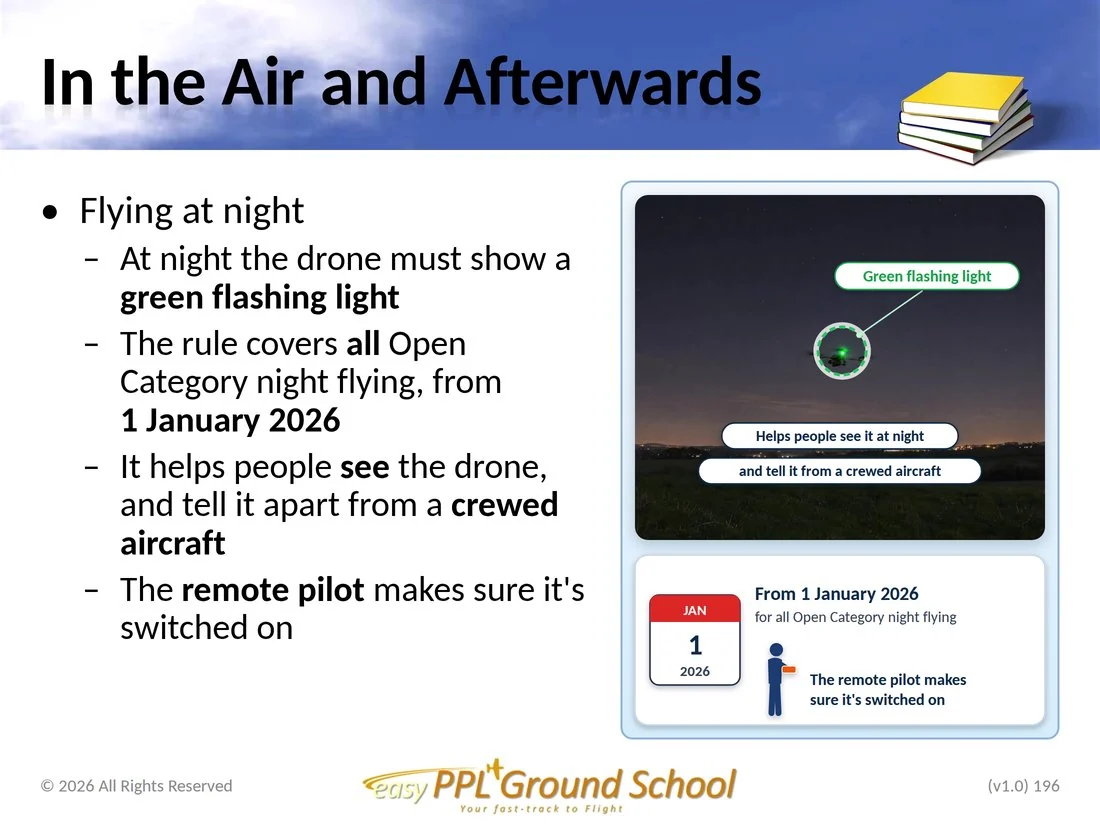
Flying at night 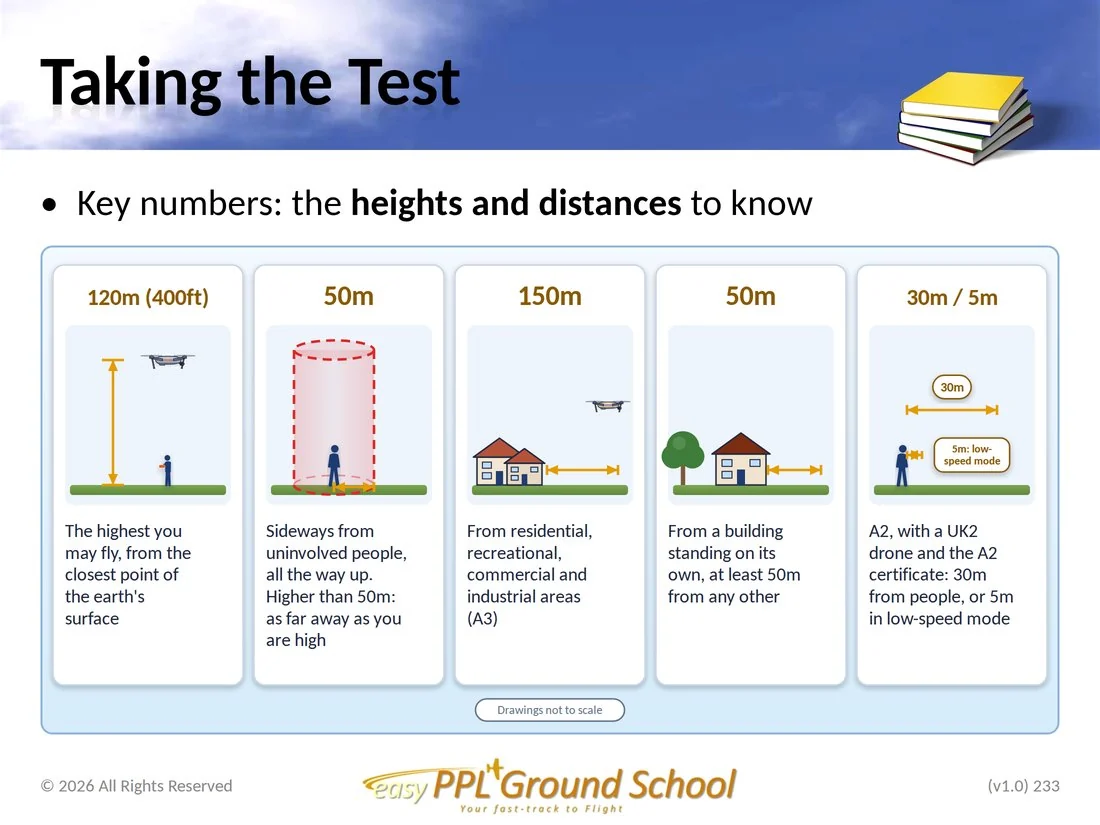
The distances to know
What's included
Everything you need, in one place
- 241 slidesEvery rule built up on screen while a narrator explains it, in 15 chapters.
- Classic slides tooPrefer still pictures? Switch to Classic for each slide with a short spoken summary.
- 13 progress testsAlong the way, with every answer explained.
- A 40-question Course Exam30 to pass, as in the CAA's test, against a 60-minute clock.
- Certificate of completionYours when you pass the Course Exam.
- Free, all of itNothing to pay: the course is £0 in the basket.
- Up to dateWritten to the rules in force from 1 January 2026.
- Study anywhereOn your computer, tablet or phone.
Questions
The Flyer ID test, answered
The Flyer ID test is the CAA's free online theory test for anyone who flies a drone or model aircraft of 100g or more in the UK. Here are the questions people ask about it most. Anything else? Contact us.
Is the Flyer ID test free?
Yes. The CAA's Flyer ID theory test is free, and so is the Flyer ID you get when you pass it. You take it online, and you can take it as many times as you like.
How many questions are in the Flyer ID test, and what is the pass mark?
The CAA's Flyer ID test has 40 multiple-choice questions, and you need 30 right to pass (75%). Allow at least 30 minutes: there's no time limit, as long as you're not inactive for more than 90 minutes.
Is the Flyer ID test open book?
Yes. You may have the CAA's Drone and Model Aircraft Code open while you take the test, and everything you need to pass is in it. The test is based on the rules in force from 1 January 2026. Read the Code through first, so you know where to look.
Do I need a Flyer ID for a drone under 250g?
Yes, if it weighs 100g or more. You need a Flyer ID to fly any drone or model aircraft of 100g or more, with a camera or without. Under 100g you need neither a Flyer ID nor an Operator ID, though the CAA strongly recommends taking the test anyway.
Do I need an Operator ID?
You need an Operator ID if you own or are responsible for a drone or model aircraft that weighs 250g or more, or 100g or more with a camera. You must be 18 or over to register; for an under-18, a parent or guardian registers as the operator. It costs £12.34 a year at the time of writing, one Operator ID covers all your aircraft, and it goes on a label on each of them.
How long does a Flyer ID last?
Five years, and to renew it you pass the test again. A Flyer ID gained with a test under the previous rules lasts three years. The CAA's My registration area shows when yours runs out.
Can children take the Flyer ID test?
Yes. There's no age limit: children and adults alike must pass the test to fly a drone or model aircraft of 100g or more. Under 13, a parent or guardian must be with them when they take the test and register; from 13 they can do it on their own. Children under 12 must only fly when supervised by someone aged 16 or over.
What does the Flyer ID test cover?
The CAA's Drone and Model Aircraft Code: the IDs you need, categories and class marks, Remote ID, keeping your drone in sight, heights and distances, people and crowds, airports and airspace, restrictions and hazards, the checks before you fly, the weather, flying itself and privacy. Points 37 to 39 of the Code, on less common flying, are not in the test.
Is there a Flyer ID practice test?
Yes. This course ends with a 40-question Course Exam set out like the CAA's test, with 30 right needed to pass (75%), on chapters 1 to 13 of the course. Ours runs against a 60-minute clock, so it's a little stricter than the real thing, and there are progress tests along the way.
Is this course really free?
Yes. The Flyer ID Test Prep Course is £0 in the basket, and you register free at checkout. You get all 15 chapters, 13 progress tests with every answer explained and the 40-question Course Exam, with a certificate of completion when you pass it.
Free
Choose how you study
Full Course
Free£0.00
- Every lesson in the course
- 13 progress tests
- The course exam
- 1 certificate
No account needed to add it to your basket: you'll register (free) at checkout, and the course opens straight away, with nothing to pay.